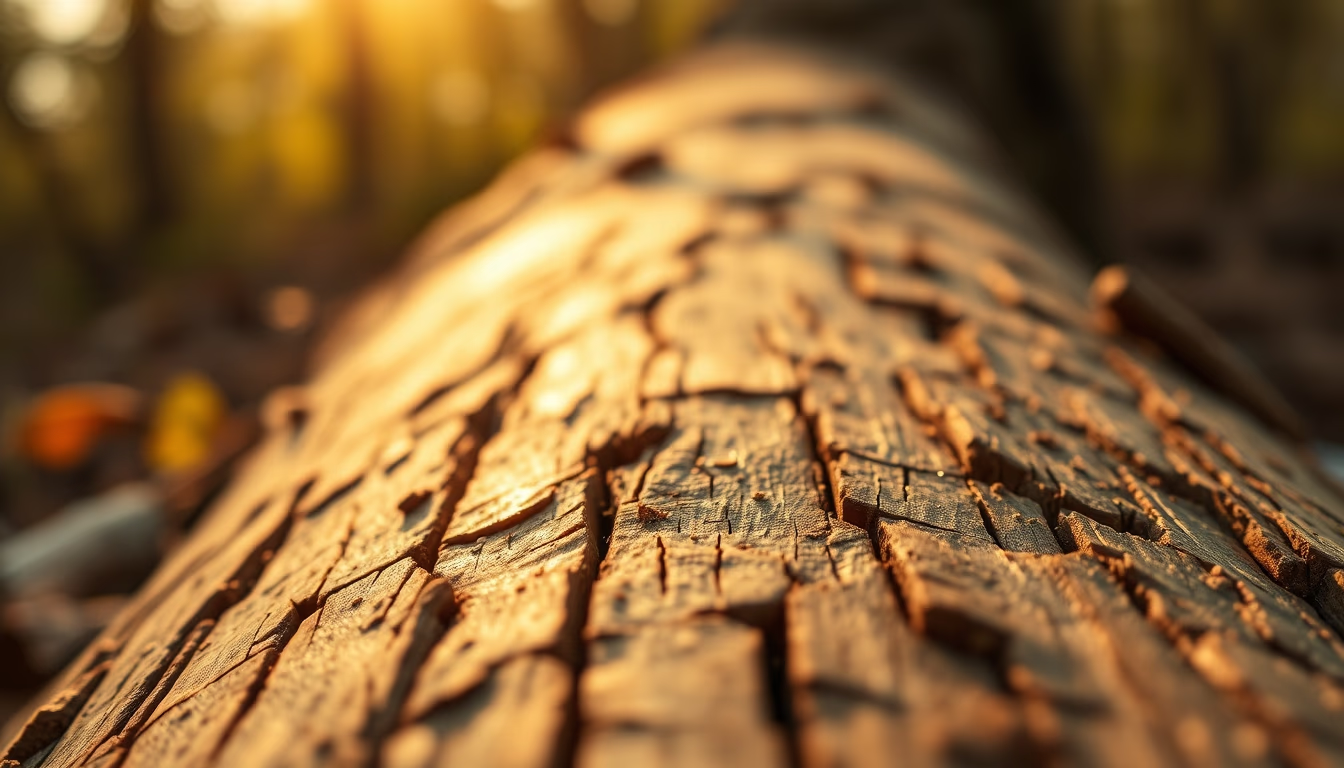
Lizard scales pattern
1344×768 · AVIF · CC BY 4.0
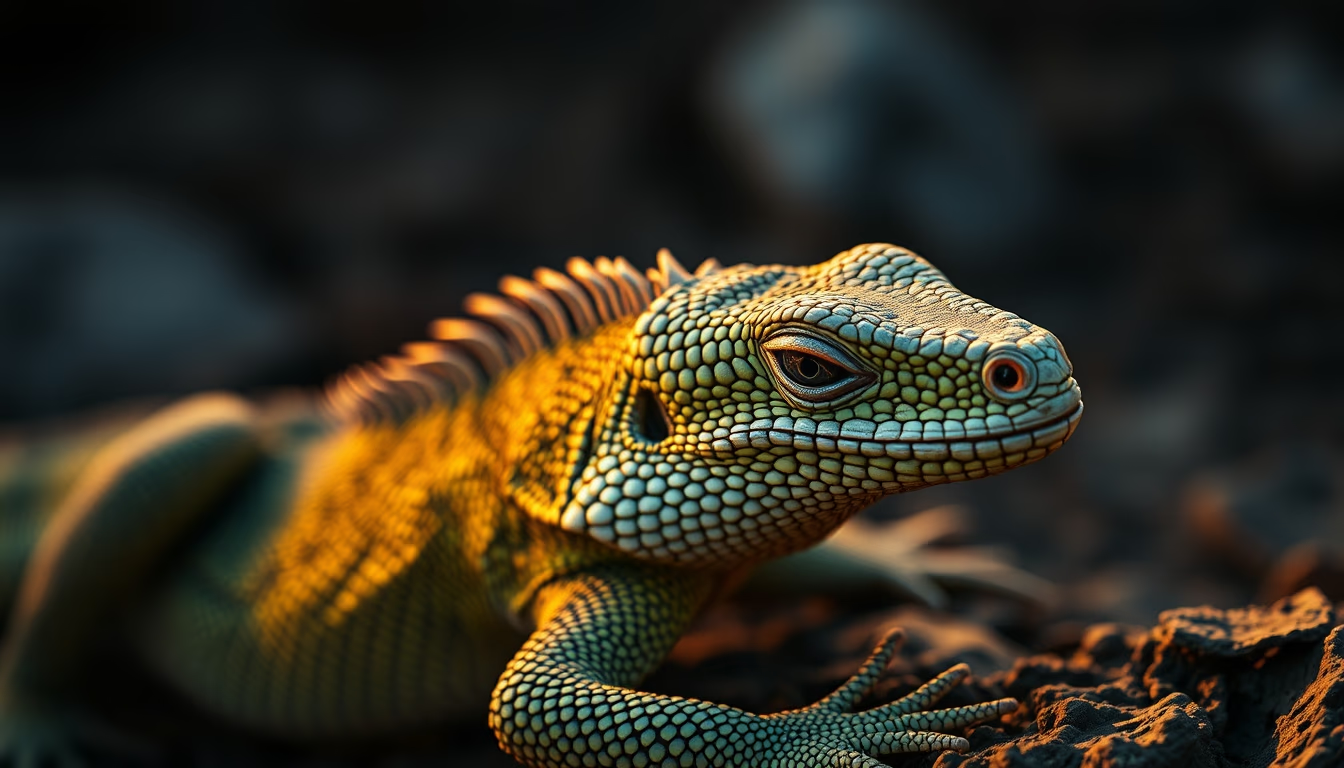
Lizard scales are keratinized structures that protect the body, aid locomotion, and regulate temperature, with unique patterns across species.
About this subject
Lizard scales are epidermal structures composed mainly of keratin, the same protein found in human nails and hair. Unlike fish scales, reptile scales are not bony plates; they are flexible plates that overlap or abut, forming a continuous covering. This structure provides protection against predators, abrasion, and dehydration, as well as serving as a barrier against parasites.
The morphology of scales varies enormously among species. Lizards like the Argentine black and white tegu (Salvator merianae), common in South America, have large, keeled scales on the back, while the frilled-neck lizard (Chlamydosaurus kingii) has elongated scales on the neck that flare up in defense. Some lizards, such as geckos, have scales modified into adhesive lamellae on their toes, allowing them to climb vertical surfaces. The color and pattern of scales can serve for camouflage, thermoregulation (darker colors absorb more heat), or visual communication between individuals.
Interestingly, lizard scales do not grow continuously; they are shed periodically in a process called ecdysis. During shedding, the outermost layer peels off, often in pieces, revealing a new layer underneath. This process is influenced by hormones and environmental factors such as temperature and humidity. Studies show that the microstructure of scales can even influence hydrodynamics in aquatic species, such as the marine iguana (Amblyrhynchus cristatus), which has scales that reduce drag in water.
Globally, there are over 7,000 species of lizards, each with unique scale adaptations. In arid regions, scales often have a granular texture to reduce water loss. In tropical forests, scales can be iridescent due to microscopic structures that refract light. The study of scale patterns, known as squamatology, helps researchers understand evolutionary relationships and ecological niches. For example, the scales of the thorny devil (Moloch horridus) are modified into spines and also have capillary channels that direct water to its mouth.
Frequently Asked Questions
Why do lizards shed their scales?
Lizards shed their scales periodically in a process called ecdysis to allow for growth, remove parasites, and replace damaged scales. The frequency varies by species, age, and environmental conditions.
Are all lizard scales the same?
No, there are various types including keeled scales (with a ridge), granular scales (small and rounded), smooth scales, and those modified into adhesive lamellae or spines. Shape and arrangement are used for taxonomic classification.
How do scales aid in camouflage?
The colors and patterns of scales can mimic the environment, such as foliage or soil, making it difficult for predators or prey to see them. Some lizards can slowly change color to better match their background.
Direct URL
https://pub-c7d6a6ea828543ac903a74a341ccb2e1.r2.dev/imagens/lizard-scales-pattern-cinematic-wide-shot-p5.avifHow to credit
Include a visible link back to UtilizAí. Copy one of the snippets below:
<a href="https://xn--utiliza-eza.com/en/midia/imagens/lizard-scales-pattern-cinematic-wide-shot-p5">Lizard scales pattern</a> by <a href="https://xn--utiliza-eza.com">UtilizAí</a>, licensed under <a href="https://creativecommons.org/licenses/by/4.0/">CC BY 4.0</a>.
[Lizard scales pattern](https://xn--utiliza-eza.com/en/midia/imagens/lizard-scales-pattern-cinematic-wide-shot-p5) by [UtilizAí](https://xn--utiliza-eza.com), CC BY 4.0
License: CC-BY-4.0