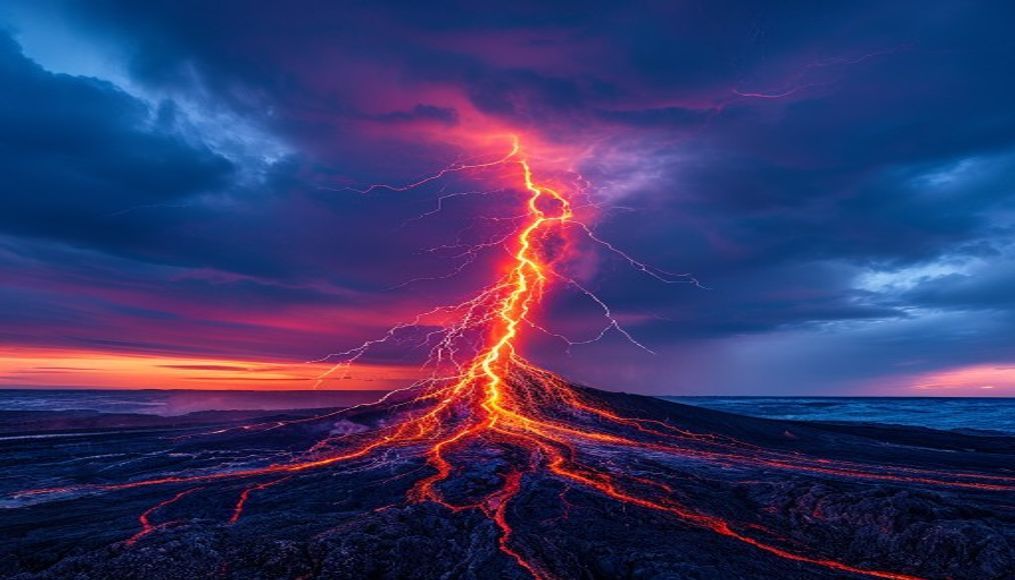
Lightning bolt sky
1344×768 · AVIF · CC BY 4.0
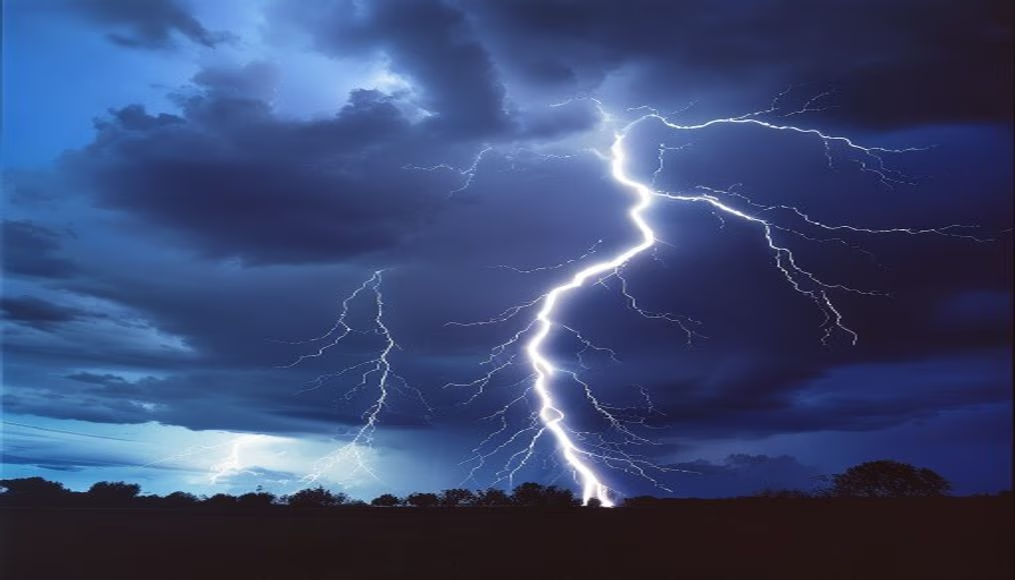
Lightning is an intense electrical discharge during storms, illuminating the sky with flashes of light and thunder.
About this subject
Lightning is a fascinating and dangerous natural phenomenon resulting from the separation of electrical charges within thunderstorm clouds. During a storm, ice particles and water collide, generating positive and negative charges. When the potential difference becomes large enough, a violent electrical discharge occurs, reaching temperatures of up to 30,000°C, five times hotter than the surface of the Sun. This discharge propagates in fractions of a second, creating the visible flash and the sound of thunder.
Brazil is one of the countries with the highest lightning incidence in the world, especially in the North and Central-West regions, due to tropical climate and convective storms. It is estimated that about 77 million lightning strikes occur annually in the country, causing deaths and significant material damage. Safety measures include avoiding open areas, not using electrical equipment during storms, and seeking shelter in buildings with lightning rods.
Beyond fear and danger, lightning has ecological and cultural importance. It helps fix nitrogen in the soil, essential for plant growth. In many cultures, it is seen as a symbol of divine power or nature's force. In Brazilian folklore, there are legends such as the Boitatá, a fire snake that protects fields from fires caused by lightning. Scientific studies continue to unravel the mysteries of lightning, such as high-altitude sprites that occur above clouds.
Frequently Asked Questions
What is the difference between lightning, flash, and thunder?
Lightning is the electrical discharge itself. The flash is the visible light produced by lightning. Thunder is the sound caused by the rapid expansion of air heated by lightning.
How can I stay safe during a thunderstorm with lightning?
Avoid open areas, stay away from isolated trees, keep away from metal objects, and avoid contact with water. The best shelter is a closed building with lightning rods or a metal-topped vehicle.
Is it true that lightning never strikes the same place twice?
No, that is a myth. Lightning can strike the same place multiple times, especially tall structures like buildings or towers. For example, the Empire State Building is struck about 25 times per year.
Direct URL
https://pub-c7d6a6ea828543ac903a74a341ccb2e1.r2.dev/imagens/lightning-bolt-sky-magazine-editorial-p2.avifHow to credit
Include a visible link back to UtilizAí. Copy one of the snippets below:
<a href="https://xn--utiliza-eza.com/en/midia/imagens/lightning-bolt-sky-magazine-editorial-p2">Lightning bolt sky</a> by <a href="https://xn--utiliza-eza.com">UtilizAí</a>, licensed under <a href="https://creativecommons.org/licenses/by/4.0/">CC BY 4.0</a>.
[Lightning bolt sky](https://xn--utiliza-eza.com/en/midia/imagens/lightning-bolt-sky-magazine-editorial-p2) by [UtilizAí](https://xn--utiliza-eza.com), CC BY 4.0
License: CC-BY-4.0