Lightning bolt sky
1344×768 · AVIF · CC BY 4.0
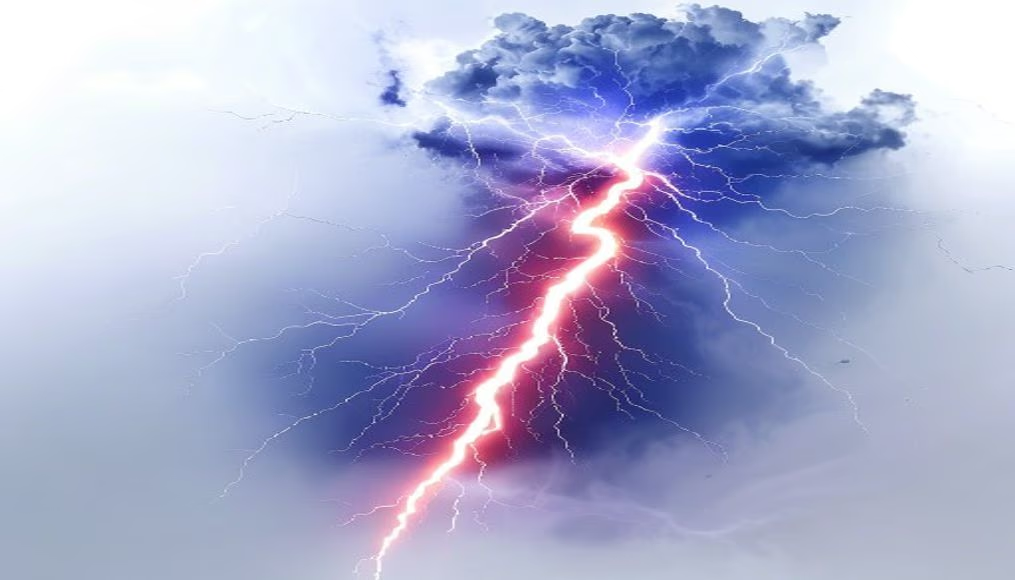
Lightning is an intense electrical discharge in the atmosphere, common in storms in Brazil, the country with the highest incidence in the world.
About this subject
Lightning is a high-intensity electrical discharge that occurs in the atmosphere during storms, typically associated with cumulonimbus clouds. These discharges can occur between clouds, within a single cloud, or from cloud to ground. In Brazil, the phenomenon is especially frequent due to the tropical climate and the country's large territorial extension. Brazil leads the world ranking of lightning incidence, with around 50 million strikes per year, concentrated mainly in the North, Central-West, and Southeast regions, especially in the Amazon and Pantanal.
A typical lightning bolt reaches temperatures around 30,000 degrees Celsius, five times hotter than the surface of the Sun. This energy explosively heats the surrounding air, creating the sound of thunder. Despite its beauty, lightning poses a real danger: in Brazil, about 100 people die each year struck by lightning, with rural activities and open areas being the most risky. Safety measures include avoiding open fields, not using electrical equipment connected to the grid, and staying inside vehicles with a metal body.
Culturally, lightning has inspired mythologies and folk beliefs. In Brazilian folklore, there are stories about entities controlling storms, such as Caipora or Saci-Pererê, though the most direct association is with Saint John, invoked for protection during thunderstorms. Scientifically, the study of lightning, fulminology, helps improve protection systems and storm forecasting, as well as contributing to the understanding of atmospheric electricity and its interactions with the global climate.
Frequently Asked Questions
What causes lightning?
Lightning is caused by the buildup of electrical charges in storm clouds, usually due to collisions between ice and water particles. When the electrical potential difference becomes too large, a violent discharge occurs to neutralize the charges.
What is the difference between lightning, a lightning bolt, and thunder?
Lightning refers to the electrical discharge itself. A lightning bolt is the visible flash of light. Thunder is the sound produced by the explosive expansion of air heated by the lightning. In everyday language, they are often used interchangeably, but technically they differ.
Is it true that lightning never strikes the same place twice?
Myth. Lightning can strike the same place multiple times, especially tall structures like buildings, towers, or trees. For example, the Empire State Building in New York is struck about 25 times per year.
Direct URL
https://pub-c7d6a6ea828543ac903a74a341ccb2e1.r2.dev/imagens/lightning-bolt-sky-commercial-product-photography-p3.avifHow to credit
Include a visible link back to UtilizAí. Copy one of the snippets below:
<a href="https://xn--utiliza-eza.com/en/midia/imagens/lightning-bolt-sky-commercial-product-photography-p3">Lightning bolt sky</a> by <a href="https://xn--utiliza-eza.com">UtilizAí</a>, licensed under <a href="https://creativecommons.org/licenses/by/4.0/">CC BY 4.0</a>.
[Lightning bolt sky](https://xn--utiliza-eza.com/en/midia/imagens/lightning-bolt-sky-commercial-product-photography-p3) by [UtilizAí](https://xn--utiliza-eza.com), CC BY 4.0
License: CC-BY-4.0