Insect compound eye macro
1344×768 · AVIF · CC BY 4.0
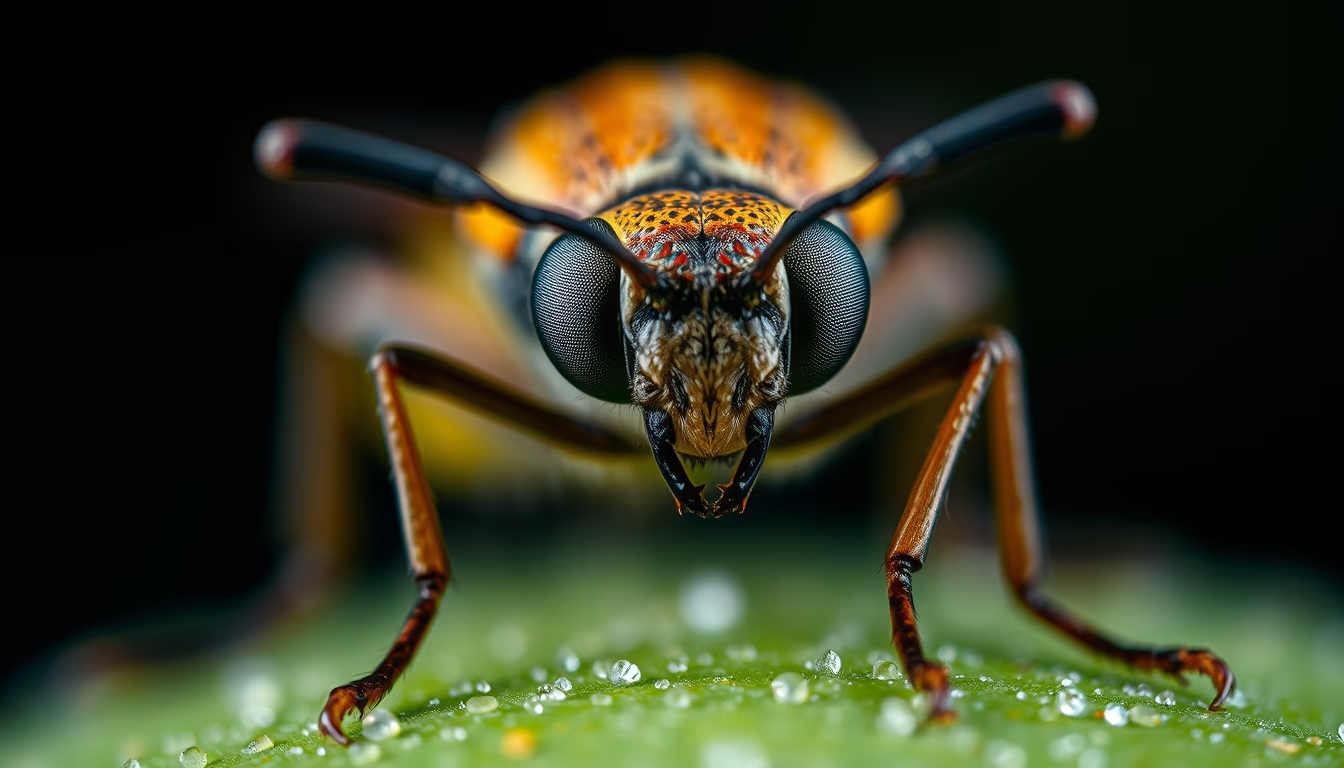
Macro of an insect compound eye reveals the intricate structure of thousands of ommatidia, adapted to detect motion and polarized light.
About this subject
Compound eyes are the predominant visual system among insects and other arthropods. Unlike the simple eyes of vertebrates, each compound eye consists of functional units called ommatidia, which can range from a few hundred to over 30,000 in dragonflies. Each ommatidium contains photoreceptor cells, a conical lens, and a crystalline cone that capture a small portion of the visual field. The insect's brain then integrates this information to form a mosaic image with low spatial resolution but extremely high sensitivity to motion and ultraviolet light.
The hexagonal arrangement of ommatidia is often compared to a honeycomb, and their distribution allows for an almost 360-degree panoramic view, essential for avoiding predators and locating prey. In insects like bees, compound eyes can also detect polarized light, a crucial resource for solar navigation even on cloudy days. Eye coloration varies from black to metallic green, depending on pigments and microstructures that reflect specific wavelengths.
Remarkably, the efficiency of compound eyes has inspired technologies such as multispectral cameras and motion sensors in robotics. Recent studies show that the ommatidial structure can be replicated in optical devices to improve edge detection and vision in low-light conditions. Macro photography with lo-fi disposable cameras captures this complexity with a grainy, vintage style that contrasts with nature's precision.
Frequently Asked Questions
How many ommatidia can an insect have in each compound eye?
The number varies greatly: ants may have only a few hundred, while dragonflies have up to 30,000 per eye, reflecting their ecological needs.
Do insects see colors like humans?
Not exactly. Most insects perceive ultraviolet light but have less sensitivity to red. They see a different spectrum, adapted for pollination and navigation.
Why is lo-fi disposable camera macro photography used to capture compound eyes?
The lo-fi style adds grain and imperfections that can emphasize textures and details, creating a nostalgic aesthetic that contrasts with the subject's precision.
Direct URL
https://pub-c7d6a6ea828543ac903a74a341ccb2e1.r2.dev/imagens/insect-compound-eye-macro-lo-fi-disposable-camera-p6.avifHow to credit
Include a visible link back to UtilizAí. Copy one of the snippets below:
<a href="https://xn--utiliza-eza.com/en/midia/imagens/insect-compound-eye-macro-lo-fi-disposable-camera-p6">Insect compound eye macro</a> by <a href="https://xn--utiliza-eza.com">UtilizAí</a>, licensed under <a href="https://creativecommons.org/licenses/by/4.0/">CC BY 4.0</a>.
[Insect compound eye macro](https://xn--utiliza-eza.com/en/midia/imagens/insect-compound-eye-macro-lo-fi-disposable-camera-p6) by [UtilizAí](https://xn--utiliza-eza.com), CC BY 4.0
License: CC-BY-4.0