Illuminated manuscript
1344×768 · AVIF · CC BY 4.0
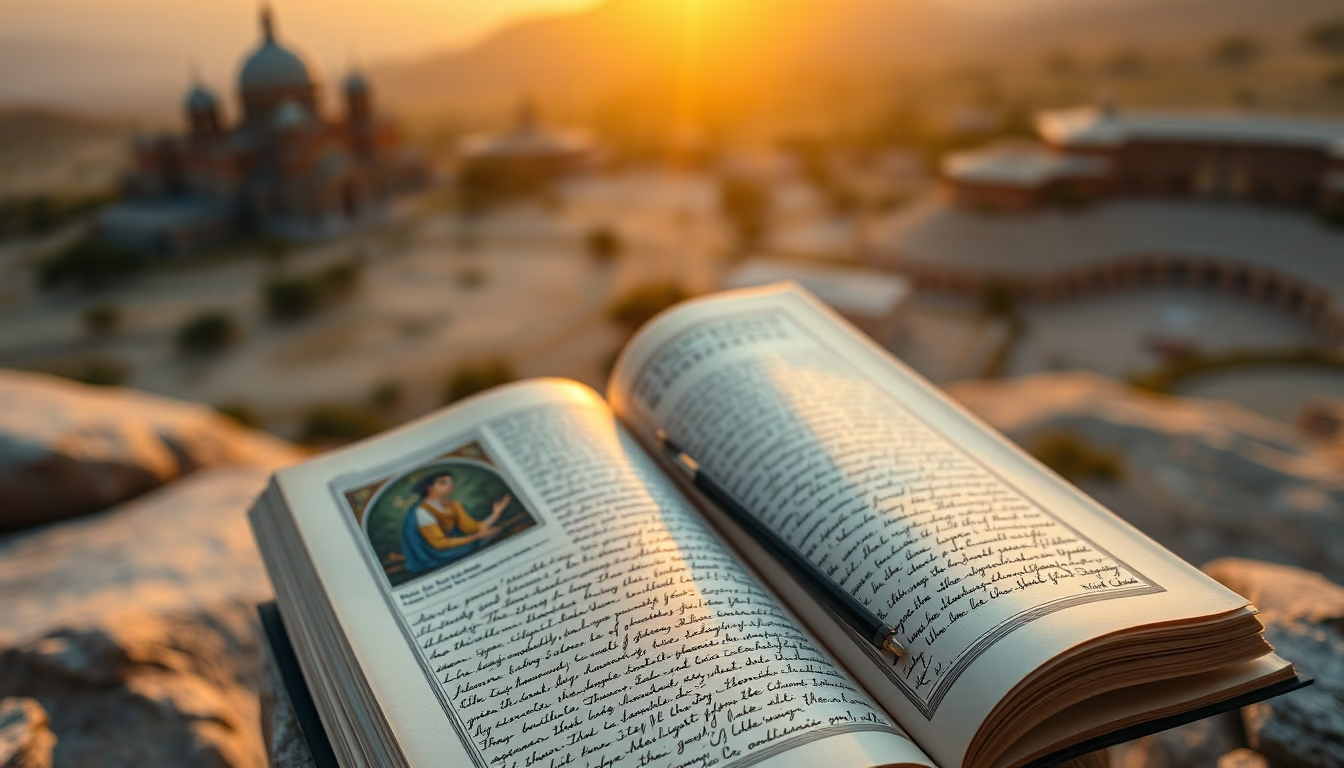
Illuminated manuscripts are medieval masterpieces that combine religious text with intricate decoration and vibrant colors.
About this subject
Illuminated manuscripts represent one of the most refined artistic expressions of the European Middle Ages, produced mainly between the 6th and 16th centuries. They consist of handwritten texts, usually of a religious nature, such as Bibles, books of hours, or psalters, adorned with illuminations, which are hand-painted decorations and ornaments. The term 'illuminated' derives from the use of gold and silver leaf that reflects light, creating a luminous effect. These works were created in monasteries and scriptoria, where monk scribes and illuminators meticulously worked on parchment (prepared animal skin) or vellum. Paints came from crushed minerals, such as lapis lazuli for blue, and organic pigments. The process was extremely costly and time-consuming, making each book a luxury object, often commissioned by kings, nobles, or ecclesiastical institutions.
The historical and cultural importance of these manuscripts is immense. They not only preserved much of classical and religious knowledge during the Middle Ages but also stand as testimonies to the evolution of art, calligraphy, and iconography. Notable examples include the Book of Kells (9th century, Ireland), famous for its intricate interlaced decoration and tiny details, and the Lindisfarne Gospels (8th century, England), which combine Insular art with Mediterranean influences. Additionally, illuminated manuscripts often incorporated historical and scientific elements, such as maps, astronomical diagrams, and bestiaries, reflecting the medieval worldview.
Today, these treasures are housed in libraries and museums around the world, accessible to the public through exhibitions and digital facsimiles. Institutions like the British Library, the National Library of France, and Trinity College Dublin hold exceptional collections. For travelers interested in art history, visiting these sites offers direct contact with the beauty and fragility of these objects. It is worth noting that each manuscript is unique, with regional and stylistic variations that reflect the cultural diversity of medieval Europe. Travel photography, such as this image, helps disseminate this heritage to a global audience.
Frequently Asked Questions
What is an illuminated manuscript?
It is a handwritten book decorated with illuminations, including paintings, ornaments, and often gold or silver leaf. They were produced by hand in the Middle Ages, mainly in monasteries, with religious or secular content.
How were illuminated manuscripts made?
They were written on parchment or vellum using inks made from minerals and plants. The illuminations were painted with fine brushes, and gold was applied as leaf. The process took months or years depending on complexity.
Where can I see illuminated manuscripts?
Major collections are at the British Library (London), the National Library of France (Paris), Trinity College (Dublin), and the Getty Museum (Los Angeles). Many are also digitized online for viewing.
Direct URL
https://pub-c7d6a6ea828543ac903a74a341ccb2e1.r2.dev/imagens/illuminated-manuscript-travel-photography-p10.avifHow to credit
Include a visible link back to UtilizAí. Copy one of the snippets below:
<a href="https://xn--utiliza-eza.com/en/midia/imagens/illuminated-manuscript-travel-photography-p10">Illuminated manuscript</a> by <a href="https://xn--utiliza-eza.com">UtilizAí</a>, licensed under <a href="https://creativecommons.org/licenses/by/4.0/">CC BY 4.0</a>.
[Illuminated manuscript](https://xn--utiliza-eza.com/en/midia/imagens/illuminated-manuscript-travel-photography-p10) by [UtilizAí](https://xn--utiliza-eza.com), CC BY 4.0
License: CC-BY-4.0