Illuminated manuscript
1344×768 · AVIF · CC BY 4.0
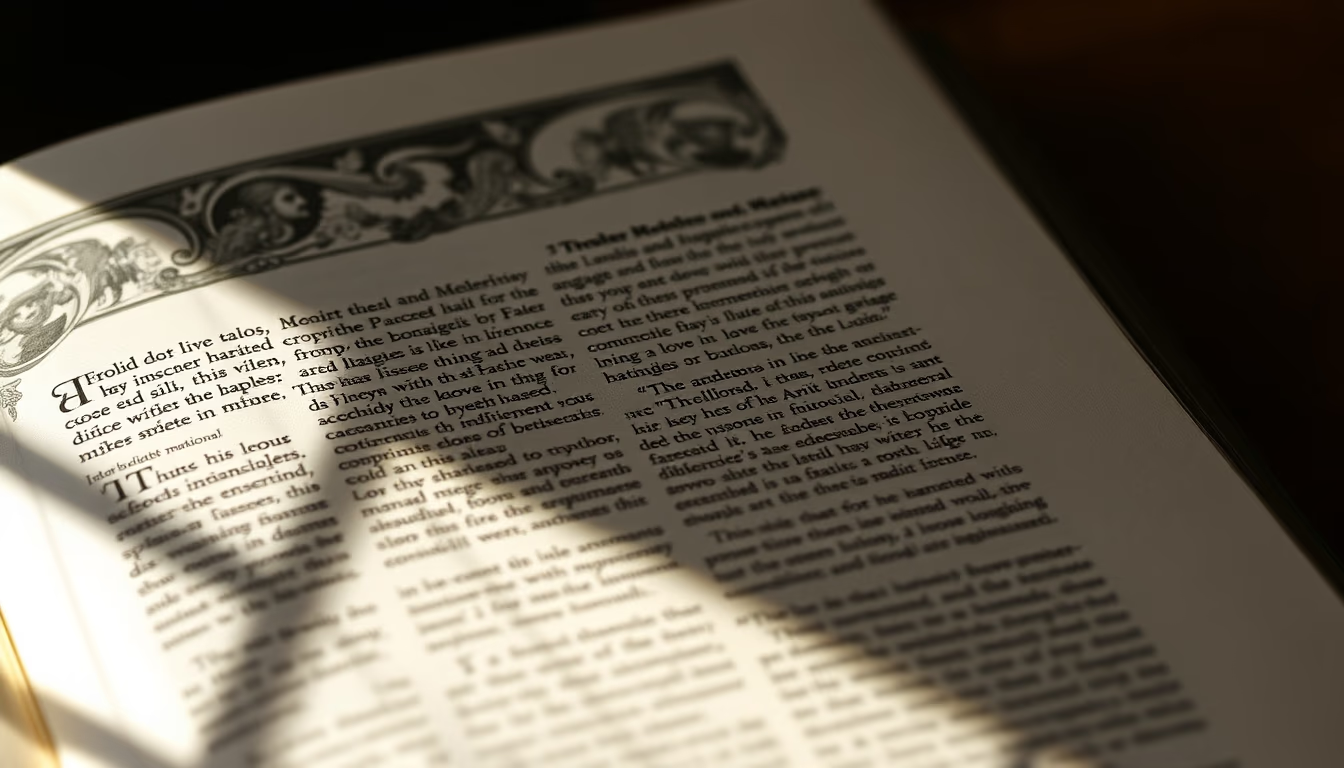
Illuminated manuscripts are hand-decorated books using gold, silver, and pigments, produced in medieval Europe from the 5th to 15th centuries.
About this subject
Illuminated manuscripts represent one of the most sophisticated forms of medieval art. They were produced by monks in monastic scriptoria or by lay artists in urban workshops, especially in Ireland, England, France, and Germany. The technique involved preparing parchment (animal skin), writing the text with iron-gall ink, and decorating with illuminations: ornate initial letters, miniatures, and detailed borders. Pigments were obtained from natural sources, such as ultramarine blue from lapis lazuli in Afghanistan and red from cinnabar or cochineal. Gold was applied in thin sheets, polished to shine.
The term 'illuminated' derives from Latin 'illuminare' (to light up), referring to the glow of gold and silver. The most famous manuscripts include the Book of Kells (9th century), the Lindisfarne Gospels (8th century), and the Grandes Chroniques de France. They were not only religious: there were also works on law, medicine, history, and philosophy. Each book could take years to complete, involving several craftsmen. Production declined after Gutenberg's invention of the printing press in 1450, but the art continued in books of hours and illuminated bibles until the 16th century.
Today, about 30,000 illuminated manuscripts survive, mainly in libraries and museums. The British Library, the French National Library, and the Getty Museum hold significant collections. Digital studies allow the visualization of microscopic details, revealing pigment techniques and historical wear. Preservation requires control of light, temperature, and humidity, as pigments are sensitive. Additionally, authenticity is verified by carbon dating and material analysis, as forgeries have existed since the 19th century.
Frequently Asked Questions
What is the oldest illuminated manuscript?
The oldest fragment is the Vergilius Augusteus (4th century), but the first complete book is the Codex Argenteus (6th century). The Book of Kells (9th century) is the most famous.
How were blue pigments made in manuscripts?
Ultramarine blue came from lapis lazuli, ground and mixed with wax or oil. Egyptian blue (artificial) was also used. Both were expensive and imported.
Why was gold used in illuminations?
Gold represented divine light and spiritual wealth. Its application required gilding and burnishing techniques to shine, highlighting the sacred text.
Direct URL
https://pub-c7d6a6ea828543ac903a74a341ccb2e1.r2.dev/imagens/illuminated-manuscript-documentary-photography-p1.avifHow to credit
Include a visible link back to UtilizAí. Copy one of the snippets below:
<a href="https://xn--utiliza-eza.com/en/midia/imagens/illuminated-manuscript-documentary-photography-p1">Illuminated manuscript</a> by <a href="https://xn--utiliza-eza.com">UtilizAí</a>, licensed under <a href="https://creativecommons.org/licenses/by/4.0/">CC BY 4.0</a>.
[Illuminated manuscript](https://xn--utiliza-eza.com/en/midia/imagens/illuminated-manuscript-documentary-photography-p1) by [UtilizAí](https://xn--utiliza-eza.com), CC BY 4.0
License: CC-BY-4.0