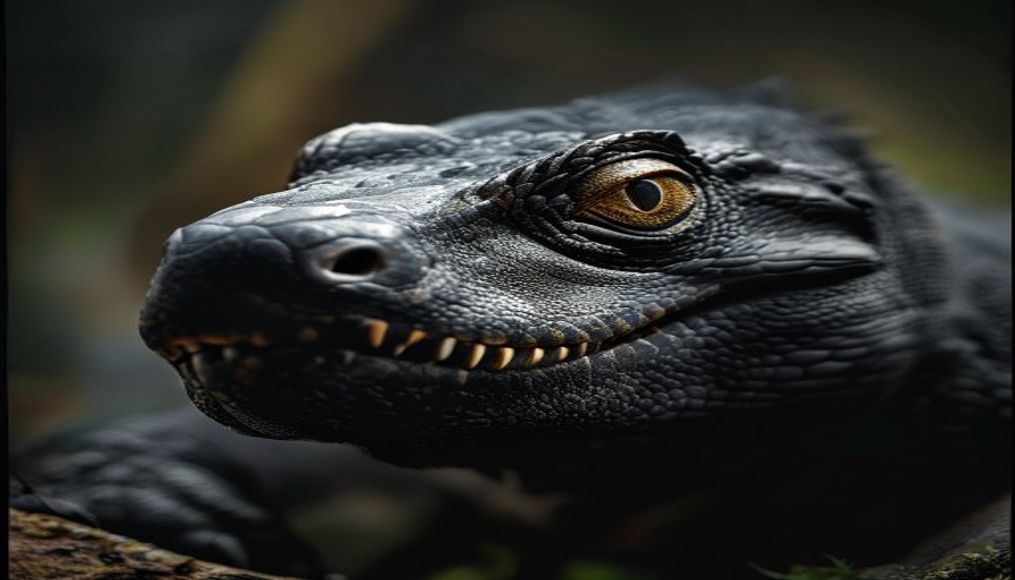
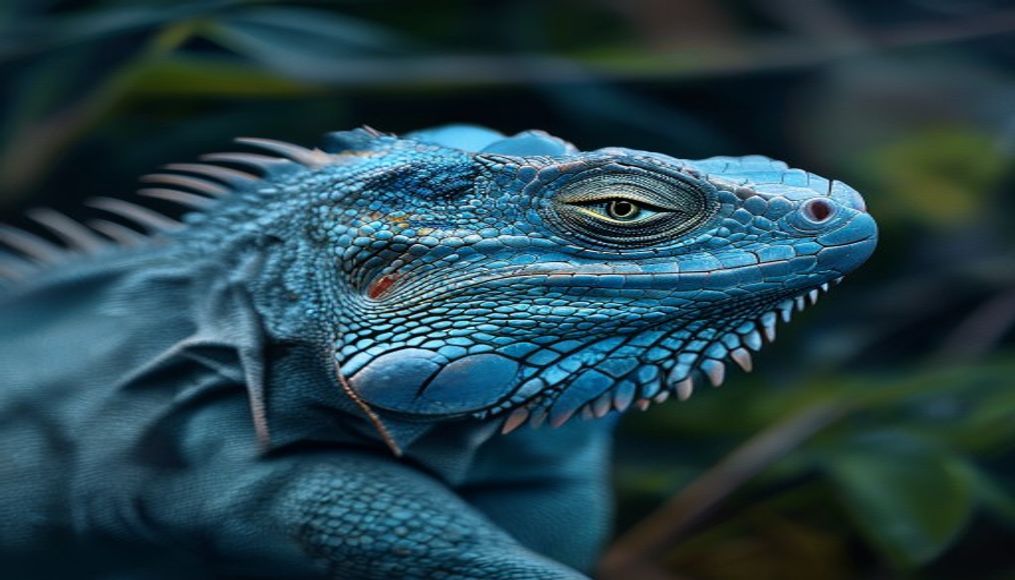
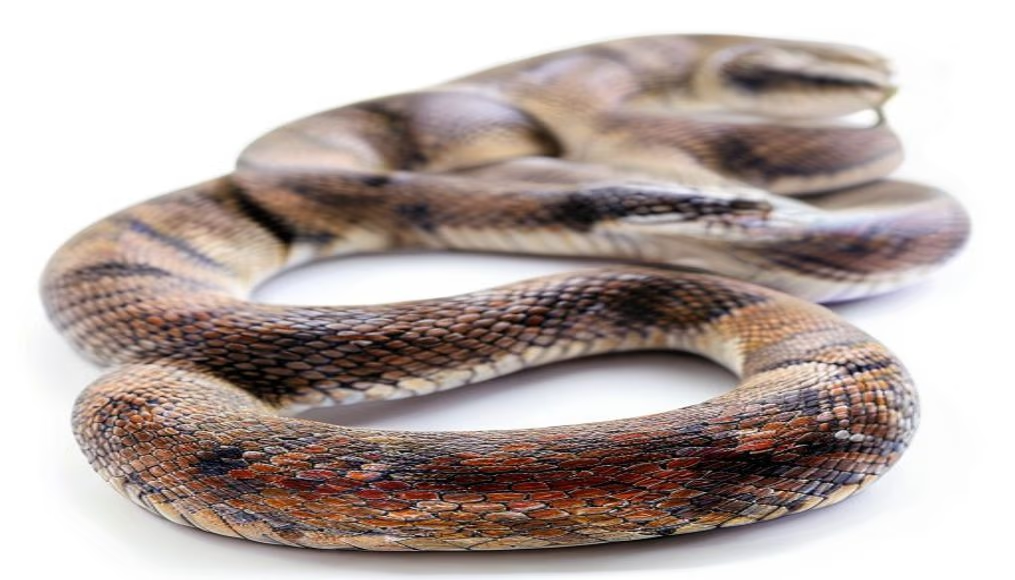
Iguana macro scales
1344×768 · AVIF · CC BY 4.0
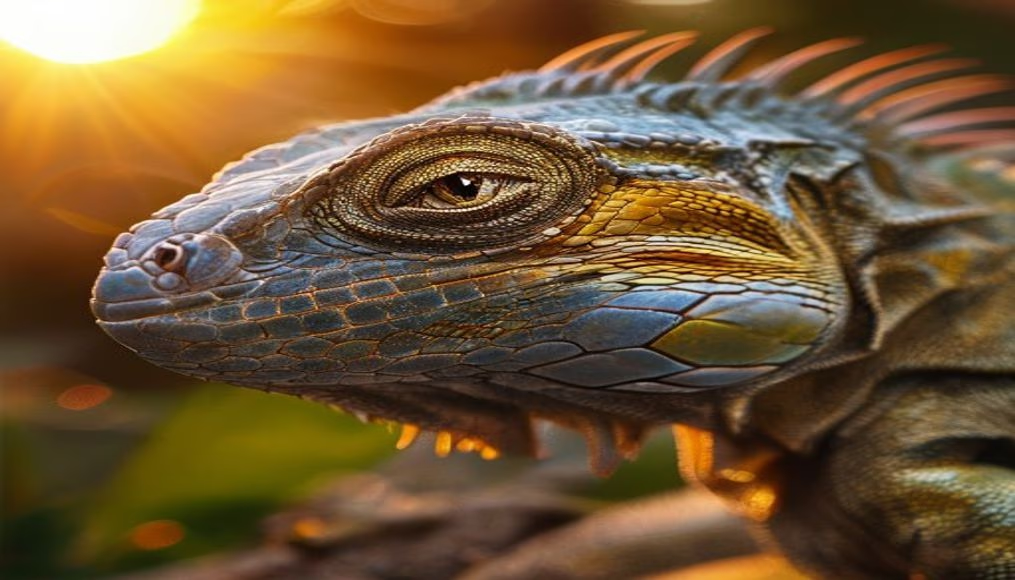
Iguana scales reveal a microarchitecture of keratin, colors and patterns that serve for camouflage and thermal regulation.
About this subject
Iguana scales are epidermal structures composed mainly of keratin, the same protein found in human nails and hair. They grow in overlapping patterns, forming a physical barrier against predators, parasites, and water loss. Each scale has a specific shape: in green iguanas (Iguana iguana), dorsal scales are keeled with a central ridge, while ventral scales are smooth and smaller. This variation allows flexibility and differentiated protection.
The coloration of the scales is determined by pigments such as melanin and carotenoids, as well as nanometric structures that refract light, producing shades of green, blue, or brown. During shedding, the iguana replaces the superficial layer of scales in patches, a process called ecdysis. Frequency depends on age, growth, and health. In captivity, adequate humidity is essential for complete shedding.
Beyond defense, scales participate in thermoregulation. Dark scales absorb more heat, useful in cooler environments, while light scales reflect solar radiation. Some species have modified scales into spines on the head and back, offering extra protection against bird or mammal attacks. These structures may also have a social function, such as in displays during mating rituals.
Interestingly, iguana scales are sensitive to touch thanks to nerve endings at their base. This allows the animal to detect physical contacts, such as those from a predator or a mate. In some species, scales around the eyes and nostrils are especially innervated, aiding environmental perception. Macrophotography of these details reveals a complexity that goes beyond aesthetics, showing sophisticated evolutionary adaptations.
Frequently Asked Questions
Do iguana scales grow throughout life?
Yes, scales grow continuously, but growth is slow and interrupted by periodic shedding. The iguana does not shed all scales at once, but in patches.
Why do iguana scales have different colors?
Colors come from pigments (melanin, carotenoids) and structures that refract light. The main function is camouflage, but they can also signal health or reproductive status.
Is it normal for an iguana to lose loose scales?
Yes, it is part of ecdysis (skin shedding). During the process, pieces of scales come off. If there is retention, it may indicate humidity or nutrition problems.
Direct URL
https://pub-c7d6a6ea828543ac903a74a341ccb2e1.r2.dev/imagens/iguana-macro-scales-cinematic-wide-shot-p1.avifHow to credit
Include a visible link back to UtilizAí. Copy one of the snippets below:
<a href="https://xn--utiliza-eza.com/en/midia/imagens/iguana-macro-scales-cinematic-wide-shot-p1">Iguana macro scales</a> by <a href="https://xn--utiliza-eza.com">UtilizAí</a>, licensed under <a href="https://creativecommons.org/licenses/by/4.0/">CC BY 4.0</a>.
[Iguana macro scales](https://xn--utiliza-eza.com/en/midia/imagens/iguana-macro-scales-cinematic-wide-shot-p1) by [UtilizAí](https://xn--utiliza-eza.com), CC BY 4.0
License: CC-BY-4.0