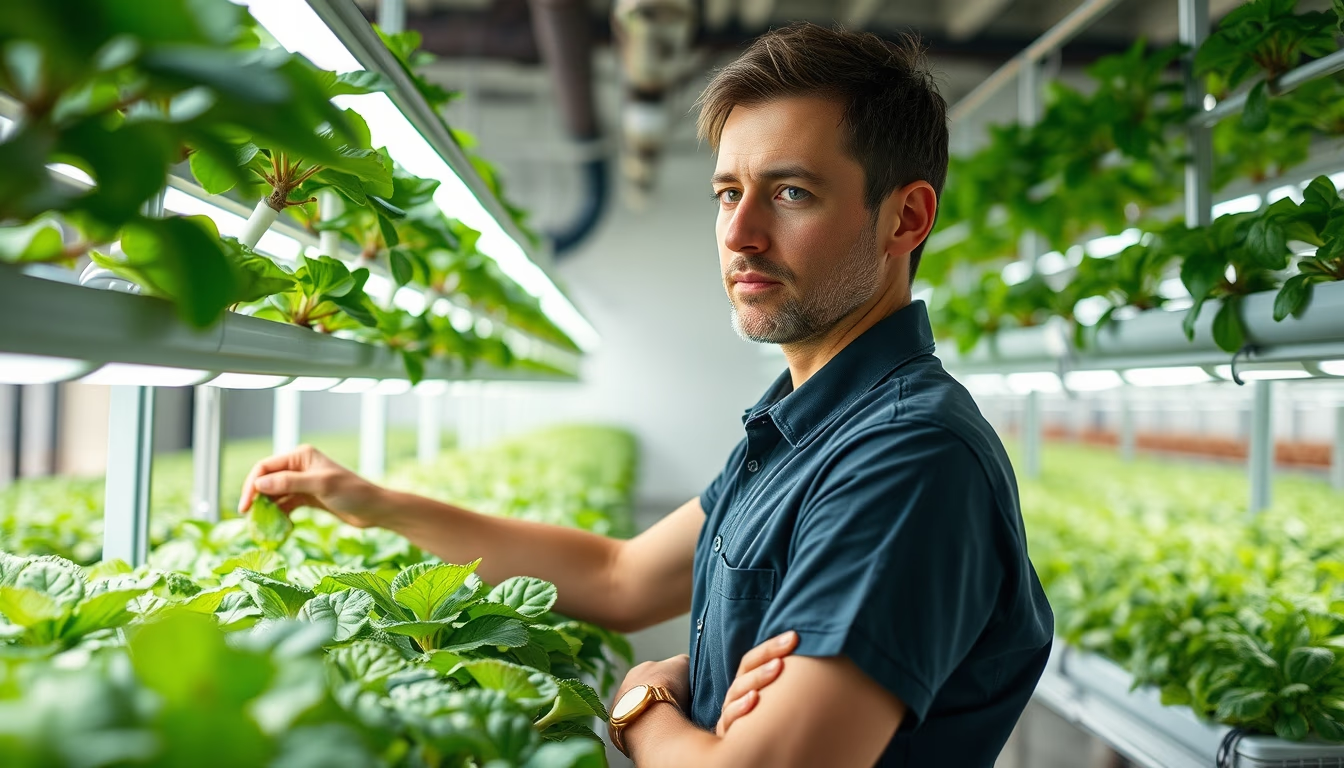
Hydroponic vertical farm
1344×768 · AVIF · CC BY 4.0
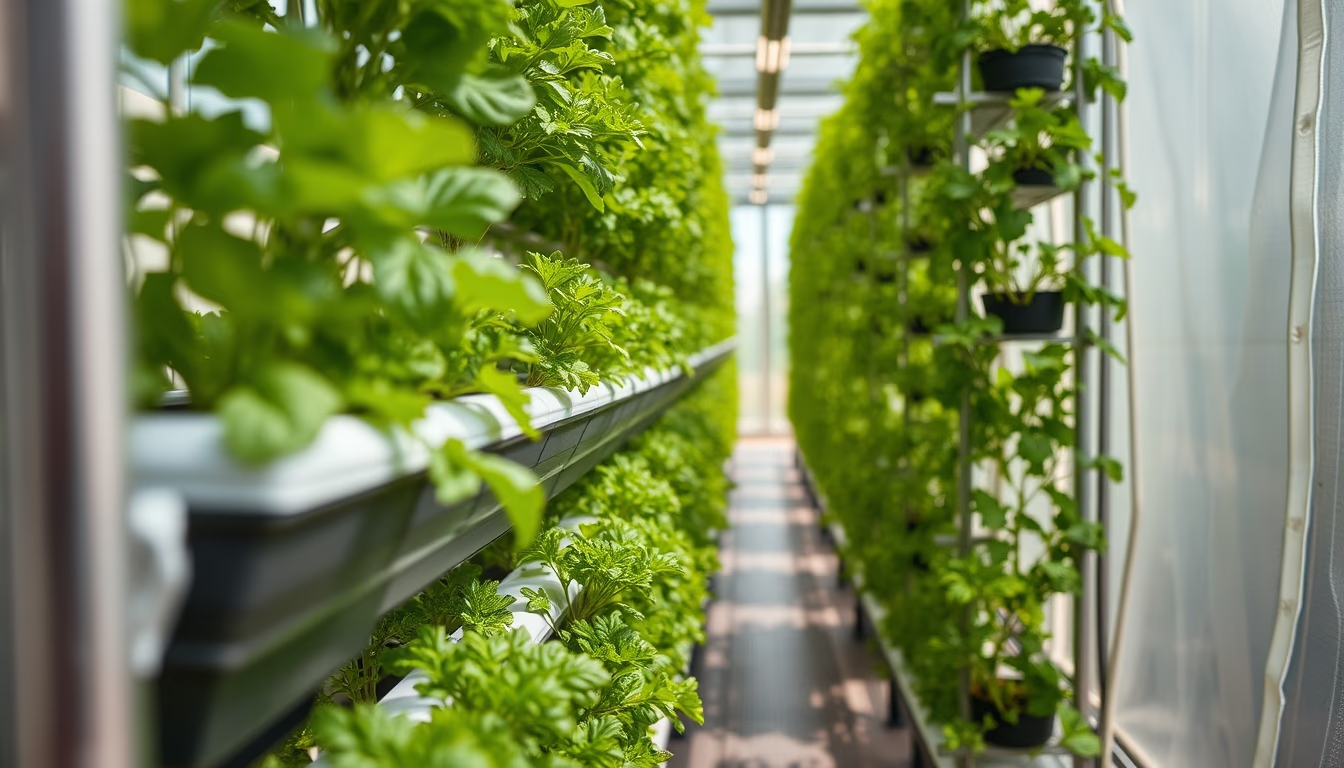
Hydroponic vertical farming: an innovative agricultural technique saving water and space, producing fresh food in urban areas.
About this subject
Hydroponic vertical farming is a soilless cultivation system where plants grow in stacked vertical structures, with roots immersed in a nutrient-rich water solution. This method eliminates the need for arable land and allows year-round production regardless of external weather conditions. Modern techniques gained traction in the early 2000s, driven by advances in LED lighting and automation, but the concept of vertical cultivation dates back to the Hanging Gardens of Babylon, one of the Seven Wonders of the Ancient World.
Today, hydroponic vertical farms operate in major urban centers like Tokyo, Singapore, and New York, where space is limited and demand for fresh food is high. Systems can be installed in shipping containers, warehouses, or even skyscrapers. One of the biggest advantages is water efficiency: while conventional agriculture uses about 70% of global freshwater, hydroponic vertical farming uses up to 90% less water because the nutrient solution is recirculated and reused. Additionally, the controlled environment eliminates the need for pesticides, resulting in healthier food with a lower environmental footprint.
In Brazil, adoption is still modest but growing. Companies in São Paulo and Brasília already operate vertical farms that supply greens and herbs to restaurants and supermarkets. The technique is also used in research projects by Embrapa, which studies varieties adapted to tropical climates. A local challenge is the high cost of electricity, as artificial lighting is essential in indoor setups. Nevertheless, vertical hydroponics is seen as a promising solution for food security in densely populated cities, especially as technology costs decline and sustainability awareness increases.
Interestingly, this method is not limited to leafy greens. Tomatoes, strawberries, bell peppers, and even root vegetables like carrots have been successfully grown in vertical hydroponic systems. Plant selection depends on the height of the structures and light intensity. In resorts and hospitals, small vertical gardens provide fresh herbs and microgreens, adding gastronomic and therapeutic value. With ongoing urbanization, hydroponic vertical farming represents an important frontier for sustainable, high-quality food production.
Frequently Asked Questions
How does vertical hydroponics work?
Vertical hydroponics uses stacked structures where plants grow with roots immersed in a nutrient solution, without soil. Water and nutrients are recirculated, and artificial lighting (usually LEDs) replaces sunlight, allowing full environmental control.
What are the main advantages of this system?
Up to 90% water savings compared to traditional agriculture, elimination of pesticides, year-round continuous production, reduced transportation distances when installed in urban areas, and more efficient use of space.
Where are vertical hydroponic farms already operating in Brazil?
There are projects in São Paulo and Brasília, supplying greens to restaurants and supermarkets. Embrapa also conducts research to adapt crops to tropical climates, but the technology is still incipient and faces challenges such as energy costs.
Direct URL
https://pub-c7d6a6ea828543ac903a74a341ccb2e1.r2.dev/imagens/hydroponic-vertical-farm-national-geographic-style-p1.avifHow to credit
Include a visible link back to UtilizAí. Copy one of the snippets below:
<a href="https://xn--utiliza-eza.com/en/midia/imagens/hydroponic-vertical-farm-national-geographic-style-p1">Hydroponic vertical farm</a> by <a href="https://xn--utiliza-eza.com">UtilizAí</a>, licensed under <a href="https://creativecommons.org/licenses/by/4.0/">CC BY 4.0</a>.
[Hydroponic vertical farm](https://xn--utiliza-eza.com/en/midia/imagens/hydroponic-vertical-farm-national-geographic-style-p1) by [UtilizAí](https://xn--utiliza-eza.com), CC BY 4.0
License: CC-BY-4.0