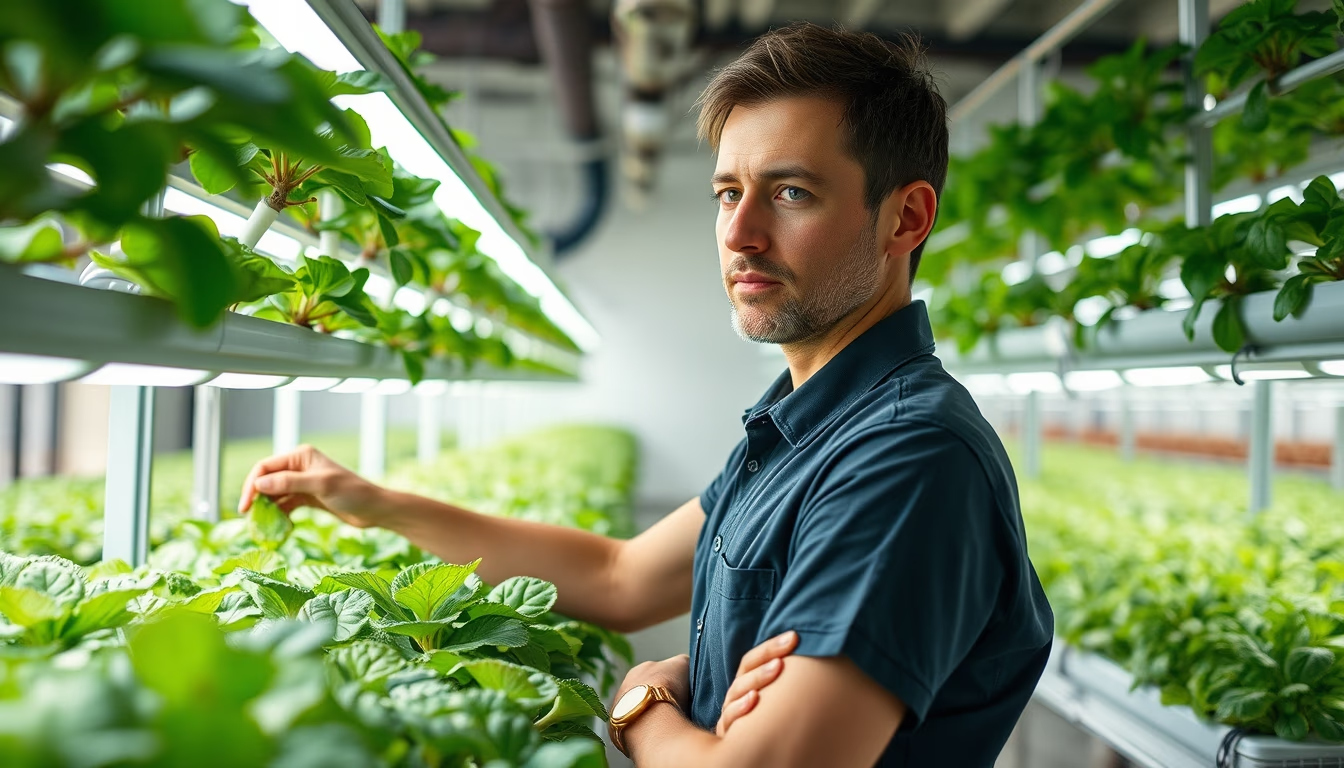
Hydroponic vertical farm
1344×768 · AVIF · CC BY 4.0

Hydroponic vertical farms revolutionize urban agriculture with soilless cultivation in controlled environments, providing sustainable fresh food production.
About this subject
Hydroponic vertical farms represent a paradigm shift in agriculture, combining vertical stacking of crops with hydroponic systems that deliver nutrient-rich water directly to plant roots. Unlike traditional farming, no soil is used; instead, inert media like coconut coir or rockwool support the plants, while automated pumps circulate a precisely balanced nutrient solution. This method uses up to 90% less water than conventional agriculture and eliminates the need for chemical pesticides, as the controlled indoor environment prevents pest infestations. Crops grow faster due to optimized light, temperature, and humidity, yielding multiple harvests per year.
These farms are particularly impactful in urban areas, where they reduce food miles and provide fresh produce locally. Cities like Singapore, Tokyo, and New York have embraced vertical farming to increase food security. For example, Singapore's Sky Greens uses vertical towers to grow leafy greens, producing ten times more per land area than traditional methods. Similarly, AeroFarms in Newark, New Jersey, operates one of the world's largest vertical farms, using aeroponics to mist roots with nutrients. The technology is also gaining traction in Brazil, with startups like Pink Farms and Bem Agro developing systems tailored to local climates.
Beyond efficiency, hydroponic vertical farms offer resilience against climate change. They are immune to droughts, floods, and soil degradation, making them ideal for arid regions or areas with poor soil quality. The controlled environment allows year-round production regardless of weather. Additionally, these farms often use LED lighting powered by renewable energy, further reducing their carbon footprint. The potential for hyperlocal food production in cities could transform supply chains, reducing reliance on long-distance transportation and refrigeration.
Challenges remain: high initial capital costs, energy consumption for lighting, and the need for technical expertise. However, innovations in automation, AI-driven monitoring, and cheaper LED fixtures are driving costs down. Governments and investors are recognizing vertical farming as a key component of sustainable urban development. As the global population grows and arable land shrinks, hydroponic vertical farms offer a viable path toward food security and environmental stewardship.
Frequently Asked Questions
How does a hydroponic vertical farm work?
Instead of soil, plants are grown in stacked trays or towers with an inert medium, and their roots receive a circulating nutrient solution. LED lights simulate sunlight, and sensors control temperature and humidity, enabling intensive cultivation in small spaces.
What are the main advantages over traditional agriculture?
Water savings of up to 90%, no pesticides, reduced land use, year-round harvests, and elimination of long-distance transport, resulting in fresher food with a lower carbon footprint.
Which crops are most common in this system?
Leafy greens like lettuce, arugula, and spinach, along with herbs such as basil and mint. Strawberries, cherry tomatoes, and microgreens are also grown. Root crops and grains remain challenging due to vertical space and costs.
Direct URL
https://pub-c7d6a6ea828543ac903a74a341ccb2e1.r2.dev/imagens/hydroponic-vertical-farm-high-fashion-editorial-p2.avifHow to credit
Include a visible link back to UtilizAí. Copy one of the snippets below:
<a href="https://xn--utiliza-eza.com/en/midia/imagens/hydroponic-vertical-farm-high-fashion-editorial-p2">Hydroponic vertical farm</a> by <a href="https://xn--utiliza-eza.com">UtilizAí</a>, licensed under <a href="https://creativecommons.org/licenses/by/4.0/">CC BY 4.0</a>.
[Hydroponic vertical farm](https://xn--utiliza-eza.com/en/midia/imagens/hydroponic-vertical-farm-high-fashion-editorial-p2) by [UtilizAí](https://xn--utiliza-eza.com), CC BY 4.0
License: CC-BY-4.0