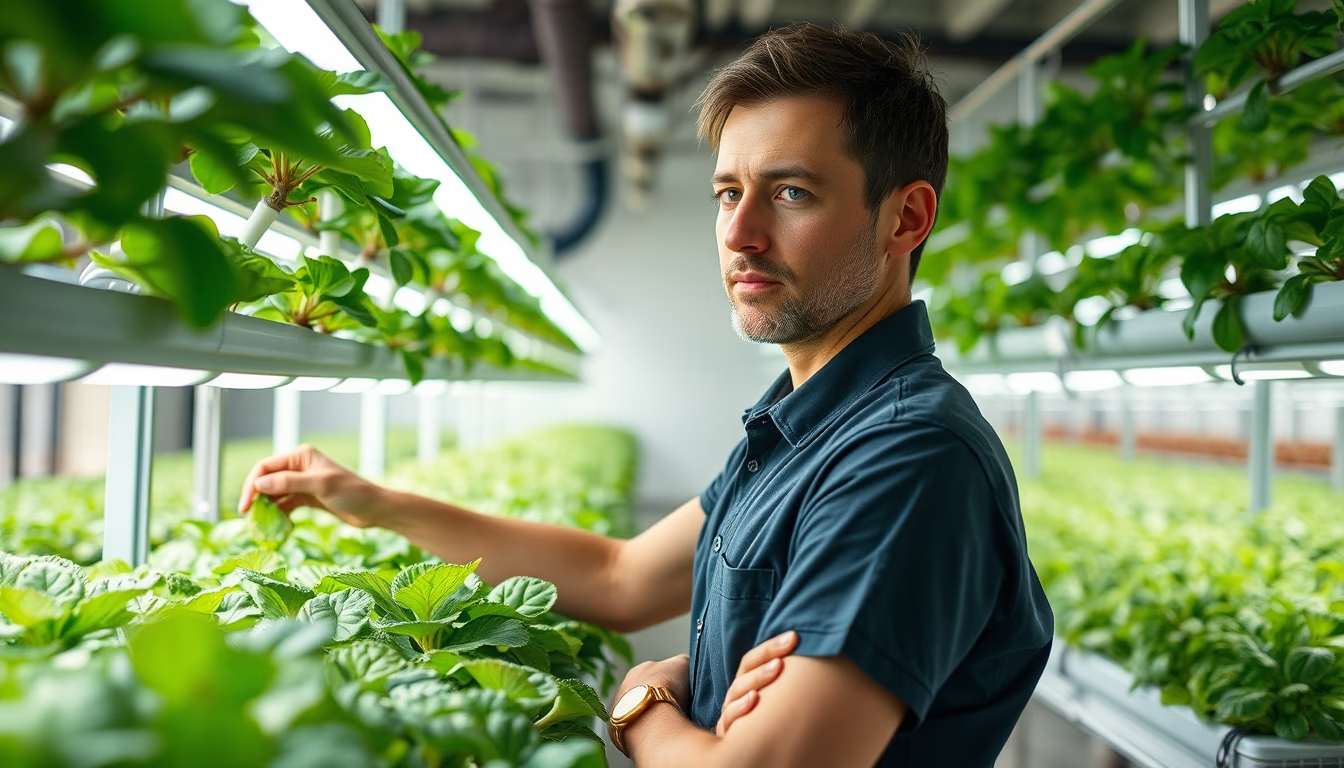
Hydroponic vertical farm
1344×768 · AVIF · CC BY 4.0
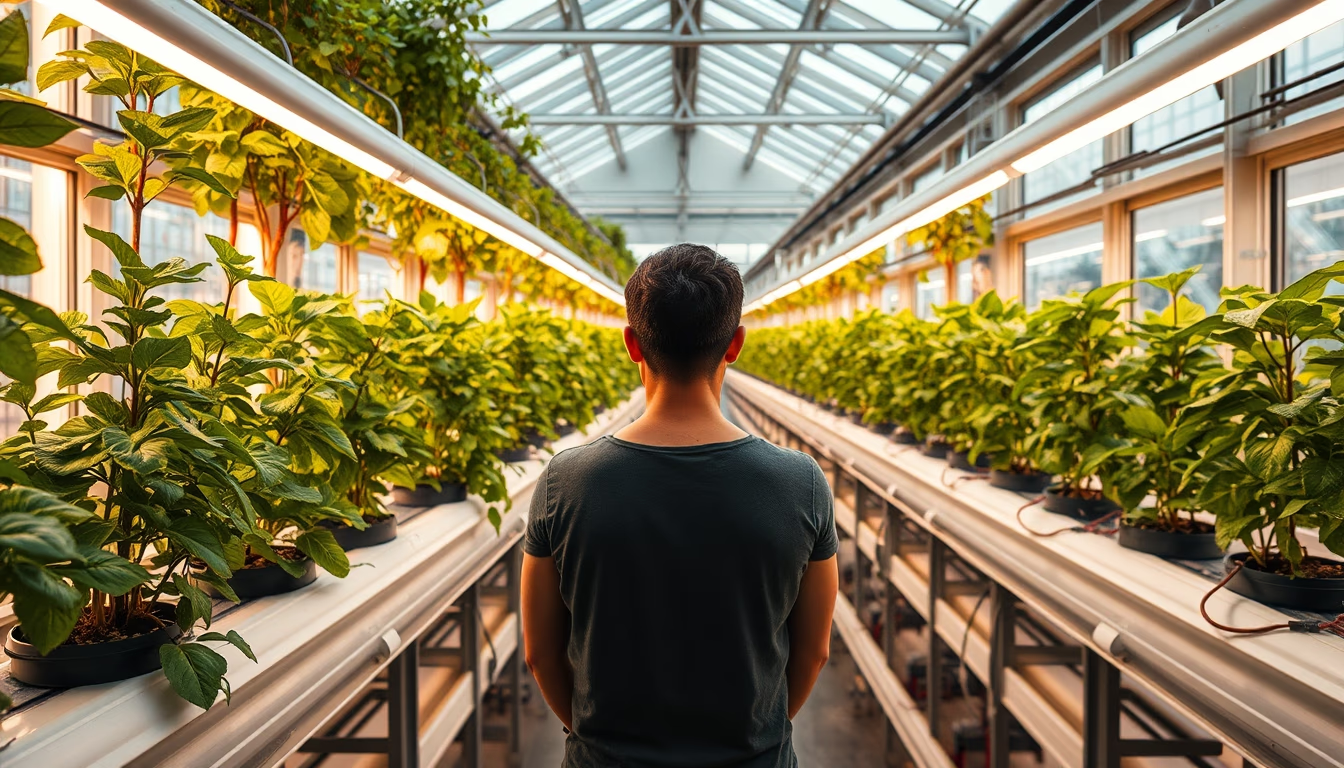
Hydroponic vertical farming combines stacked growing systems in controlled environments to efficiently produce food in urban areas.
About this subject
Hydroponic vertical farms represent a breakthrough in food production, where plants grow in stacked layers without soil, using nutrient-rich water solutions. This method, widely adopted in cities like Singapore and New York, enables year-round cultivation regardless of outdoor climate. LED lighting systems simulate solar spectra, optimizing photosynthesis and reducing energy consumption by up to 60% compared to traditional greenhouses.
Water efficiency is a major draw: hydroponics uses up to 95% less water than conventional agriculture, as the solution is recirculated. This is critical in arid regions or where water is scarce. Additionally, the absence of soil eliminates the need for pesticides, resulting in cleaner, safer food. Companies like AeroFarms and Infarm lead the sector, with vertical farms installed in repurposed warehouses and even shipping containers.
Architecturally, these structures require designs that integrate ventilation, temperature control, and energy efficiency. Glass facades and modular systems are common, allowing vertical expansion on limited land. NASA studies hydroponics for long-duration space missions, aiming for self-sustaining crops on Mars or the International Space Station. Experiments with lettuce and tomatoes in microgravity have already succeeded.
Interestingly, the first large-scale hydroponic vertical farm opened in 2012 in Singapore, driven by the country's 90% dependence on food imports. Since then, the model has spread to countries like Japan, the Netherlands, and Brazil, where startups adapt systems for leafy greens such as arugula and basil. The trend for 2026 points to integration with solar power and artificial intelligence, automating plant nutrition and harvesting.
Frequently Asked Questions
How does a hydroponic vertical farm work?
Plants are grown in vertical layers without soil, with roots immersed in or misted with a nutrient solution. LED lighting and climate control systems optimize growth conditions.
What are the advantages over traditional agriculture?
Water savings of up to 95%, year-round production, no pesticides, reduced land use, and proximity to urban centers, lowering logistics costs and emissions.
Which crops can be grown in vertical hydroponics?
Leafy greens (lettuce, arugula, spinach), herbs (basil, mint), strawberries, and cherry tomatoes are common. Root crops and grains remain challenging due to space and support requirements.
Direct URL
https://pub-c7d6a6ea828543ac903a74a341ccb2e1.r2.dev/imagens/hydroponic-vertical-farm-architectural-photography-p3.avifHow to credit
Include a visible link back to UtilizAí. Copy one of the snippets below:
<a href="https://xn--utiliza-eza.com/en/midia/imagens/hydroponic-vertical-farm-architectural-photography-p3">Hydroponic vertical farm</a> by <a href="https://xn--utiliza-eza.com">UtilizAí</a>, licensed under <a href="https://creativecommons.org/licenses/by/4.0/">CC BY 4.0</a>.
[Hydroponic vertical farm](https://xn--utiliza-eza.com/en/midia/imagens/hydroponic-vertical-farm-architectural-photography-p3) by [UtilizAí](https://xn--utiliza-eza.com), CC BY 4.0
License: CC-BY-4.0