Hydroelectric dam from above
1344×768 · AVIF · CC BY 4.0
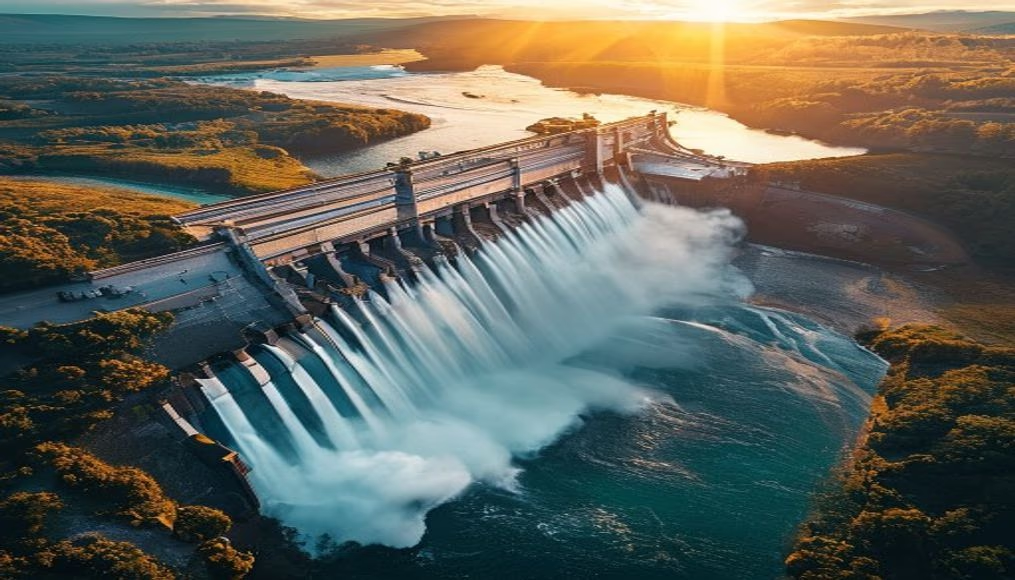
Aerial view of a hydroelectric dam, showcasing the massive structure and water reservoir. Travel photography image.
About this subject
Hydroelectric dams are structures built to dam rivers and create water reservoirs. The stored water is released in a controlled manner through turbines, generating electricity from the kinetic energy of the flow. These plants are renewable energy sources and play a crucial role in the electrical grids of many countries, such as Brazil, China, and Canada.
The construction of a hydroelectric dam involves complex engineering, including the dam foundation, spillway for flood control, and the powerhouse with generators. The resulting reservoir can extend for kilometers, altering the local landscape and impacting ecosystems and riverside communities. On the other hand, the generated energy is clean and can supply millions of homes.
In Brazil, the Itaipu Dam on the Paraná River is one of the largest in the world, with a capacity of 14 GW. The Three Gorges Dam in China is the largest in terms of installed capacity. Although they are reliable energy sources, hydroelectric projects often face environmental and social debates due to the flooding of vast areas and the displacement of populations.
Aerial photographs reveal the magnitude of these infrastructure works, showing the dam's geometry, the reservoir's water surface, and the natural or urban surroundings. Images like this are common in travel and engineering photography collections, highlighting the interaction between technology and landscape.
Frequently Asked Questions
How does a hydroelectric dam generate electricity?
Water from the reservoir flows through tunnels to spin turbines. The turbines drive generators that produce electricity, which is then transmitted via power lines.
What are the main environmental impacts of a hydroelectric dam?
Flooding large areas can destroy habitats, release greenhouse gases from submerged organic matter, and affect aquatic life. It can also displace human communities.
Which is the largest hydroelectric dam in Brazil by installed capacity?
Itaipu Dam, located on the Paraná River at the border with Paraguay, has a capacity of 14,000 MW. It is currently the second largest in the world, behind China's Three Gorges Dam.
Direct URL
https://pub-c7d6a6ea828543ac903a74a341ccb2e1.r2.dev/imagens/hydroelectric-dam-from-above-travel-photography-v10.avifHow to credit
Include a visible link back to UtilizAí. Copy one of the snippets below:
<a href="https://xn--utiliza-eza.com/en/midia/imagens/hydroelectric-dam-from-above-travel-photography-v10">Hydroelectric dam from above</a> by <a href="https://xn--utiliza-eza.com">UtilizAí</a>, licensed under <a href="https://creativecommons.org/licenses/by/4.0/">CC BY 4.0</a>.
[Hydroelectric dam from above](https://xn--utiliza-eza.com/en/midia/imagens/hydroelectric-dam-from-above-travel-photography-v10) by [UtilizAí](https://xn--utiliza-eza.com), CC BY 4.0
License: CC-BY-4.0