Hydroelectric dam from above
1344×768 · AVIF · CC BY 4.0
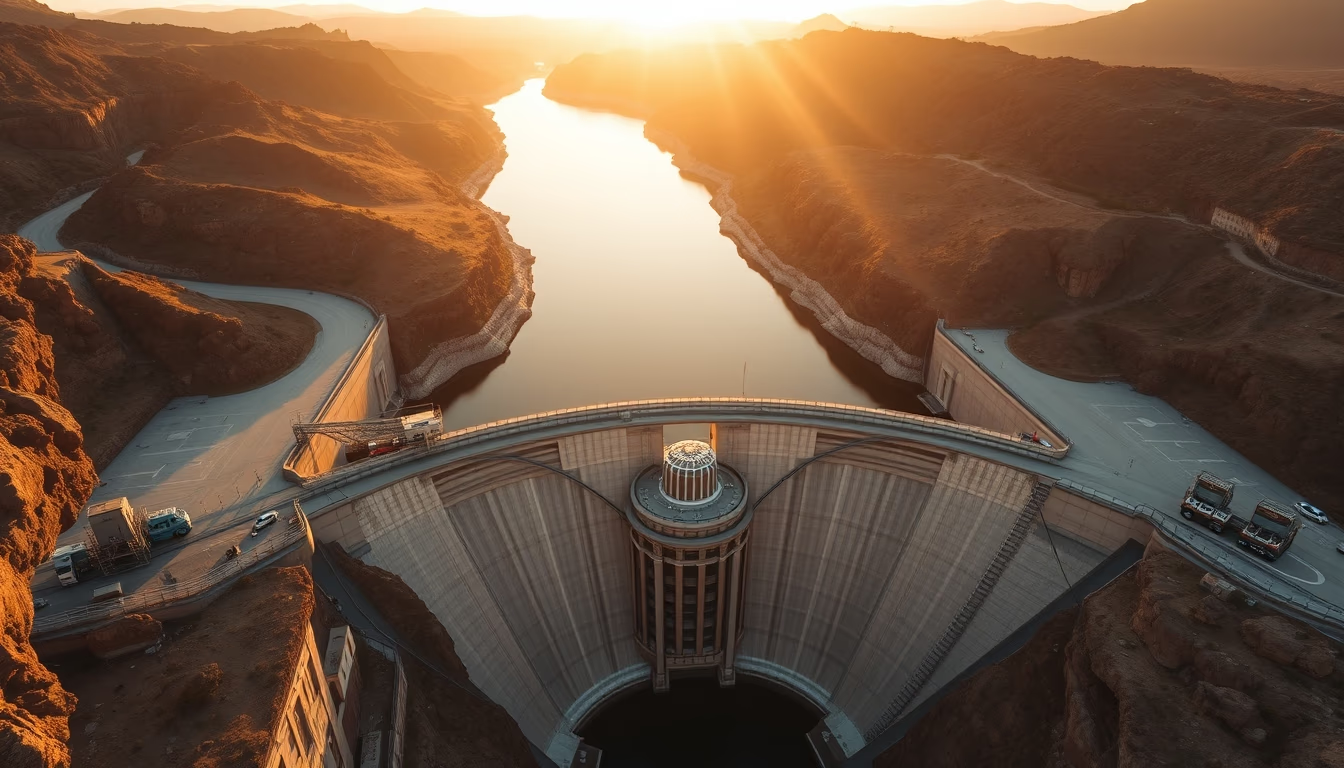
Aerial view of a hydroelectric dam, showing its concrete structure, spillway, and water reservoir.
About this subject
Hydroelectric dams are structures designed to impound water and generate electricity through the potential energy of falling water. The image shows a typical concrete dam with a spillway that controls excess water flow. The upstream reservoir can stretch for kilometers, flooding valleys and creating artificial lakes.
In Brazil, hydroelectric plants account for about 60% of the electricity matrix, with highlights being Itaipu (14 GW) and Belo Monte (11 GW). The dam in the image has an average capacity of 2 GW, enough to power a city of 2 million people. Construction involves reinforced concrete, steel, and Francis or Kaplan turbine systems.
The spillway is essential for safety: it prevents water from overtopping the dam during floods. Some dams have stepped spillways to dissipate energy. Water released from the spillway can create mist and loud noise. The reservoir also allows recreation like fishing and water sports but causes environmental impacts such as flooding forests and displacing communities.
Fun fact: the world's first hydroelectric plant was in Appleton, USA (1882), with only 12.5 kW. Today, the largest is the Three Gorges Dam in China, at 22.5 GW. In Brazil, the first plant was Ribeirão das Lajes, in 1908, in Rio de Janeiro. The image captures the monumental scale of these structures, combining engineering, hydrology, and environmental management.
Frequently Asked Questions
How does a hydroelectric dam work?
Water from the reservoir is released through gates and flows through turbines, which spin and drive electrical generators. The kinetic energy of the water is converted into electrical energy.
What is the largest hydroelectric plant in Brazil?
Itaipu Binacional, with 14 GW of installed capacity, located on the border with Paraguay. It was considered one of the Seven Wonders of the Modern World.
What are the environmental impacts of a dam?
Flooding of large areas, displacement of communities, alteration of aquatic ecosystems, methane emissions from decomposing submerged organic matter, and habitat fragmentation.
Direct URL
https://pub-c7d6a6ea828543ac903a74a341ccb2e1.r2.dev/imagens/hydroelectric-dam-from-above-cinematic-wide-shot-v2.avifHow to credit
Include a visible link back to UtilizAí. Copy one of the snippets below:
<a href="https://xn--utiliza-eza.com/en/midia/imagens/hydroelectric-dam-from-above-cinematic-wide-shot-v2">Hydroelectric dam from above</a> by <a href="https://xn--utiliza-eza.com">UtilizAí</a>, licensed under <a href="https://creativecommons.org/licenses/by/4.0/">CC BY 4.0</a>.
[Hydroelectric dam from above](https://xn--utiliza-eza.com/en/midia/imagens/hydroelectric-dam-from-above-cinematic-wide-shot-v2) by [UtilizAí](https://xn--utiliza-eza.com), CC BY 4.0
License: CC-BY-4.0