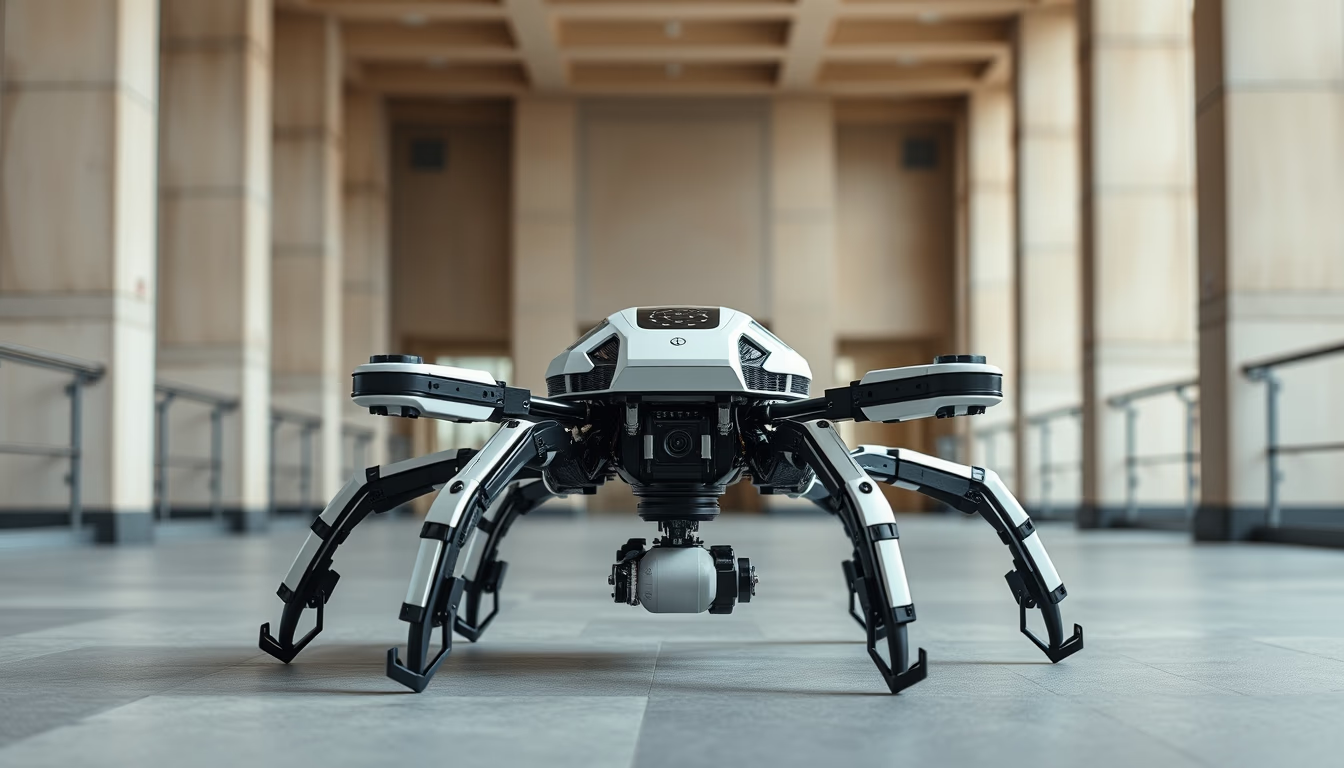
Hexapod robot moving
1344×768 · AVIF · CC BY 4.0
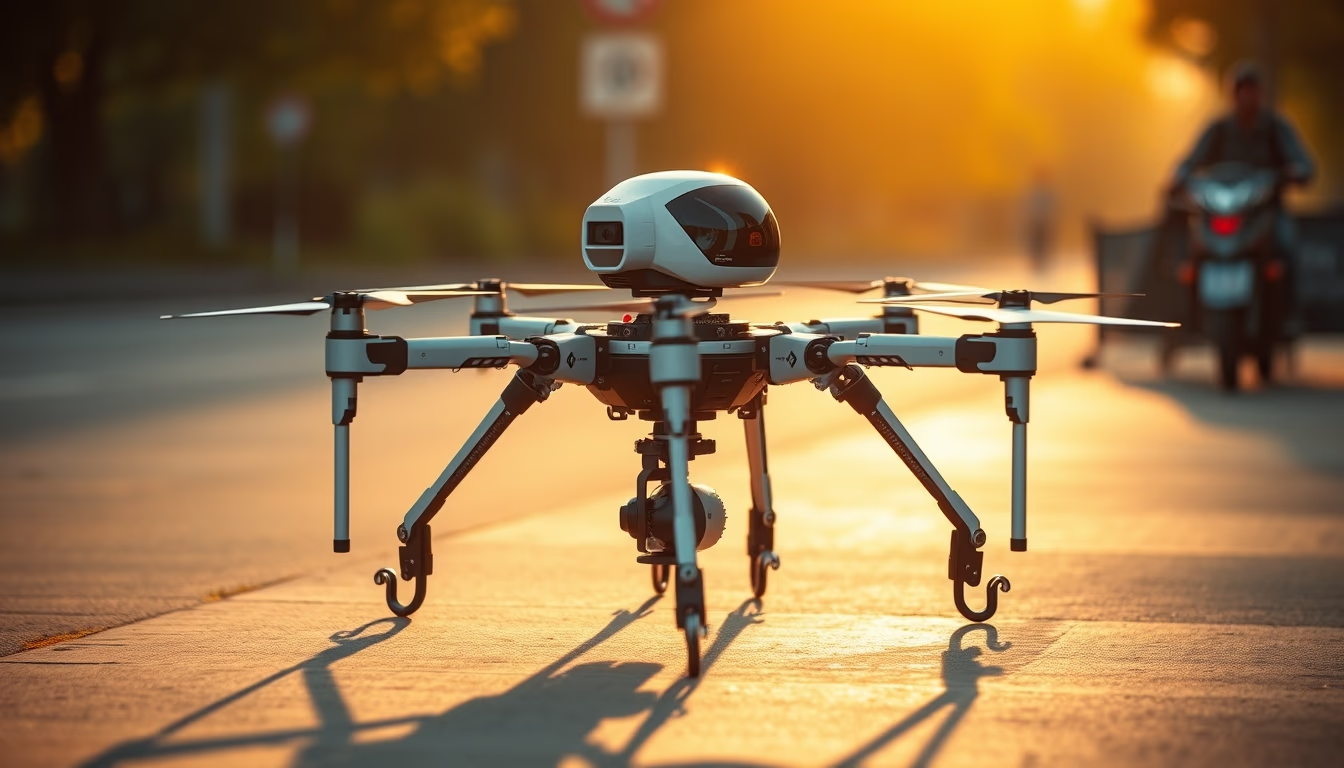
Hexapods are six-legged robots inspired by insects, capable of stable locomotion on uneven terrain, combining biological principles and control engineering.
About this subject
Hexapod robots are designed with six articulated legs, inspired by the locomotion of insects such as cockroaches and ants. This configuration offers significant advantages in rugged environments, as the robot can maintain balance even if one or two legs lose contact with the ground. Unlike wheeled or tracked robots, hexapods can climb over obstacles, traverse rubble, and operate on soft or slippery terrain.
Development of hexapods dates back to the 1980s and 1990s, with projects like the RHex robot from the University of Pennsylvania, which used simple rotating legs to achieve high speed and energy efficiency. Another notable example is Lauron, created by the Karlsruhe Institute of Technology, which employs adaptive gait algorithms to adjust its step according to the terrain. These robots often use inertial sensors, cameras, and control systems based on neural networks or fuzzy logic to coordinate leg movement.
Applications of hexapods are diverse. In planetary exploration, prototypes are tested as alternatives to wheeled rovers for handling irregular surfaces on Mars or the Moon. In search and rescue operations, they can access disaster areas where conventional vehicles cannot, such as piles of concrete or unstable terrain. In precision agriculture, some projects use hexapods for monitoring crops on uneven soil, reducing soil compaction compared to tractors. Despite advances, gait control remains challenging, requiring substantial computing power to coordinate each leg individually and react to rapid environmental changes.
Frequently Asked Questions
How many legs does a hexapod robot have?
A hexapod has exactly six legs, providing static and dynamic stability, allowing it to move even with one or two legs lifted.
How do hexapods control leg movement?
They use gait control algorithms, such as the tripod (three legs on the ground at a time) or wave gait. Sensors and feedback systems adjust the angle and force of each leg in real time.
In which fields are hexapod robots most commonly used?
They are used in planetary exploration, search and rescue in disasters, pipe inspection, precision agriculture, and research in robotic locomotion.
Direct URL
https://pub-c7d6a6ea828543ac903a74a341ccb2e1.r2.dev/imagens/hexapod-robot-moving-travel-photography-p9.avifHow to credit
Include a visible link back to UtilizAí. Copy one of the snippets below:
<a href="https://xn--utiliza-eza.com/en/midia/imagens/hexapod-robot-moving-travel-photography-p9">Hexapod robot moving</a> by <a href="https://xn--utiliza-eza.com">UtilizAí</a>, licensed under <a href="https://creativecommons.org/licenses/by/4.0/">CC BY 4.0</a>.
[Hexapod robot moving](https://xn--utiliza-eza.com/en/midia/imagens/hexapod-robot-moving-travel-photography-p9) by [UtilizAí](https://xn--utiliza-eza.com), CC BY 4.0
License: CC-BY-4.0