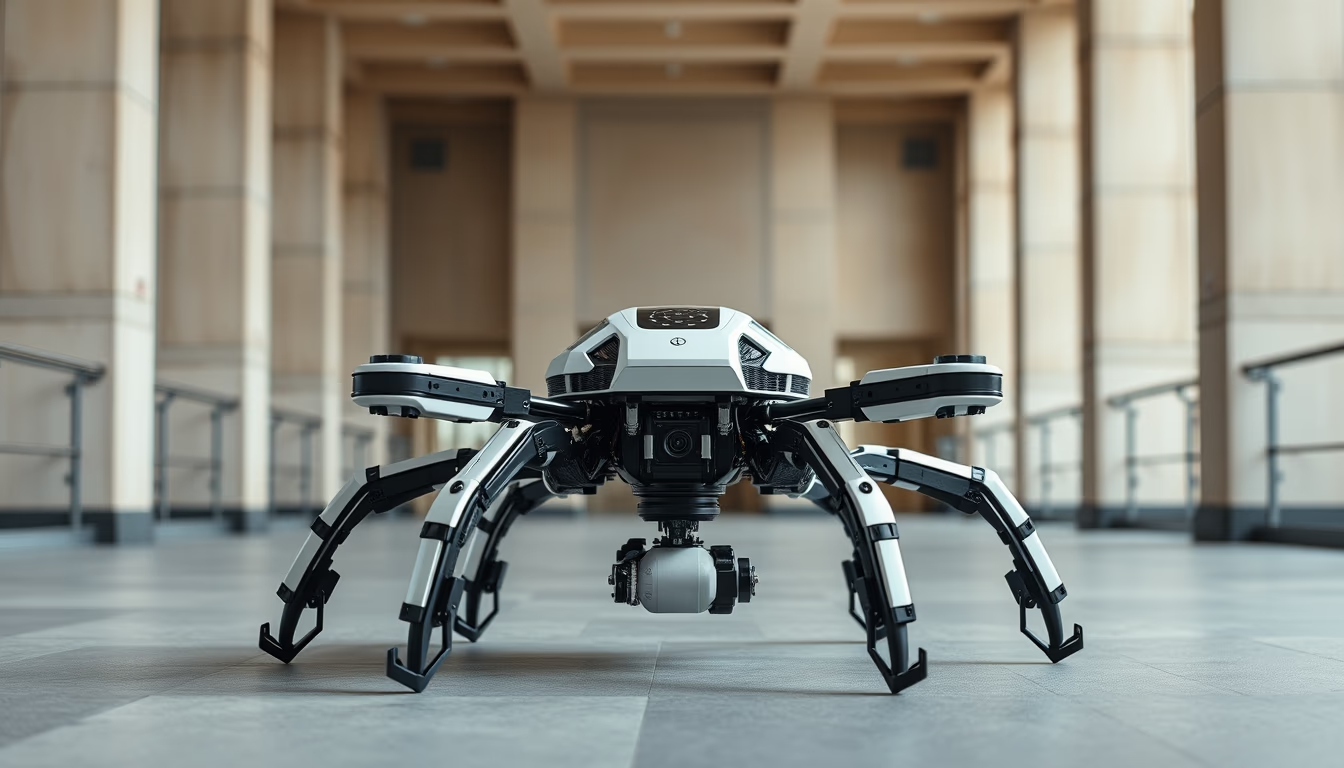
Hexapod robot moving
1344×768 · AVIF · CC BY 4.0
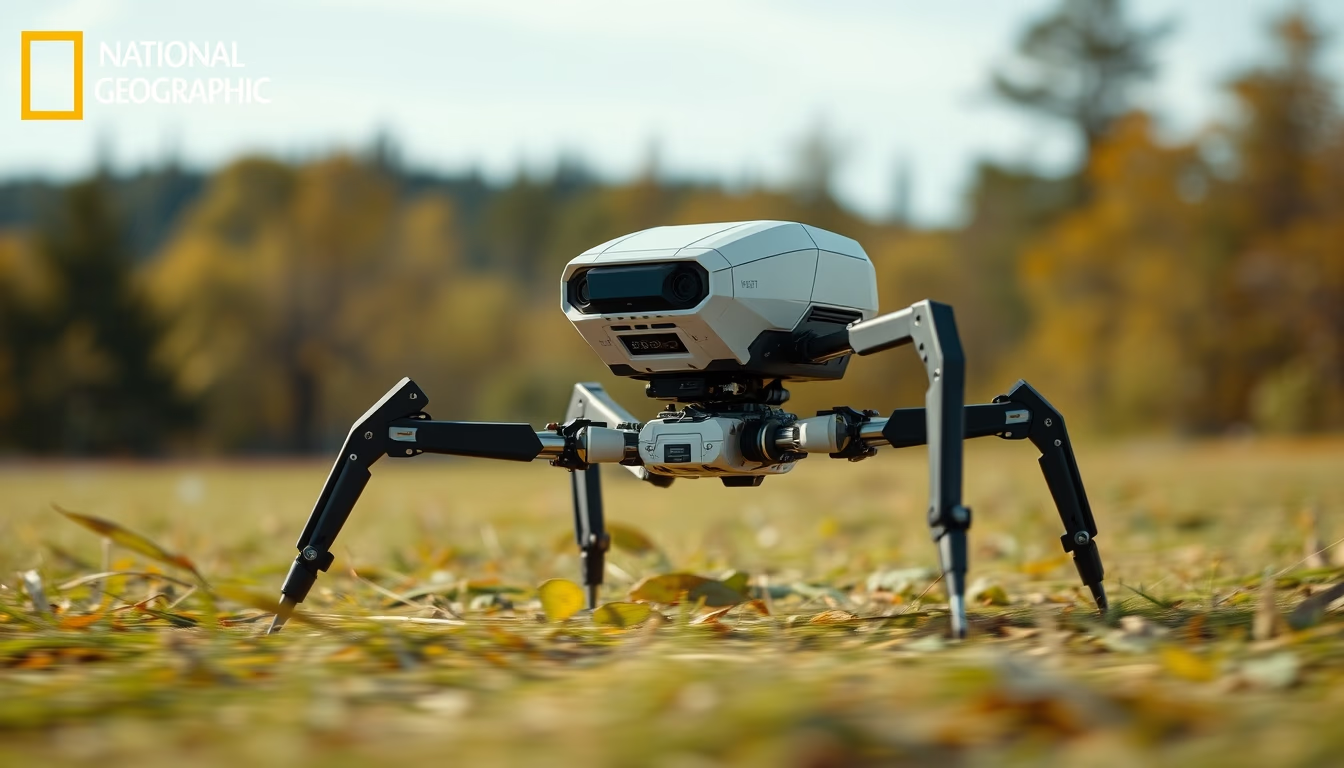
Hexapod robots, inspired by insects, use six legs for stable locomotion on uneven terrain, combining biomechanics and advanced control.
About this subject
Hexapod robots are robotic platforms with six articulated legs, designed to mimic insect locomotion. This configuration offers significant advantages in stability and adaptability on rough terrain, where wheeled or tracked robots struggle. Movement relies on gait patterns such as the alternating tripod, where three legs contact the ground while the other three swing, ensuring constant balance even during fast motion.
The development of hexapods dates back to the 1980s at MIT, with the Genghis robot, one of the first to demonstrate autonomous walking. Since then, advances in sensors, actuators, and control algorithms have enabled these robots to operate in extreme environments, from Martian cliffs (e.g., NASA robots) to disaster zones. Biomechanics research often draws inspiration from cockroaches and ants, which can climb surfaces and recover from obstacles.
Practical applications include cave exploration, pipe inspection, search-and-rescue after earthquakes, and environmental monitoring. A notable example is the LAURON robot from the Karlsruhe Institute of Technology, which adapts to snow and mud. Companies like Boston Dynamics have created hexapods such as RHex, capable of running, jumping, and even swimming. Challenges remain in energy efficiency and high-speed control, but ongoing research promises more autonomous and robust robots.
Frequently Asked Questions
How does a hexapod robot maintain balance while moving?
It uses gait patterns like the alternating tripod, where three legs always touch the ground while the other three move, forming a stable support base. Inertial and force sensors in the feet continuously adjust posture.
What are the advantages of six legs over four or two?
Six legs provide redundancy: even if one fails, the robot can still move. They also offer greater stability on uneven terrain and the ability to carry heavier loads without compromising balance.
Where are hexapod robots currently used?
They are employed in exploring hard-to-access areas such as caves and pipelines, in search-and-rescue missions after disasters, and in scientific research on biomechanics and autonomous locomotion. They are also being tested for planetary exploration.
Direct URL
https://pub-c7d6a6ea828543ac903a74a341ccb2e1.r2.dev/imagens/hexapod-robot-moving-national-geographic-style-p10.avifHow to credit
Include a visible link back to UtilizAí. Copy one of the snippets below:
<a href="https://xn--utiliza-eza.com/en/midia/imagens/hexapod-robot-moving-national-geographic-style-p10">Hexapod robot moving</a> by <a href="https://xn--utiliza-eza.com">UtilizAí</a>, licensed under <a href="https://creativecommons.org/licenses/by/4.0/">CC BY 4.0</a>.
[Hexapod robot moving](https://xn--utiliza-eza.com/en/midia/imagens/hexapod-robot-moving-national-geographic-style-p10) by [UtilizAí](https://xn--utiliza-eza.com), CC BY 4.0
License: CC-BY-4.0