Hexapod robot moving
1344×768 · AVIF · CC BY 4.0
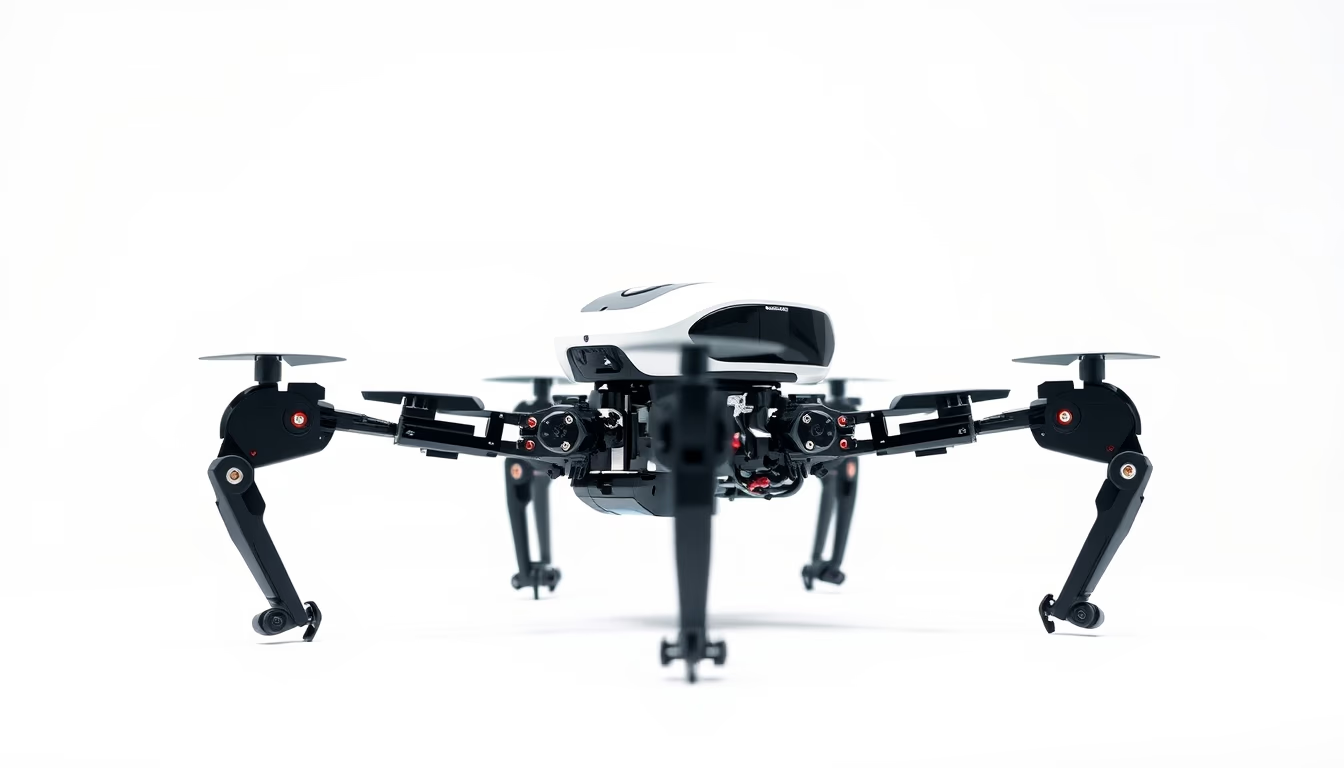
A hexapod robot in motion: how these insect-inspired locomotion systems are revolutionizing industrial and exploration robotics.
About this subject
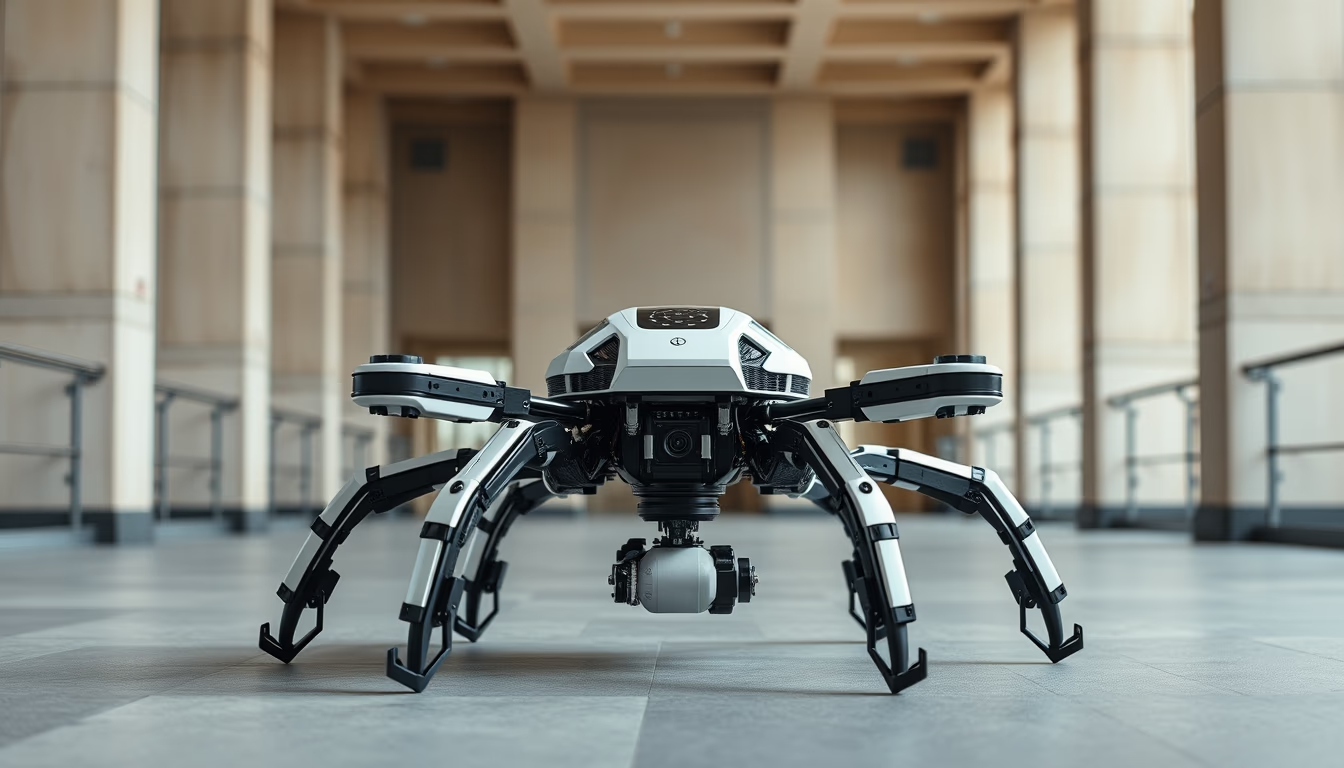
Hexapod robots, as the name suggests, have six legs and are inspired by the biomechanics of insects and arthropods. This configuration offers exceptional stability on uneven terrain, allowing the robot to maintain at least three points of contact with the ground during walking, a concept known as the static tripod. Unlike wheeled or tracked robots, hexapods can overcome obstacles like rocks, steps, and slippery surfaces more efficiently, making them ideal for search and rescue missions in rubble, planetary exploration, and industrial inspection in hostile environments.
One of the most famous examples is ATHLETE, developed by NASA for future lunar missions. It combines six articulated legs with wheels at the extremities, enabling locomotion both by walking and rolling. In the private sector, companies like Ghost Robotics and Boston Dynamics have created agile hexapods capable of running and jumping. Ghost Robotics' Vision 60, for instance, is used by military forces for surveillance, while Boston Dynamics' Spot (a quadruped) has inspired numerous control studies.
The main technical challenge is gait planning, which involves the temporal and spatial coordination of each leg to ensure dynamic balance. Intelligent control algorithms, such as neural networks and fuzzy logic, are employed to adapt movement to the terrain in real time. Sensors like accelerometers, gyroscopes, and cameras provide continuous feedback, enabling quick corrections. This control complexity contrasts with mechanical simplicity, since each leg typically has three degrees of freedom.
Commercially, hexapods are still more expensive than wheeled robots, but their versatility on rough terrain justifies the investment in specific niches. Emerging applications include precision agriculture (soil monitoring), pipeline inspection, and even entertainment with educational robots like Modular Robotics Cubelets. The future points to lighter materials, longer-lasting batteries, and miniaturized sensors, which should make these robots more accessible and autonomous.
Frequently Asked Questions
What is the main advantage of a hexapod robot over a wheeled robot?
The main advantage is its ability to traverse rough and steep terrain with greater stability, overcoming obstacles that would stop a wheeled or tracked robot.
In which fields are hexapod robots most commonly used?
They are used in search and rescue, planetary exploration (such as NASA's ATHLETE), industrial inspection, precision agriculture, and military surveillance.
How does a hexapod maintain balance while walking?
Balance is maintained through gait planning algorithms and inertial sensors. The robot alternates between support and swing phases for each leg, keeping three legs on the ground (static tripod) or using dynamic control for faster gaits.
Direct URL
https://pub-c7d6a6ea828543ac903a74a341ccb2e1.r2.dev/imagens/hexapod-robot-moving-commercial-product-photography-p8.avifHow to credit
Include a visible link back to UtilizAí. Copy one of the snippets below:
<a href="https://xn--utiliza-eza.com/en/midia/imagens/hexapod-robot-moving-commercial-product-photography-p8">Hexapod robot moving</a> by <a href="https://xn--utiliza-eza.com">UtilizAí</a>, licensed under <a href="https://creativecommons.org/licenses/by/4.0/">CC BY 4.0</a>.
[Hexapod robot moving](https://xn--utiliza-eza.com/en/midia/imagens/hexapod-robot-moving-commercial-product-photography-p8) by [UtilizAí](https://xn--utiliza-eza.com), CC BY 4.0
License: CC-BY-4.0