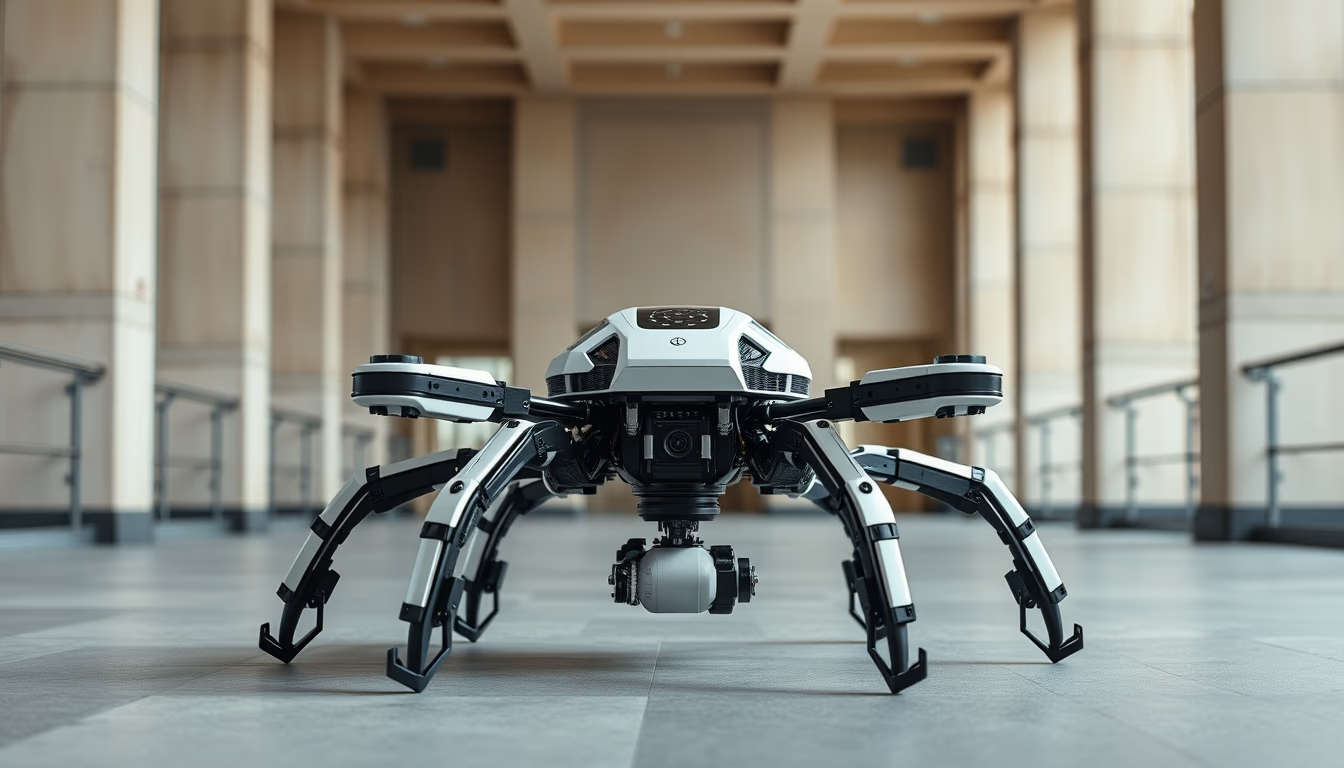
Hexapod robot moving
1344×768 · AVIF · CC BY 4.0
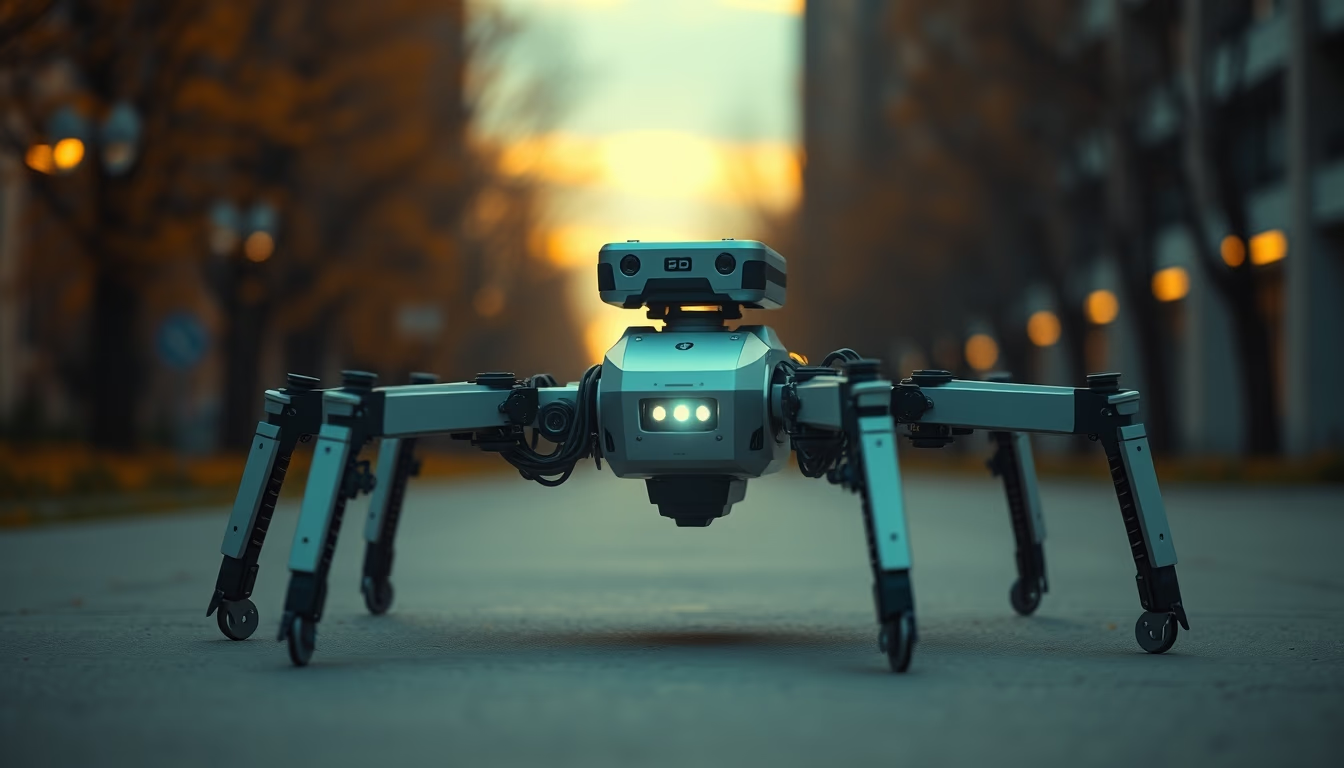
Hexapod robots, inspired by insects and arachnids, offer superior stability and adaptability on uneven terrain, widely used in exploration, rescue, and research.
About this subject
Hexapod robots are locomotor machines with six articulated legs, designed to mimic the locomotion of arthropods such as ants, cockroaches, and spiders. This configuration provides exceptional balance, allowing the robot to maintain at least three points of contact with the ground at all times, which is ideal for rough or unstable terrain. Unlike wheeled or tracked robots, hexapods can climb obstacles, step over curbs, and cross rocky surfaces with ease.
Historically, the development of hexapod robots began in the 1980s with projects like the Odex I from Odetics, one of the first operational six-legged robots. The field has since evolved significantly with advances in computing and sensors. A notable example is NASA's ATHLETE (All-Terrain Hex-Legged Extra-Terrestrial Explorer), designed for lunar and Martian exploration. It combines articulated legs with wheels at the tips, allowing hybrid locomotion modes. Another example is the LAURON robot, developed by the Karlsruhe Institute of Technology, which mimics the locomotion of locusts and is used in search and rescue operations.
Culturally, hexapods appear frequently in science fiction, such as the AT-AT walkers in Star Wars or the Strider in Halo, although those are quadrupedal. They are also popular in robotics competitions like RoboCup Rescue, where their ability to navigate rubble is crucial. In industry, they are used for pipe and tunnel inspection, and in precision agriculture for crop monitoring. The main advantage is leg redundancy: if one leg fails, the robot can still move with the remaining five. Moreover, hexapod locomotion allows smooth and adaptive movements, with control algorithms that switch between walking, trotting, and running as needed.
Frequently Asked Questions
What is the main advantage of a hexapod robot over a wheeled robot?
The main advantage is its ability to move on uneven terrain, climb steps and obstacles, and maintain stability on unstable surfaces, whereas wheeled or tracked robots can get stuck or tip over.
In which fields are hexapod robots most commonly used today?
They are used in space exploration (e.g., NASA's ATHLETE), search and rescue operations in rubble, pipe and tunnel inspection, precision agriculture, and academic research on robotic locomotion.
What are the main challenges in controlling a hexapod robot?
Challenges include coordinating the movements of six legs efficiently, maintaining balance during locomotion, processing sensor data to adapt to terrain in real time, and optimizing energy consumption.
Direct URL
https://pub-c7d6a6ea828543ac903a74a341ccb2e1.r2.dev/imagens/hexapod-robot-moving-cinematic-wide-shot-p1.avifHow to credit
Include a visible link back to UtilizAí. Copy one of the snippets below:
<a href="https://xn--utiliza-eza.com/en/midia/imagens/hexapod-robot-moving-cinematic-wide-shot-p1">Hexapod robot moving</a> by <a href="https://xn--utiliza-eza.com">UtilizAí</a>, licensed under <a href="https://creativecommons.org/licenses/by/4.0/">CC BY 4.0</a>.
[Hexapod robot moving](https://xn--utiliza-eza.com/en/midia/imagens/hexapod-robot-moving-cinematic-wide-shot-p1) by [UtilizAí](https://xn--utiliza-eza.com), CC BY 4.0
License: CC-BY-4.0