Green roof on building
1344×768 · AVIF · CC BY 4.0
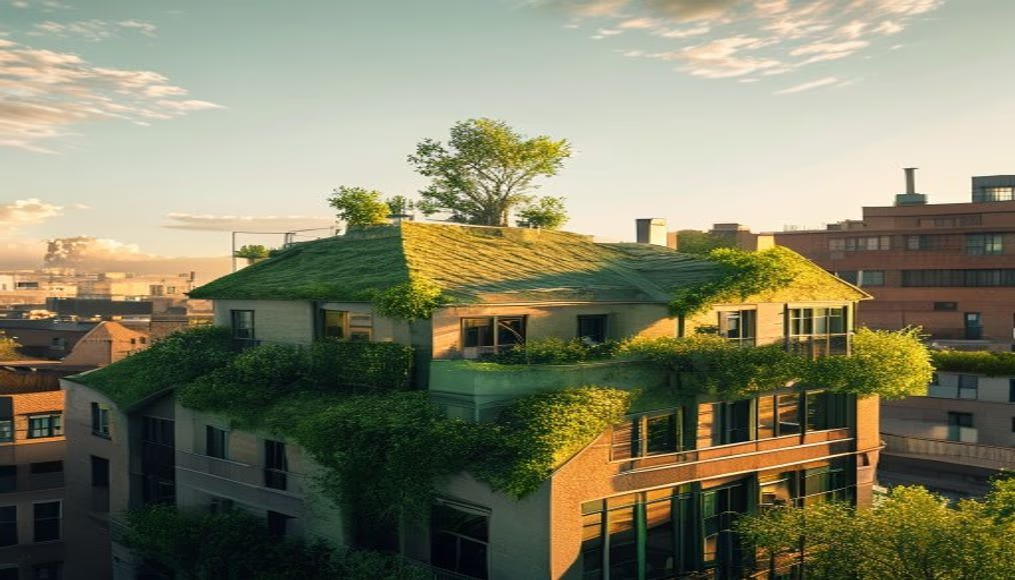
Green roofs transform building tops into ecological spaces, reducing heat islands and improving energy efficiency.
About this subject
Green roofs, also known as vegetated roofs or living roofs, are building systems that incorporate vegetation on top of a waterproof membrane. This ancient technique, dating back to the Hanging Gardens of Babylon, has been modernized to meet contemporary urban sustainability demands. There are two main types: extensive green roofs, with shallow substrate and hardy plants like sedums, and intensive green roofs, deeper and capable of supporting trees and even urban gardens. The benefits go beyond aesthetics: green roofs improve thermal and acoustic insulation, reduce stormwater runoff by up to 65%, filter air pollutants, and provide habitat for birds and pollinators.
Cities such as Chicago, Toronto, and Copenhagen have adopted tax incentives to promote green roof installations. Notable examples in Brazil include the Museum of Tomorrow in Rio de Janeiro and the Eldorado Shopping Mall in São Paulo, which features one of the country's largest green roofs. Maintenance varies by type: extensive roofs require minimal irrigation and occasional weeding, while intensive roofs need care similar to a conventional garden. Studies show that the additional installation cost can be recovered within 10 to 15 years through energy savings and extended roof membrane lifespan.
In tropical regions like most of Brazil, selecting native species adapted to the local climate is crucial for system success. Grasses, bromeliads, and succulents are common choices. Green roofs also contribute to LEED certification and other sustainable building labels, increasing property value. The global trend of urban reforestation positions this technology as a key tool in combating climate change and creating more resilient cities.
Frequently Asked Questions
How much does it cost to install a green roof?
Costs vary by type, area, and building structure. Extensive green roofs average $15, $50 per square foot, while intensive roofs can exceed $100/sq ft. The investment is offset by energy savings and extended roof lifespan.
Can green roofs be installed on any building?
Not without assessment of structure, slope, and waterproofing. Roofs steeper than 30° require special systems. Existing buildings may need structural reinforcement to handle the additional load.
How does drainage work on a green roof?
The system includes drainage layers like expanded clay and geotextile mats that channel excess water. Vegetation and substrate retain some rainwater, reducing runoff to urban drainage systems and helping prevent floods.
Direct URL
https://pub-c7d6a6ea828543ac903a74a341ccb2e1.r2.dev/imagens/green-roof-on-building-travel-photography-v10.avifHow to credit
Include a visible link back to UtilizAí. Copy one of the snippets below:
<a href="https://xn--utiliza-eza.com/en/midia/imagens/green-roof-on-building-travel-photography-v10">Green roof on building</a> by <a href="https://xn--utiliza-eza.com">UtilizAí</a>, licensed under <a href="https://creativecommons.org/licenses/by/4.0/">CC BY 4.0</a>.
[Green roof on building](https://xn--utiliza-eza.com/en/midia/imagens/green-roof-on-building-travel-photography-v10) by [UtilizAí](https://xn--utiliza-eza.com), CC BY 4.0
License: CC-BY-4.0