Globe vintage spinning
1344×768 · AVIF · CC BY 4.0
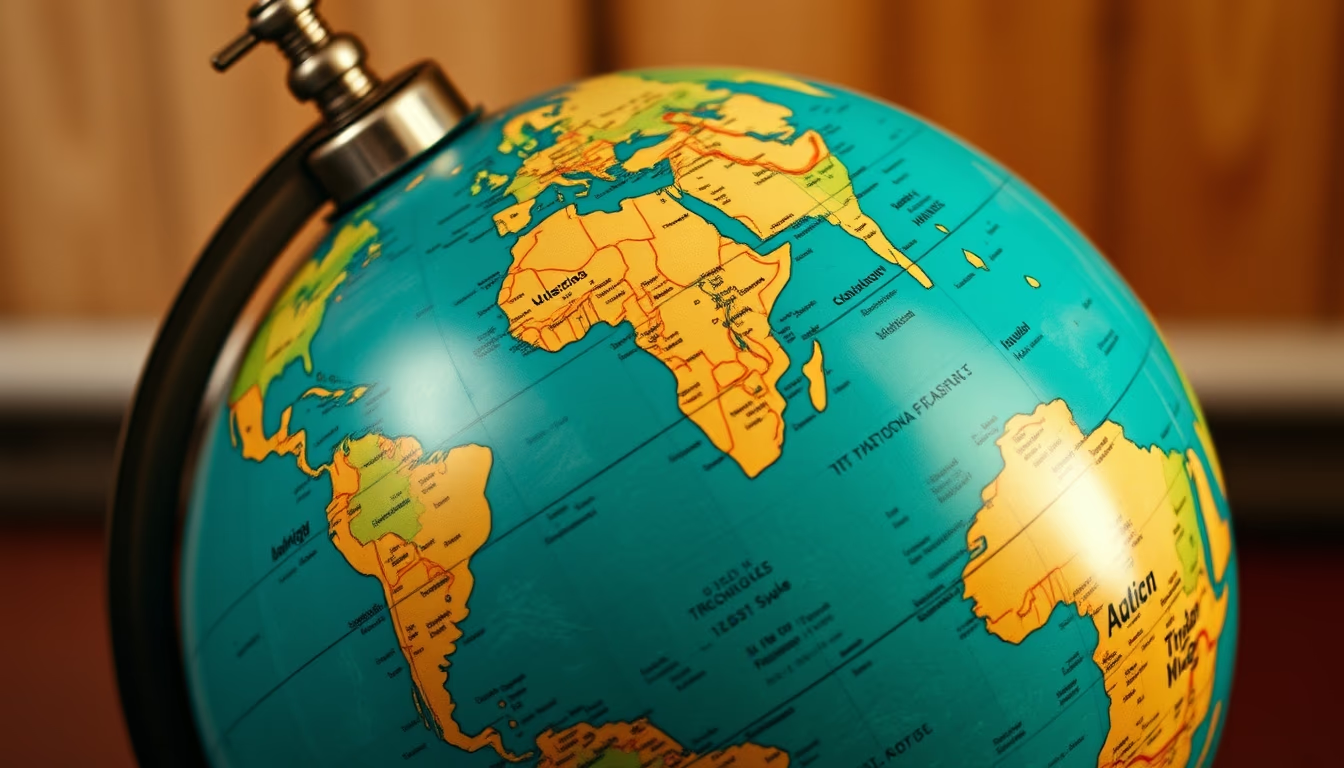
Vintage globes are cartographic instruments that blend art and science, revealing the world view from different historical periods.
About this subject
Vintage globes are three-dimensional representations of Earth produced between the 16th and 20th centuries, before the rise of digital maps. They were handcrafted using techniques such as applying printed gores (paper strips) onto a wooden or papier-mâché sphere, covered with plaster and varnish. The oldest globes, like those by Gerardus Mercator (16th century) or the Blaeu family, were true works of art, with copper engravings and hand-coloring.
During the 19th century, globe manufacturing became more affordable with industrialization. Companies like Replogle, Cram, and Columbus began mass-producing globes for schools and homes. These globes often displayed geopolitical information of the time, such as colonial borders, names of extinct countries (e.g., the Soviet Union or Rhodesia), and even unexplored regions labeled "Terra Incognita."
The aesthetics of vintage globes vary by era: Victorian-era globes had ornate iron or carved wooden bases, with brass meridians and four-column feet. By the 1950s, globes featured pastel colors and modern metal bases. Today, these objects are collectibles, with rare examples fetching thousands of dollars depending on rarity and condition.
A fun fact: vintage globes often contain cartographic errors, such as California depicted as an island (on 17th-century maps) or a large southern continent (Terra Australis). These inaccuracies tell the story of evolving geographical knowledge, making each globe a unique time capsule.
Frequently Asked Questions
How can I tell if a globe is vintage?
Check the base and materials: 19th-century globes often have cast iron or carved wooden bases with ornate details. The presence of extinct countries (e.g., Soviet Union) or colonial borders also indicates age. The copyright date on the globe can help pinpoint its age.
What is the value of a vintage globe?
Value varies greatly. Common 20th-century table globes can be found for $50 to $150. Rare 18th-century items in good condition can reach over $5,000. Factors such as rarity, condition, and manufacturer reputation influence the price.
How do I preserve a vintage globe?
Keep it away from direct sunlight and humidity. Use a soft dry cloth to dust. If the spinning mechanism is stuck, do not force it; lubricate gently with silicone oil. For stains on the surface, consult a professional conservator.
Direct URL
https://pub-c7d6a6ea828543ac903a74a341ccb2e1.r2.dev/imagens/globe-vintage-spinning-national-geographic-style-p3.avifHow to credit
Include a visible link back to UtilizAí. Copy one of the snippets below:
<a href="https://xn--utiliza-eza.com/en/midia/imagens/globe-vintage-spinning-national-geographic-style-p3">Globe vintage spinning</a> by <a href="https://xn--utiliza-eza.com">UtilizAí</a>, licensed under <a href="https://creativecommons.org/licenses/by/4.0/">CC BY 4.0</a>.
[Globe vintage spinning](https://xn--utiliza-eza.com/en/midia/imagens/globe-vintage-spinning-national-geographic-style-p3) by [UtilizAí](https://xn--utiliza-eza.com), CC BY 4.0
License: CC-BY-4.0