Globe vintage spinning
1344×768 · AVIF · CC BY 4.0
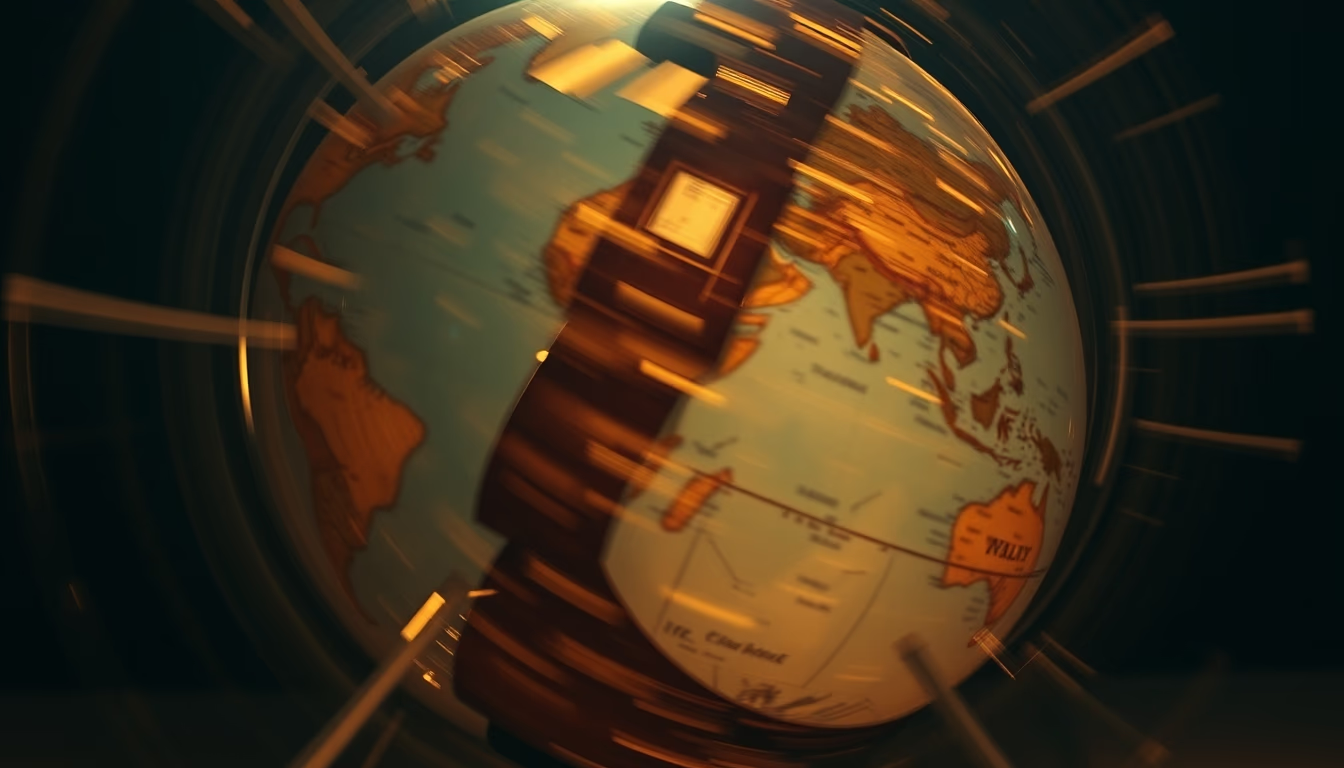
Vintage globes, tools of navigation and education, blend art and historical cartography. Discover their evolution and cultural value.
About this subject
Vintage globes are three-dimensional representations of the Earth or sky, produced between the 16th and 20th centuries. They served as essential tools for navigators, astronomers, and educators, showcasing the geographical and astronomical knowledge of their eras. The handmade process involved printing maps on paper gores, which were then glued onto a wooden or plaster sphere. The oldest terrestrial globes date back to the Renaissance, such as Martin Behaim's 1492 globe, which still did not include the Americas. Celestial globes mapped constellations and stars based on Ptolemy's catalogues and later observations.
During the 18th and 19th centuries, globe production became widespread with manufacturers like J. & G. Cary, W. & A. K. Johnston, and the German company Columbus Verlag. These globes were often mounted on turned wooden or metal stands, allowing rotation and tilt. The design featured graduated meridian rings and paper or metal horizons. In Brazil, educational globes were imported and also locally produced, used in schools and libraries. The historical value of these objects lies in their relative cartographic accuracy for each period and their decorative aesthetic, with vibrant colors and ornamental details such as vignettes and patterns.
With the advent of digital technology, vintage globes have gained collector's status and as decorative pieces. They reflect the worldview of their times, with political boundaries, place names, and relief representations that changed over time. Interestingly, many 19th-century globes still show places like Terra Australis Incognita, a hypothetical southern continent. Preserving these artifacts requires special care, such as humidity control and indirect light exposure, due to the fragility of paper and inks.
Frequently Asked Questions
How can I date a vintage globe?
Look for dates, manufacturer or publisher names on the globe or stand. Compare political boundaries (e.g., existence of the Soviet Union or colonial African countries) and place names that may have changed. Paper quality and printing type also provide clues.
Who were the main historical globe makers?
Notable makers include J. & G. Cary (England), W. & A. K. Johnston (Scotland), Columbus Verlag (Germany), and American Rand McNally. In Brazil, publisher Melhoramentos produced educational globes in the 20th century.
What is the difference between a terrestrial and a celestial globe?
A terrestrial globe represents the Earth's surface, with continents and oceans. A celestial globe shows the night sky, with stars, constellations, and the Milky Way. Both can be vintage and were often sold as pairs.
Direct URL
https://pub-c7d6a6ea828543ac903a74a341ccb2e1.r2.dev/imagens/globe-vintage-spinning-high-fashion-editorial-p4.avifHow to credit
Include a visible link back to UtilizAí. Copy one of the snippets below:
<a href="https://xn--utiliza-eza.com/en/midia/imagens/globe-vintage-spinning-high-fashion-editorial-p4">Globe vintage spinning</a> by <a href="https://xn--utiliza-eza.com">UtilizAí</a>, licensed under <a href="https://creativecommons.org/licenses/by/4.0/">CC BY 4.0</a>.
[Globe vintage spinning](https://xn--utiliza-eza.com/en/midia/imagens/globe-vintage-spinning-high-fashion-editorial-p4) by [UtilizAí](https://xn--utiliza-eza.com), CC BY 4.0
License: CC-BY-4.0