Globe vintage spinning
1344×768 · AVIF · CC BY 4.0
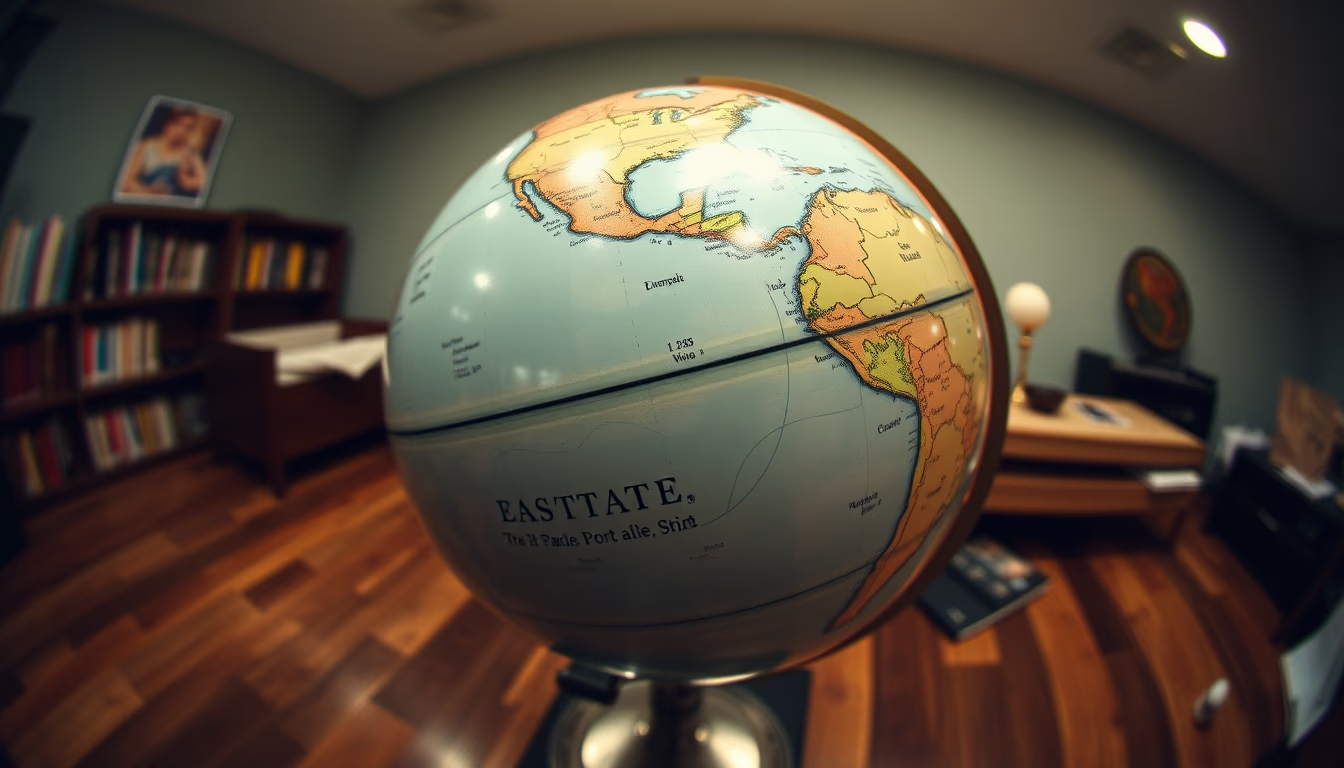
A vintage spinning globe with a fish-eye effect evokes the history of cartography and world exploration.
About this subject
Vintage terrestrial globes are three-dimensional objects representing the Earth's surface with cartographic details from past eras. Unlike flat maps, globes preserve the true proportions of continents and oceans, offering an accurate view of world geography. Since the Renaissance, globes have been used in libraries, universities, and scholars' studies as educational tools and symbols of erudition.
The first known terrestrial globe was created by German navigator Martin Behaim in 1492, before Columbus's voyage. Called the "Erdapfel" (Earth apple), it depicted the known world of the time, without America. Over the centuries, globes were produced by renowned cartographers such as Gerardus Mercator and Willem Blaeu, often with carved wooden stands and hand-printed paper gores. Celestial globes, showing constellations, were also common.
In the 19th and early 20th centuries, globes became popular in homes and schools, often accompanied by ornate iron or brass stands. The patina of age gives these objects a nostalgic charm. Today, vintage globes are collectible and decorative items, valued for their design and historical significance. The fish-eye photography technique, with its hemispherical distortion, can evoke the very curvature of the globe, creating a striking visual composition.
Interesting fact: spinning globes were frequently used in detective scenes and film noir as symbols of investigation and global knowledge. The act of spinning the globe recalls the search for new routes and discoveries, perpetuating the fascination with navigation and exploration.
Frequently Asked Questions
What is the difference between a terrestrial globe and a celestial globe?
A terrestrial globe represents the Earth's surface with countries and oceans, while a celestial globe shows stars and constellations as seen from Earth.
How were antique globes manufactured?
They were typically made with hand-printed paper gores glued onto a plaster or wooden sphere, mounted on wooden or metal stands with a tilted axis.
Why are vintage globes so valuable today?
Besides their historical and educational value, they are unique decorative pieces that represent the art of ancient cartography and nostalgia for past eras.
Direct URL
https://pub-c7d6a6ea828543ac903a74a341ccb2e1.r2.dev/imagens/globe-vintage-spinning-fish-eye-wide-angle-p11.avifHow to credit
Include a visible link back to UtilizAí. Copy one of the snippets below:
<a href="https://xn--utiliza-eza.com/en/midia/imagens/globe-vintage-spinning-fish-eye-wide-angle-p11">Globe vintage spinning</a> by <a href="https://xn--utiliza-eza.com">UtilizAí</a>, licensed under <a href="https://creativecommons.org/licenses/by/4.0/">CC BY 4.0</a>.
[Globe vintage spinning](https://xn--utiliza-eza.com/en/midia/imagens/globe-vintage-spinning-fish-eye-wide-angle-p11) by [UtilizAí](https://xn--utiliza-eza.com), CC BY 4.0
License: CC-BY-4.0