Globe vintage spinning
1344×768 · AVIF · CC BY 4.0
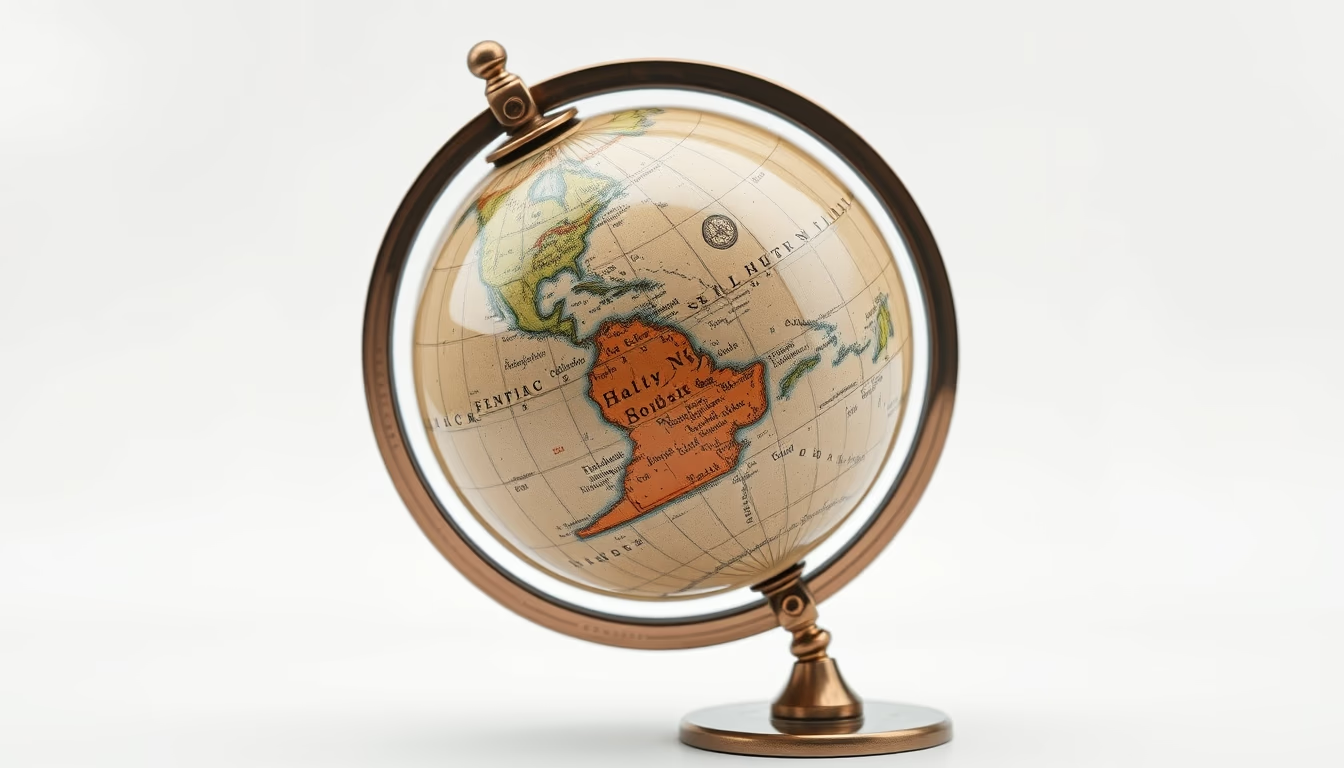
Vintage globes are cartographic instruments that blend art and science, highly valued by collectors and interior decorators.
About this subject
Vintage globes represent a fascinating intersection of cartography, craftsmanship, and decoration. Manufactured primarily between the 18th and 20th centuries, these objects were made from noble materials such as wood, papier-mâché, and plaster, covered with printed maps on paper or parchment. Terrestrial and celestial globes served both educational purposes and as status symbols, commonly found in libraries and cabinets of curiosities.
Great cartographers like Gerard Mercator and Vincenzo Coronelli left important legacies in globe making. Mercator, famous for his projection, also produced detailed terrestrial globes. Coronelli, an Italian astronomer and geographer, created large globes for European royalty, some over a meter in diameter. These pieces were true works of art, with turned wooden stands and brass meridians.
In contemporary decoration, vintage globes are appreciated for their nostalgic and aesthetic appeal. They come in various styles, from more subdued pastel tones to richly colored examples with gold details. Many 19th-century specimens feature raised mountains and valleys, providing a tactile experience. The patina of age, with natural stains and wear, is often prized by collectors.
Today, modern replicas are common, but true antique globes require special care. Dust should be removed with a soft brush, and direct sunlight can fade the maps. For those seeking authenticity, it is important to check the manufacturer's mark, publication date, and condition. Original pieces can fetch thousands of dollars, especially if they belonged to historical figures or were produced by renowned houses such as Replogle or Columbus.
Frequently Asked Questions
How to identify an original antique globe?
Look for manufacturer marks, dates, or serial numbers. Original globes usually have visible paper seams, natural patina, and solid wood stands. Known brands include Replogle and Cram. Avoid pieces with high-definition offset printing, common in modern replicas.
What is the importance of globes in cartography history?
Globes were the first accurate three-dimensional representations of Earth, allowing spatial relationships to be seen without projection distortions. They were used in schools, universities, and by explorers. The oldest surviving terrestrial globe is Martin Behaim's Erdapfel (1492), which still did not include the Americas.
How to care for a vintage globe?
Keep it away from direct sunlight and heat sources. Dust with a soft brush or microfiber duster. Do not use chemical cleaners. If the surface is dirty, consult a professional restorer. Avoid handling the map with greasy or damp hands.
Direct URL
https://pub-c7d6a6ea828543ac903a74a341ccb2e1.r2.dev/imagens/globe-vintage-spinning-commercial-product-photography-p1.avifHow to credit
Include a visible link back to UtilizAí. Copy one of the snippets below:
<a href="https://xn--utiliza-eza.com/en/midia/imagens/globe-vintage-spinning-commercial-product-photography-p1">Globe vintage spinning</a> by <a href="https://xn--utiliza-eza.com">UtilizAí</a>, licensed under <a href="https://creativecommons.org/licenses/by/4.0/">CC BY 4.0</a>.
[Globe vintage spinning](https://xn--utiliza-eza.com/en/midia/imagens/globe-vintage-spinning-commercial-product-photography-p1) by [UtilizAí](https://xn--utiliza-eza.com), CC BY 4.0
License: CC-BY-4.0