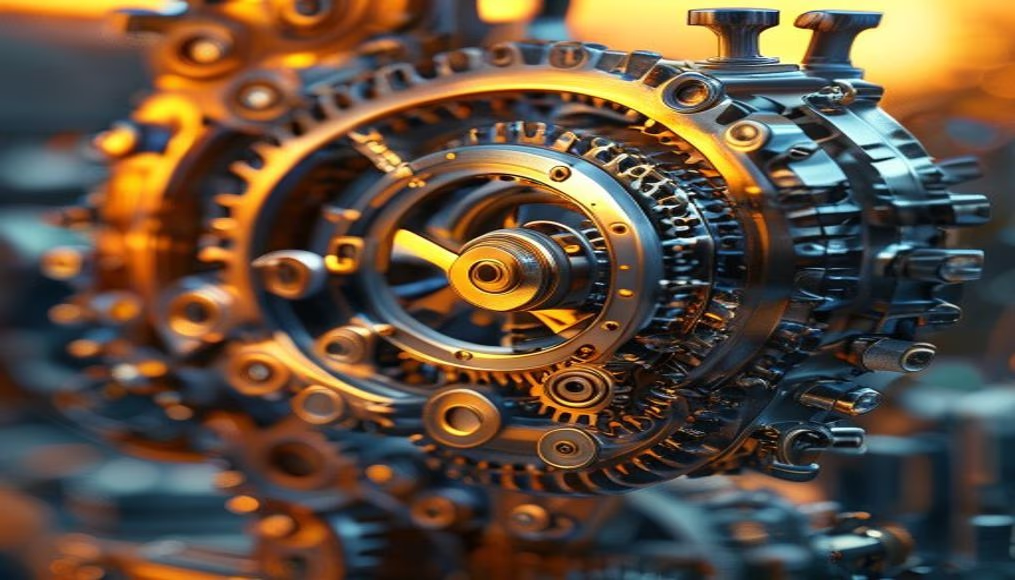
Gear mechanism mechanical
1344×768 · AVIF · CC BY 4.0
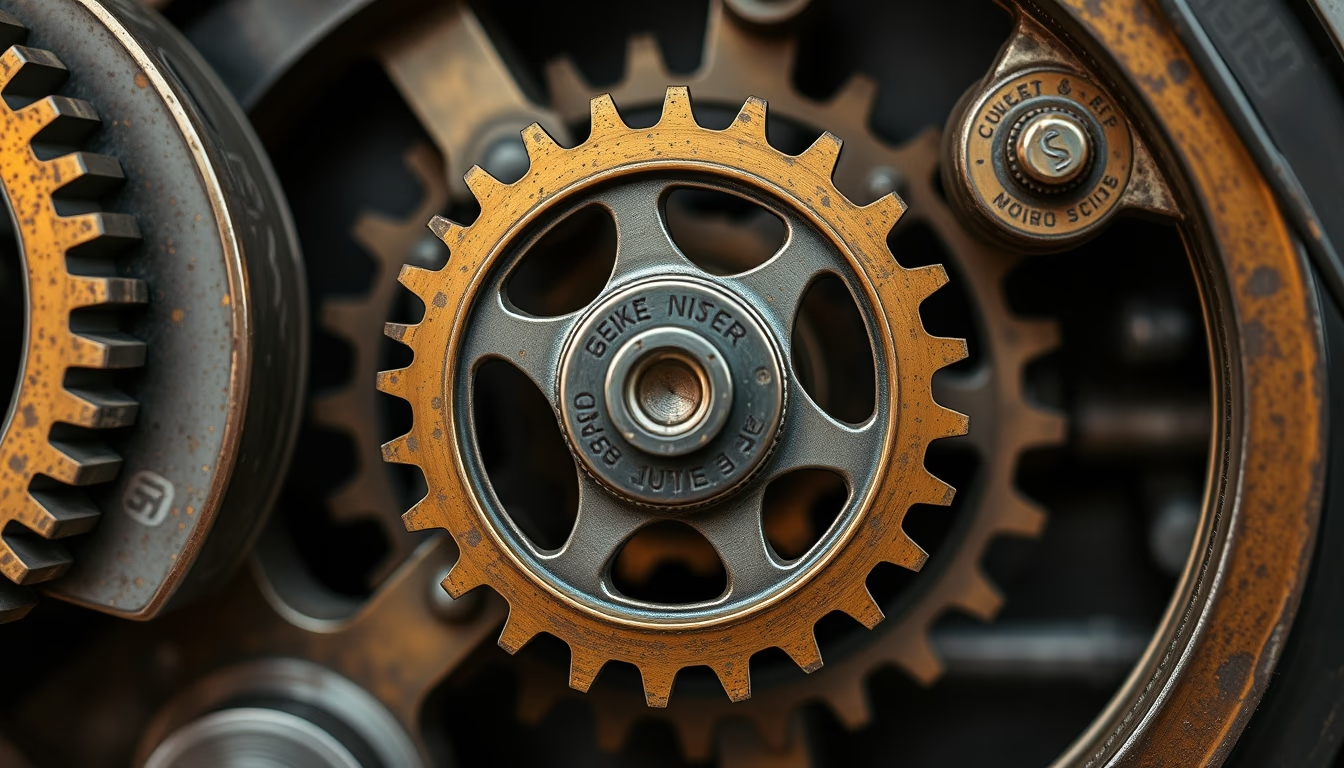
Gear mechanisms are fundamental components for power transmission and motion in industrial machinery and vehicles.
About this subject
Gears are toothed wheels that mesh to transfer torque and speed between shafts. They are present in virtually all mechanical systems, from watches to wind turbines. The basic principle is simple: two or more teeth interlock, converting rotary motion into controlled force. There are various types, such as spur gears, helical gears, bevel gears, and worm gears, each with specific applications. Spur gears are the most common, used in gearboxes and simple machinery. Helical gears operate more smoothly and quietly, ideal for high speeds. Bevel gears allow changing the shaft direction, while worm gears provide high reduction ratios in compact spaces.
The history of gears dates back to Ancient Greece, with the Antikythera mechanism (circa 100 BC), an analog computer that used bronze gears to predict astronomical positions. During the Industrial Revolution, mass production of standardized gears powered textile machines, locomotives, and engines. Today, manufacturing involves high-precision processes such as milling, grinding, and sintering, with tolerances in the micrometer range. Common materials include carbon steel, alloy steel, cast iron, and polymers, depending on load and environment.
Lubrication is crucial to reduce friction and wear. In critical applications like aircraft turbines, gears operate under high temperatures and pressures, requiring synthetic lubricants and special coatings. The efficiency of a well-designed gear can exceed 98%, but losses from friction and vibration remain challenges. Engineers use simulation software to optimize tooth profiles, reducing noise and increasing lifespan. Additionally, the current trend is integration with IoT sensors for predictive failure monitoring.
Interesting fact: tooth shapes follow international standards such as AGMA (American Gear Manufacturers Association) and ISO. Spur gears can produce characteristic noise due to abrupt contact, while helical gears have progressive engagement, preferred in quiet electric vehicles. Improper maintenance, such as misalignment or inadequate lubrication, is a leading cause of mechanical failures, potentially leading to unplanned downtime and high costs.
Frequently Asked Questions
What are the main types of gears and their applications?
Main types include spur gears (used in gearboxes and simple machinery), helical gears (for quiet operation at high speeds), bevel gears (to change shaft direction), and worm gears (for high reduction ratios).
How does lubrication affect gear performance?
Lubrication reduces friction and wear, dissipates heat, and protects against corrosion. Lack of lubrication can cause overheating, premature failure, and excessive noise. Synthetic lubricants are used in high-temperature applications.
What is the typical efficiency of a gear system?
Well-designed gears can achieve efficiency above 98%. Losses occur due to tooth friction, vibration, and lubricant resistance. Efficiency varies with gear type and operating conditions.
Direct URL
https://pub-c7d6a6ea828543ac903a74a341ccb2e1.r2.dev/imagens/gear-mechanism-mechanical-national-geographic-style.avifHow to credit
Include a visible link back to UtilizAí. Copy one of the snippets below:
<a href="https://xn--utiliza-eza.com/en/midia/imagens/gear-mechanism-mechanical-national-geographic-style">Gear mechanism mechanical</a> by <a href="https://xn--utiliza-eza.com">UtilizAí</a>, licensed under <a href="https://creativecommons.org/licenses/by/4.0/">CC BY 4.0</a>.
[Gear mechanism mechanical](https://xn--utiliza-eza.com/en/midia/imagens/gear-mechanism-mechanical-national-geographic-style) by [UtilizAí](https://xn--utiliza-eza.com), CC BY 4.0
License: CC-BY-4.0