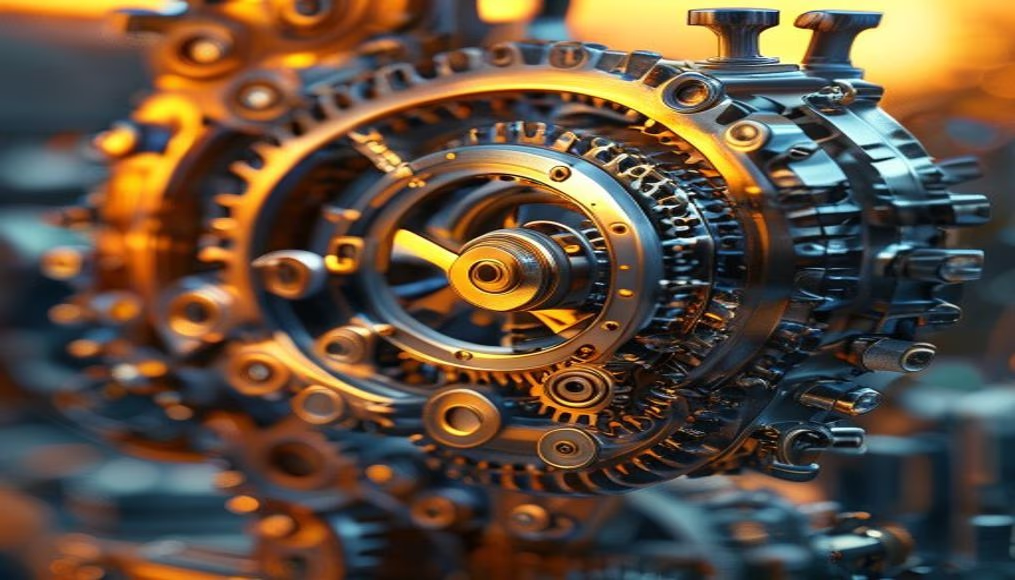
Gear mechanism mechanical
1344×768 · AVIF · CC BY 4.0
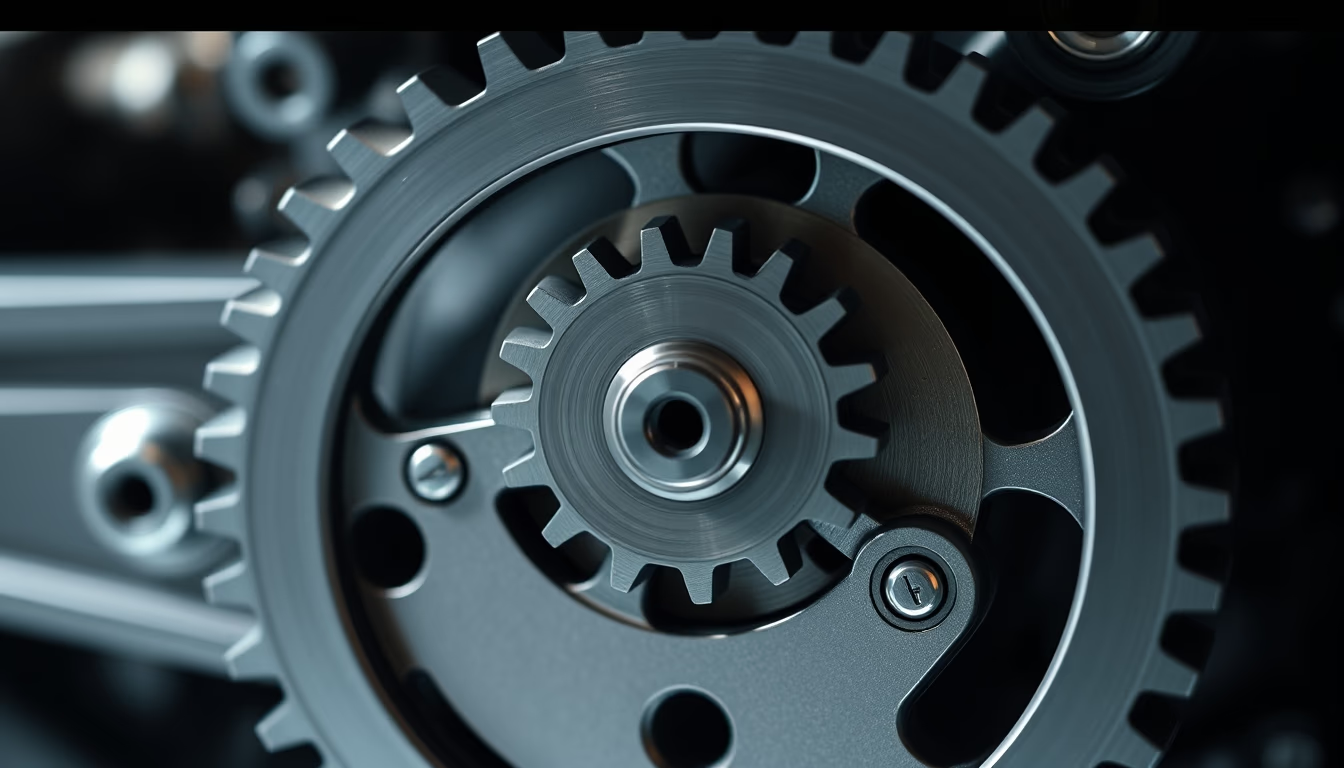
Mechanical gear mechanism: interconnected gears that convert rotational motion into different speeds and torques.
About this subject
Gears are fundamental components in mechanical systems, responsible for transmitting rotational motion between shafts. They work by meshing teeth that engage, allowing the transfer of force and motion. Gears can be classified into different types, such as spur, bevel, and helical gears, each with its own characteristics and applications. The combination of gears in a mechanism allows for the achievement of different speeds and torques, making them essential in a wide range of applications, from simple machines to complex power transmission systems.
Frequently Asked Questions
What are the main types of gears?
The main types of gears are spur, bevel, and helical gears. Each type has its own characteristics and specific applications.
How do gears work?
Gears work by meshing teeth that engage, allowing the transfer of force and rotational motion between shafts.
What are the most common applications of gears?
Gears are used in a wide range of applications, including simple machines, power transmission systems, vehicles, and industrial equipment.
Direct URL
https://pub-c7d6a6ea828543ac903a74a341ccb2e1.r2.dev/imagens/gear-mechanism-mechanical-minimalist-composition-v6.avifHow to credit
Include a visible link back to UtilizAí. Copy one of the snippets below:
<a href="https://xn--utiliza-eza.com/en/midia/imagens/gear-mechanism-mechanical-minimalist-composition-v6">Gear mechanism mechanical</a> by <a href="https://xn--utiliza-eza.com">UtilizAí</a>, licensed under <a href="https://creativecommons.org/licenses/by/4.0/">CC BY 4.0</a>.
[Gear mechanism mechanical](https://xn--utiliza-eza.com/en/midia/imagens/gear-mechanism-mechanical-minimalist-composition-v6) by [UtilizAí](https://xn--utiliza-eza.com), CC BY 4.0
License: CC-BY-4.0