Frog skin texture macro
1344×768 · AVIF · CC BY 4.0
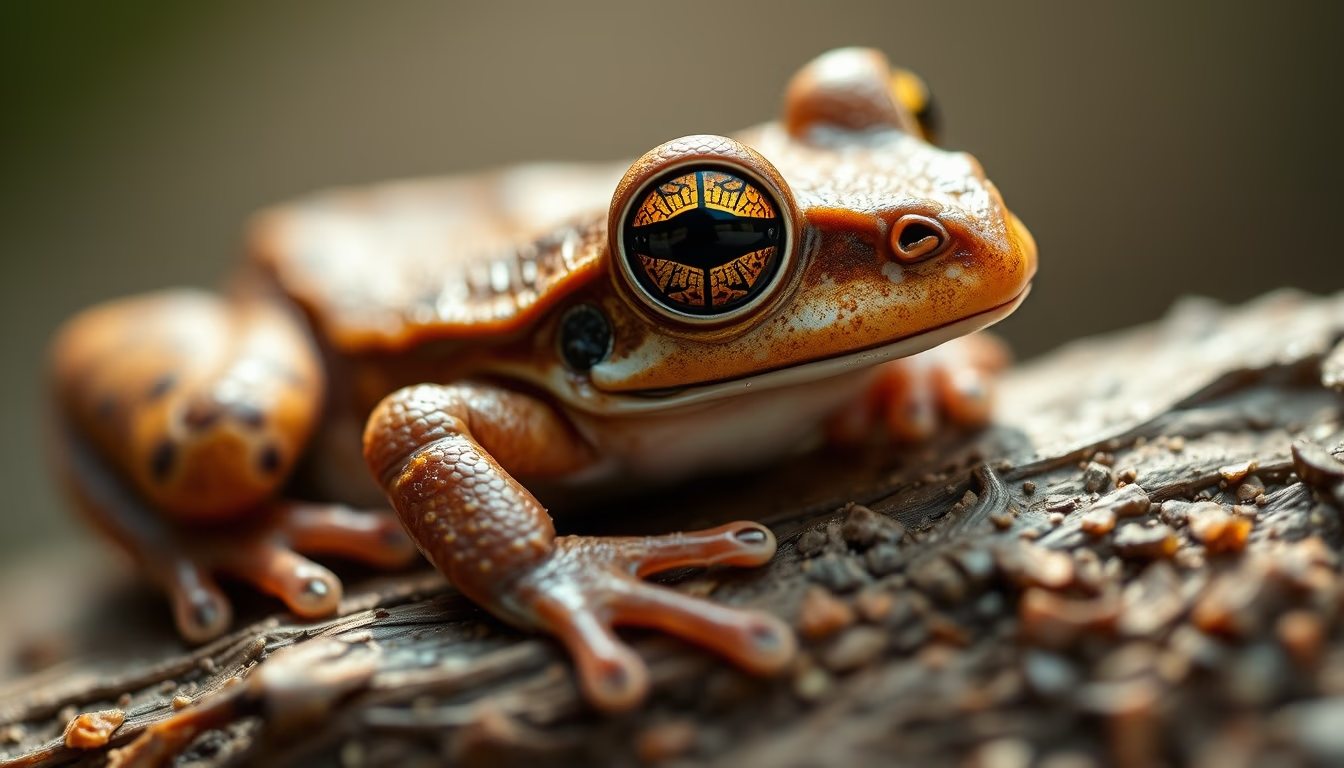
Frog and toad skin texture reveals unique adaptations: glands, chromatophores, and patterns that aid respiration, camouflage, and defense.
About this subject
Amphibian skin, such as that of frogs and toads, is a multifunctional organ quite different from mammalian or reptilian skin. It is thin, permeable, and richly vascularized, allowing for cutaneous respiration. This trait is essential for survival, as many amphibians rely partially or entirely on gas exchange through their skin. Hence, moisture is critical, and the surface texture plays key roles in water retention and substance absorption.
Macroscopically, the texture ranges from smooth (as in some tree frogs) to warty and granular (as in bufonid toads). These bumps are not medical warts but clusters of mucous and venom glands. Mucous glands keep the skin moist, while venom glands produce toxic secretions for defense against predators. The distribution and size of these glands create unique patterns that can aid in species identification.
At the microscopic level (macro photography), the surface reveals ridges, grooves, and pores. Many species possess chromatophores, pigment cells that allow color changes controlled by hormones and environmental stimuli. These adaptations assist in thermoregulation, camouflage, and communication. For instance, the leaf frog (Phyllomedusa) has a skin texture that mimics dead leaves, while the cane toad (Rhinella) exhibits tubercles resembling stones.
Documentary macro photography of amphibian skin textures is a valuable scientific tool. It enables the study of microstructure, detection of diseases such as chytridiomycosis (which affects skin keratin), and contributes to conservation. Each textured pattern tells an evolutionary story of adaptation to specific habitats, from humid forests to arid deserts.
Frequently Asked Questions
Why is frog skin so moist?
Moisture is maintained by mucous glands that secrete mucus, essential for cutaneous respiration and preventing desiccation. Without this moisture, the amphibian cannot exchange gases properly.
Can toad warts be transmitted to humans?
No. The bumps on toad skin are glands, not viral warts. There is no risk of transmission to humans. However, some secretions may be irritating or toxic upon contact.
What do chromatophores in amphibian skin do?
Chromatophores are cells containing pigments or reflective structures. They allow frogs and toads to change color for camouflage, thermoregulation, and social communication, such as during mating.
Direct URL
https://pub-c7d6a6ea828543ac903a74a341ccb2e1.r2.dev/imagens/frog-skin-texture-macro-documentary-photography-p5.avifHow to credit
Include a visible link back to UtilizAí. Copy one of the snippets below:
<a href="https://xn--utiliza-eza.com/en/midia/imagens/frog-skin-texture-macro-documentary-photography-p5">Frog skin texture macro</a> by <a href="https://xn--utiliza-eza.com">UtilizAí</a>, licensed under <a href="https://creativecommons.org/licenses/by/4.0/">CC BY 4.0</a>.
[Frog skin texture macro](https://xn--utiliza-eza.com/en/midia/imagens/frog-skin-texture-macro-documentary-photography-p5) by [UtilizAí](https://xn--utiliza-eza.com), CC BY 4.0
License: CC-BY-4.0