Fresco painting ceiling
1344×768 · AVIF · CC BY 4.0
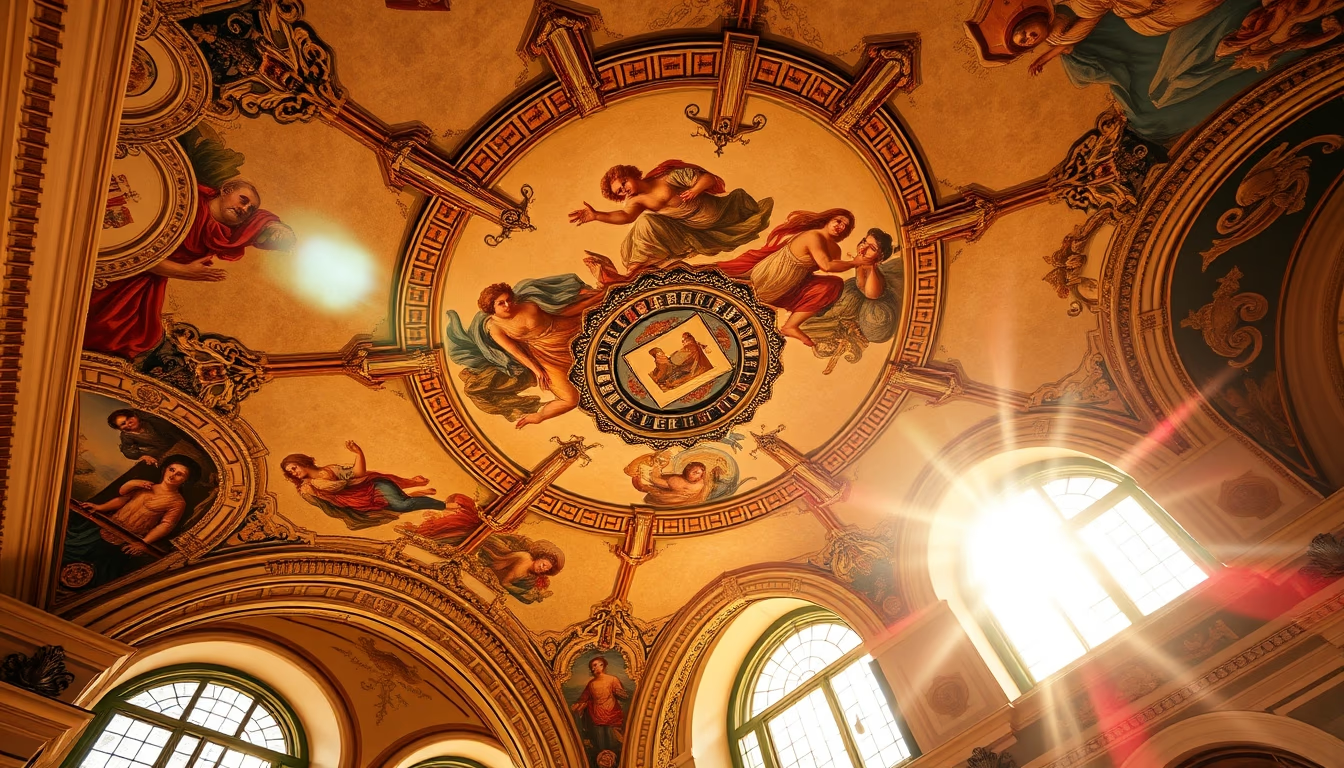
Fresco painting on ceilings of churches and palaces: an ancient technique that combines art and architecture in monumental works.
About this subject
Fresco painting, from the Italian 'buon fresco', is an ancient technique that involves applying water-diluted pigments onto a fresh layer of plaster (intonaco). The chemical reaction between lime and air permanently fixes the pigments, granting extraordinary durability. Originating in classical antiquity, it was widely used in ancient Rome, such as in the villas of Pompeii, and reached its peak during the Italian Renaissance with masters like Giotto, Raphael, and Michelangelo. The ceiling of the Sistine Chapel, painted by Michelangelo between 1508 and 1512, is one of the most iconic examples, with over 300 narrative figures arranged in a complex illusory architectural structure.
Beyond Europe, the technique spread worldwide, adapting to different contexts. In Brazil, baroque and rococo churches, such as the Church of São Francisco de Assis in Ouro Preto, feature painted ceilings that mimic fresco effects, though often executed with tempera or oil on wood. Genuine fresco is rare in Brazil due to the humid climate, which accelerates deterioration. In Latin America, Mexican muralists like Diego Rivera revived fresco in the 20th century for political and social murals, blending tradition with modern themes.
A curiosity: fresco work requires meticulous planning, as the artist must paint quickly before the plaster dries, usually within a day. Corrections are nearly impossible without removing the plaster. This led to the development of the 'secco' technique, where retouches are made on dry plaster but with lower durability. Large frescoes, such as the ceiling of the Church of the Gesù in Rome (The Triumph of the Name of Jesus by Baciccia), use optical illusion to create the sensation of an open sky, an effect known as 'quadratura'. Today, preserving these works faces challenges from pollution, humidity, and mass tourism, requiring constant restoration.
Frequently Asked Questions
What is the fresco painting technique?
It is a mural painting technique where dry pigments are mixed with water and applied onto a fresh layer of plaster (intonaco). As it dries, the lime in the plaster reacts with air and fixes the pigments, making the painting an integral part of the wall.
What are the most famous frescoes in the world?
The Sistine Chapel ceiling (Michelangelo), the School of Athens (Raphael), and the Last Supper (Leonardo da Vinci, though not pure fresco) are among the most renowned. Also notable are the frescoes of Pompeii’s villas and the Scrovegni Chapel (Giotto).
Why are frescoes so durable?
Durability comes from the chemical reaction between carbon dioxide in the air and calcium hydroxide in the plaster, forming calcium carbonate, which fixes the pigments and resists water and time. However, factors like humidity and pollution can accelerate degradation.
Direct URL
https://pub-c7d6a6ea828543ac903a74a341ccb2e1.r2.dev/imagens/fresco-painting-ceiling-travel-photography-p1.avifHow to credit
Include a visible link back to UtilizAí. Copy one of the snippets below:
<a href="https://xn--utiliza-eza.com/en/midia/imagens/fresco-painting-ceiling-travel-photography-p1">Fresco painting ceiling</a> by <a href="https://xn--utiliza-eza.com">UtilizAí</a>, licensed under <a href="https://creativecommons.org/licenses/by/4.0/">CC BY 4.0</a>.
[Fresco painting ceiling](https://xn--utiliza-eza.com/en/midia/imagens/fresco-painting-ceiling-travel-photography-p1) by [UtilizAí](https://xn--utiliza-eza.com), CC BY 4.0
License: CC-BY-4.0