Fresco painting ceiling
1344×768 · AVIF · CC BY 4.0
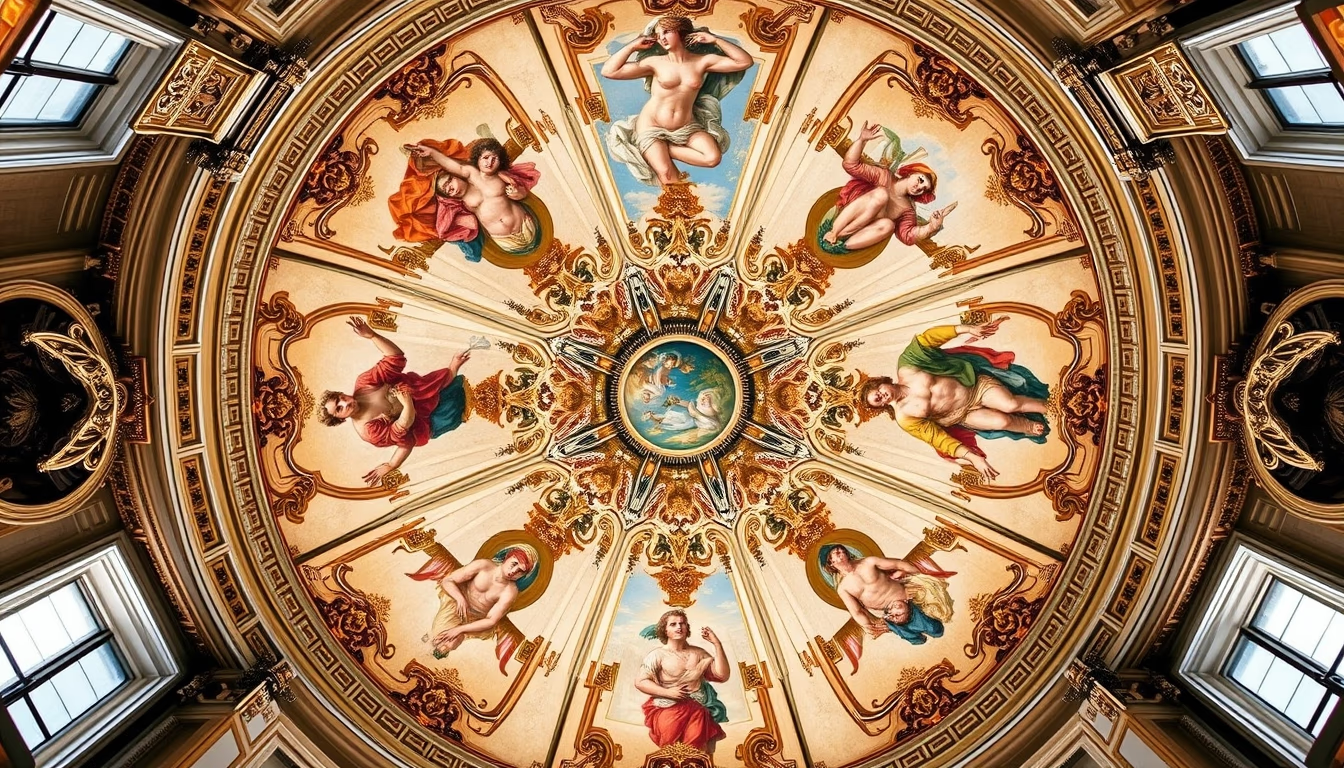
Fresco is an ancient mural painting technique on fresh plaster, widely used on ceilings of churches and Renaissance palaces.
About this subject
The fresco technique, from the Italian 'fresco' (fresh), involves applying water-diluted pigments onto a layer of wet plaster. The chemical reaction between the plaster and air makes the painting become part of the wall or ceiling, providing exceptional durability for centuries. This art reached its peak during the Italian Renaissance, particularly in the 15th and 16th centuries, with masterpieces like the Sistine Chapel ceiling painted by Michelangelo between 1508 and 1512, covering over 500 square meters with scenes from Genesis. Another iconic example is Raphael's 'School of Athens' in the Vatican, which uses the technique to depict classical philosophers in an illusionistic architecture.
Preparing a fresco required meticulous planning: the artist sketched a sinopia on the dry wall, then a rough plaster layer (arriccio) was applied, followed by a fine plaster layer (intonaco) on which they painted in daily sections called 'giornate'. Each giornata corresponded to the area that could be completed before the plaster dried, usually about 4 to 5 hours. This demanded extreme precision and skill, as later corrections were nearly impossible. Besides Renaissance frescoes, the technique was also used in ancient civilizations, such as the Minoan murals of Knossos (circa 1500 BCE) and the Pompeian paintings that survived the eruption of Vesuvius in 79 CE.
Culturally, ceiling frescoes often carry religious, political, or mythological meanings. In Baroque churches, like the Church of Saint Francis of Assisi in Ouro Preto (Brazil), ceilings were painted to create a heavenly experience, with trompe-l'oeil effects that visually expanded the space. In palaces, such as the Palace of Versailles, the ceiling of the Hall of Mirrors celebrates Louis XIV's military victories through allegories. Currently, fresco conservation faces challenges like humidity and pollution, requiring advanced restoration techniques, such as those performed on the Sistine Chapel between 1980 and 1994, which removed centuries of soot and revealed original vibrant colors.
Frequently Asked Questions
What is the difference between fresco and oil painting?
In fresco, pigments are applied on wet plaster and become part of the wall, while oil painting uses oil-based paint on a dry surface (like canvas or wood). Fresco is more durable in suitable environments but requires quick execution.
How are frescoes restored?
Restoration involves careful cleaning with solvents or lasers to remove dirt and old varnishes, consolidation of damaged areas with special mortars, and chromatic reintegration using reversible watercolors, always documenting the process.
What are the most famous frescoes in Brazil?
Notable Brazilian frescoes include those by artist Athos Bulcão in Brasília and Baroque ceilings in Minas Gerais, such as in the Church of Saint Francis of Assisi in Ouro Preto by Manuel da Costa Ataíde, depicting the Assumption of the Virgin.
Direct URL
https://pub-c7d6a6ea828543ac903a74a341ccb2e1.r2.dev/imagens/fresco-painting-ceiling-architectural-photography-p4.avifHow to credit
Include a visible link back to UtilizAí. Copy one of the snippets below:
<a href="https://xn--utiliza-eza.com/en/midia/imagens/fresco-painting-ceiling-architectural-photography-p4">Fresco painting ceiling</a> by <a href="https://xn--utiliza-eza.com">UtilizAí</a>, licensed under <a href="https://creativecommons.org/licenses/by/4.0/">CC BY 4.0</a>.
[Fresco painting ceiling](https://xn--utiliza-eza.com/en/midia/imagens/fresco-painting-ceiling-architectural-photography-p4) by [UtilizAí](https://xn--utiliza-eza.com), CC BY 4.0
License: CC-BY-4.0