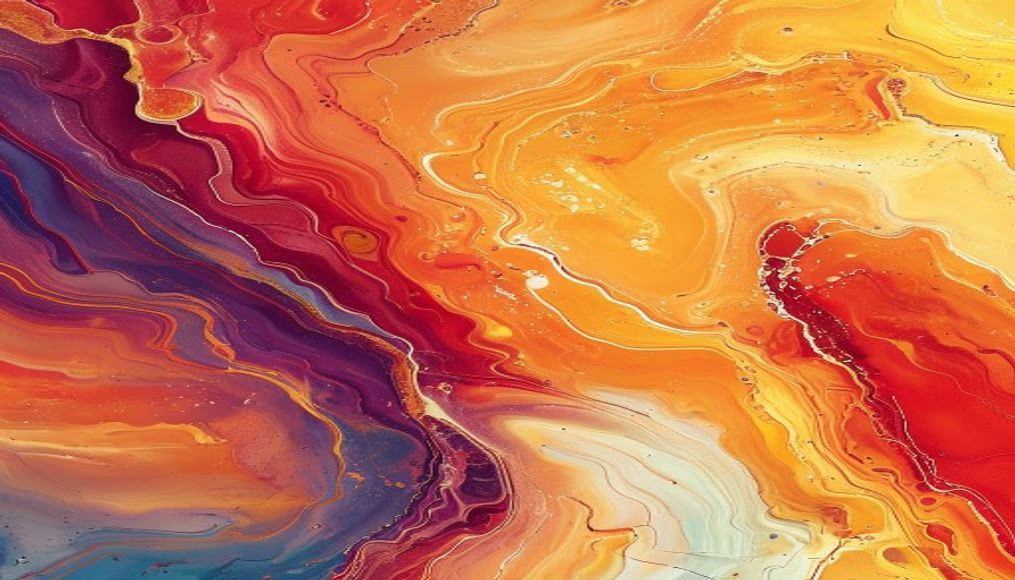
Fluid art swirling marble
1344×768 · AVIF · CC BY 4.0

Fluid art uses acrylic paints poured onto canvas to create marble-like patterns. The swirling marble technique produces organic layers and cells.
About this subject
Fluid art, also known as pouring or acrylic pouring, is a contemporary abstract technique that surged in popularity around the 2010s, fueled by online tutorials and social media sharing. Unlike traditional brushwork, fluid artists mix acrylic paint with a medium (usually water-based resin) to achieve a runny consistency and then pour the mixture onto a canvas. By tilting the surface, using palette knives, or blowing through straws, the paint flows freely. The dried result often resembles natural marble veining, with organic curves and layered color cells.
The marbled effect hinges on the formation of 'cells', circular shapes with distinct outlines. Adding silicone oil or dimethicone creates these cells because the oil repels the water-based paint, forming small craters as the mixture moves. Factors like paint density, the medium-to-paint ratio, and the order of pouring determine cell size and distribution. Experienced artists adjust viscosity to achieve either large, smooth cells or delicate, lace-like patterns.
The imitation of marble has deep roots: paper marbling techniques such as Japanese suminagashi and European marbled paper have existed for centuries. Fluid art reinvents this aesthetic on modern supports like stretched canvas, wooden panels, or even furniture. Despite its spontaneous appearance, the process demands precise material preparation and patience, as curing can take days. The flexibility allows for everything from small decorative pieces to large-scale murals.
A practical insight: fluid art is considered beginner-friendly, yet mastering it requires understanding the chemistry between pigments and additives. Galleries and collectors prize works with balanced composition and well-defined cells, elevating the technique to a form of liquid sculpture. The term 'swirling marble' specifically highlights the spiral motion that produces classic marbled visuals.
Frequently Asked Questions
What is fluid art?
Fluid art, also called acrylic pouring, is an abstract technique where liquid acrylic paints are poured onto a canvas and manipulated by gravity and motion, creating organic patterns reminiscent of marble.
How are cells formed in fluid art?
Cells form when silicone or oil is added to the paint. These immiscible substances react with the paint's surface tension, creating craters and swirls that dry into distinct circular shapes.
What materials do I need to start fluid art?
Essential materials include acrylic paints, pouring medium (e.g., Floetrol), silicone oil, pre-gessoed canvases, disposable cups, gloves, and a drop cloth.
Direct URL
https://pub-c7d6a6ea828543ac903a74a341ccb2e1.r2.dev/imagens/fluid-art-swirling-marble-studio-editorial-portrait-p0.avifHow to credit
Include a visible link back to UtilizAí. Copy one of the snippets below:
<a href="https://xn--utiliza-eza.com/en/midia/imagens/fluid-art-swirling-marble-studio-editorial-portrait-p0">Fluid art swirling marble</a> by <a href="https://xn--utiliza-eza.com">UtilizAí</a>, licensed under <a href="https://creativecommons.org/licenses/by/4.0/">CC BY 4.0</a>.
[Fluid art swirling marble](https://xn--utiliza-eza.com/en/midia/imagens/fluid-art-swirling-marble-studio-editorial-portrait-p0) by [UtilizAí](https://xn--utiliza-eza.com), CC BY 4.0
License: CC-BY-4.0