Flower stamen pollen macro
1344×768 · AVIF · CC BY 4.0
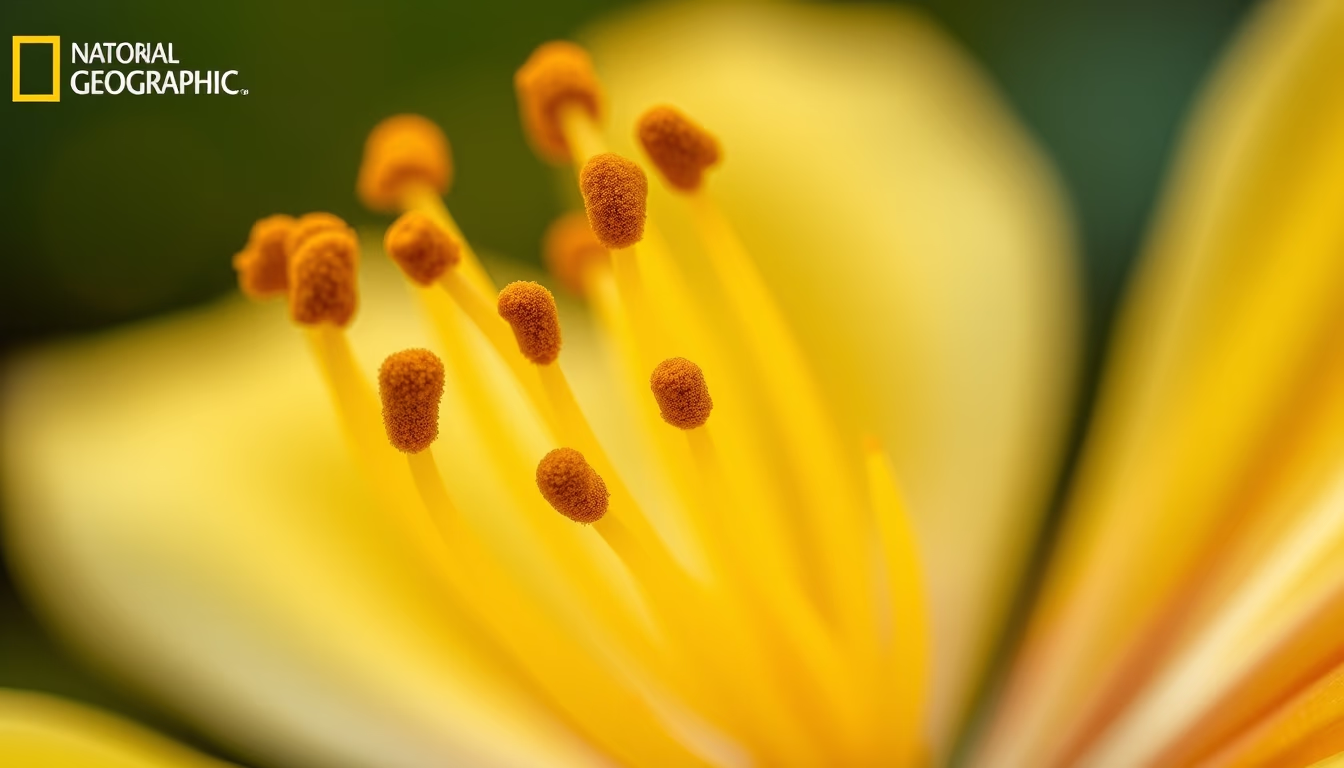
Stamens are the male reproductive structures of flowers, responsible for producing and releasing pollen, essential for plant reproduction.
About this subject
The stamen is the male reproductive organ of a flower, consisting of a filament and an anther. The anther contains pollen sacs where pollen grains are formed. Each pollen grain carries the male gametes needed to fertilize the female ovule in the pistil. Stamen morphology varies widely across species: some are long and pendulous, others erect and colorful, contributing to the visual diversity of flowers.
Pollen is one of the most resilient biological substances. Its outer wall, the exine, is made of sporopollenin, an extremely durable polymer that can fossilize. Analysis of fossil pollen (palynology) helps reconstruct ancient climates and ecosystems. Pollen also has economic importance: it is used in beekeeping as a protein source for bees, in traditional medicine as a supplement, and even in the cosmetic industry.
Pollen release occurs through anther dehiscence, often aided by wind or pollinators. Wind-pollinated (anemophilous) flowers produce light, abundant pollen grains, while insect-pollinated (entomophilous) flowers have sticky, ornamented grains. In macro photography, the surface details of pollen reveal intricate textures, from smooth spheres to reticulated or spiny forms, each adapted to its dispersal method.
Frequently Asked Questions
What is the function of the stamen in a flower?
The stamen is the male reproductive organ, responsible for producing and releasing pollen. Pollen contains male gametes that fertilize the ovule in the pistil, leading to seed formation.
Why does pollen have different shapes and textures?
Pollen shape and texture are adapted to pollination methods. Wind-pollinated plants produce light, smooth pollen, while insect-pollinated plants have sticky, ornamented pollen that clings to pollinators.
What is palynology and what is it used for?
Palynology is the study of fossil and modern pollen and spores. It is used to reconstruct past climates, date sediments, understand plant evolution, and assist in forensic investigations and honey production.
Direct URL
https://pub-c7d6a6ea828543ac903a74a341ccb2e1.r2.dev/imagens/flower-stamen-pollen-macro-national-geographic-style-p4.avifHow to credit
Include a visible link back to UtilizAí. Copy one of the snippets below:
<a href="https://xn--utiliza-eza.com/en/midia/imagens/flower-stamen-pollen-macro-national-geographic-style-p4">Flower stamen pollen macro</a> by <a href="https://xn--utiliza-eza.com">UtilizAí</a>, licensed under <a href="https://creativecommons.org/licenses/by/4.0/">CC BY 4.0</a>.
[Flower stamen pollen macro](https://xn--utiliza-eza.com/en/midia/imagens/flower-stamen-pollen-macro-national-geographic-style-p4) by [UtilizAí](https://xn--utiliza-eza.com), CC BY 4.0
License: CC-BY-4.0