Flower stamen pollen macro
1344×768 · AVIF · CC BY 4.0
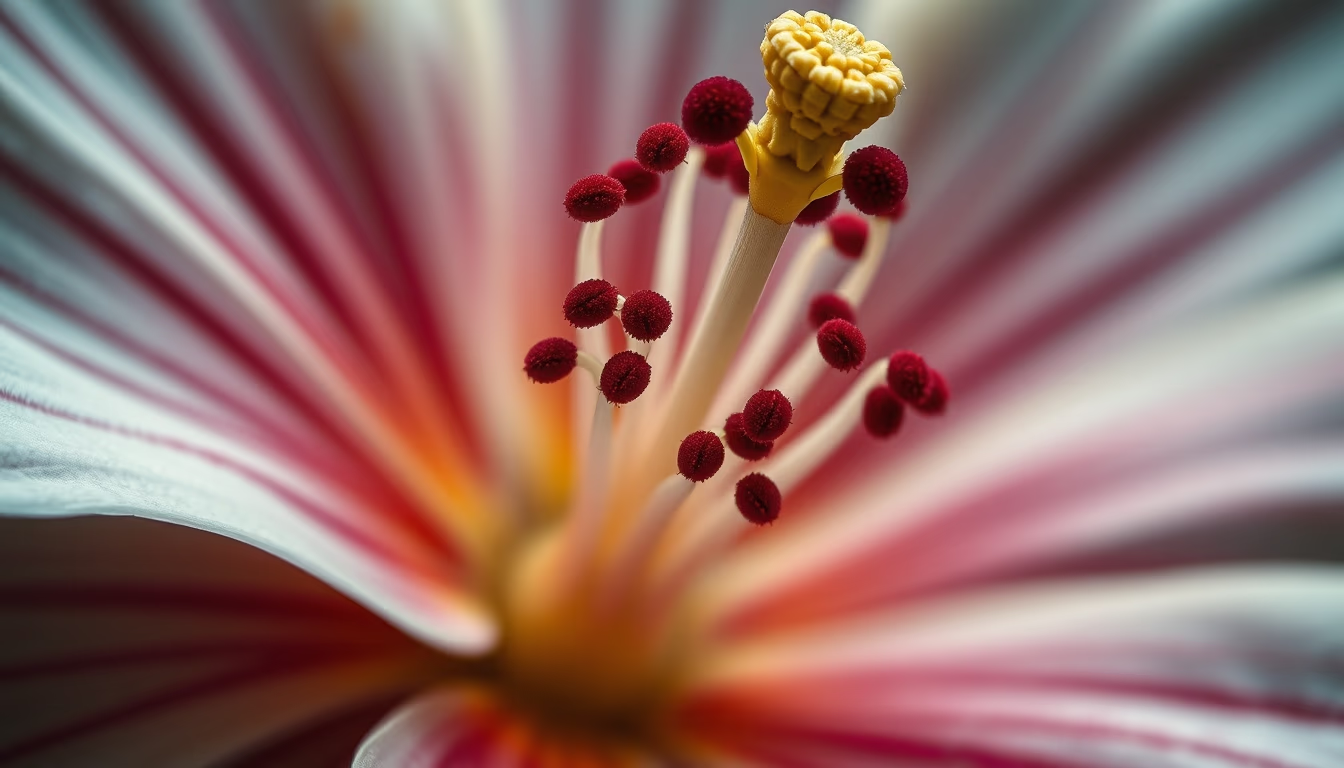
Stamens are the male reproductive part of flowers, producing pollen in their anthers. Each pollen grain carries the male gamete, crucial for the reproduction of flowering plants.
About this subject
Stamens are the male reproductive organs of flowers. Each stamen consists of a slender filament topped by an anther, where pollen grains are produced and stored. Pollen grains are microscopic structures with a complex architecture: the outer layer, called exine, is made of sporopollenin, one of the toughest biological substances, while the inner layer, intine, is more delicate. When a pollen grain lands on a compatible stigma, it germinates and forms a pollen tube that delivers the male gamete to the ovule, enabling fertilization and seed development.
Pollen grains display an astonishing variety of shapes, sizes, and surface ornamentation, depending on the plant species. This diversity is so distinctive that palynology, the study of pollen, relies on these traits to identify plants and reconstruct ancient environments. For instance, sunflower pollen is spiky, while pine pollen has air bladders for wind dispersal. Some grains are smooth, others reticulated or grooved. Colors also range widely from yellow and orange to white, red, and even blue, influenced by carotenoid content and other pigments.
Beyond their essential role in plant reproduction, pollen grains directly affect human life. Seasonal allergies, such as hay fever and asthma, are often triggered by airborne pollen, especially in spring. Conversely, bees collect pollen and turn it into bee bread, a protein-rich food. In alternative medicine and nutrition, pollen supplements are consumed for their energetic and anti-inflammatory properties. In design and fashion, the intricate textures and vibrant colors of pollen inspire prints, textile patterns, and jewelry. Macro photography of pollen, with its almost abstract details, has become a staple in high fashion editorials, elevating the microscopic beauty of nature into art.
Frequently Asked Questions
What is the function of the stamen in a flower?
The stamen is the male reproductive organ that produces pollen grains, which contain the male gametes needed for fertilization of the ovule.
Why do pollen grains have different shapes?
Shapes vary by species and are adapted to dispersal methods: wind-borne pollen is often light with air sacs, while insect-borne pollen tends to be stickier and more ornamented.
Can pollen be seen with the naked eye?
Individual grains are microscopic, but when present in large quantities they form a visible fine dust, usually yellow or orange, coating the anthers and nearby surfaces.
Direct URL
https://pub-c7d6a6ea828543ac903a74a341ccb2e1.r2.dev/imagens/flower-stamen-pollen-macro-high-fashion-editorial-p5.avifHow to credit
Include a visible link back to UtilizAí. Copy one of the snippets below:
<a href="https://xn--utiliza-eza.com/en/midia/imagens/flower-stamen-pollen-macro-high-fashion-editorial-p5">Flower stamen pollen macro</a> by <a href="https://xn--utiliza-eza.com">UtilizAí</a>, licensed under <a href="https://creativecommons.org/licenses/by/4.0/">CC BY 4.0</a>.
[Flower stamen pollen macro](https://xn--utiliza-eza.com/en/midia/imagens/flower-stamen-pollen-macro-high-fashion-editorial-p5) by [UtilizAí](https://xn--utiliza-eza.com), CC BY 4.0
License: CC-BY-4.0