Feather quill ink
1344×768 · AVIF · CC BY 4.0
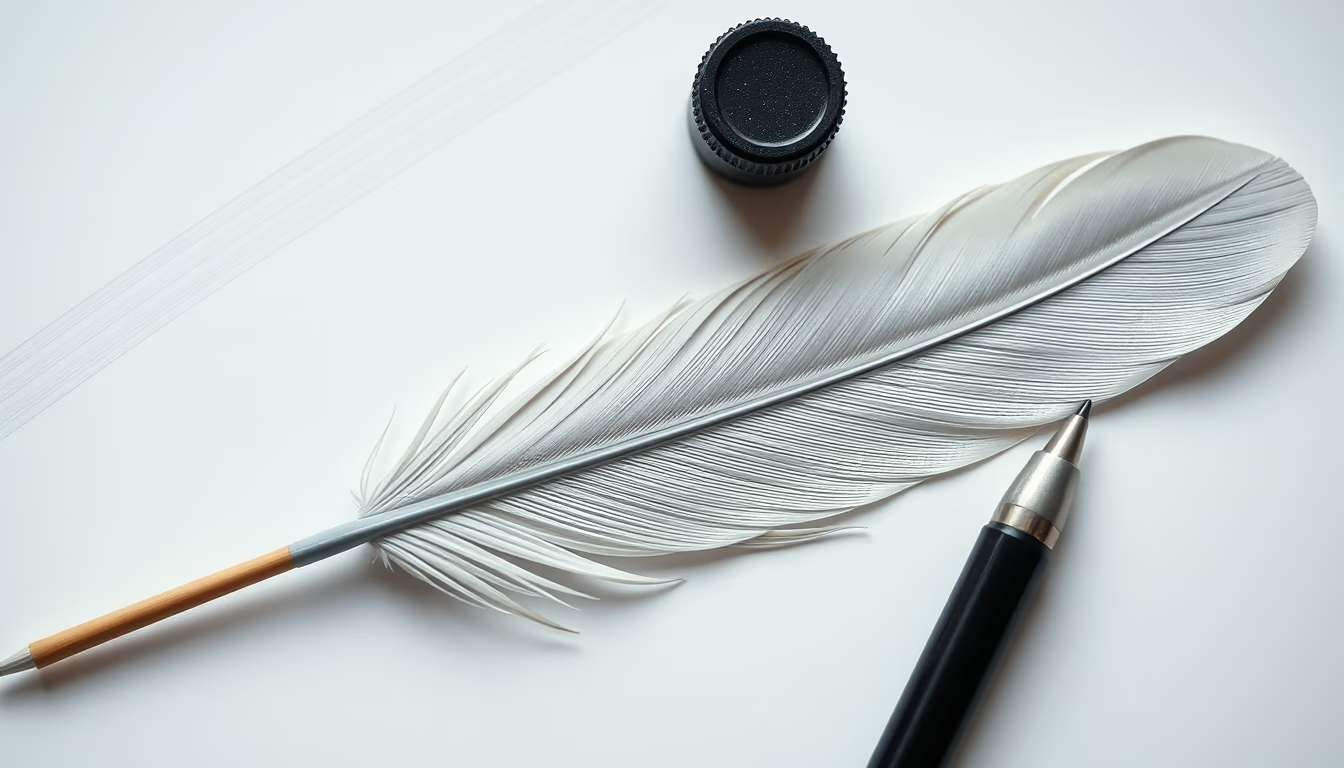
Hand-cut goose feathers were crafted into quills, essential for writing for centuries before the fountain pen.
About this subject
The writing quill, typically made from goose, swan, or crow feathers, was the primary writing instrument in Europe and the Americas from the 6th to the 19th century. Its use required skill: the tip was cut at an angle with a special penknife, and the cut was renewed as it wore down. Iron-gall ink, made from gallnuts and ferrous sulfate, was the most common ink because it was permanent and dark.
In colonial Brazil, quills were imported from Europe or made from native bird feathers. Scribes and magistrates used them to write official documents, letters, and minutes. The transition to metal nibs began slowly in the late 18th century, with mass-produced steel pens appearing in England around 1820. Despite this, bird quills remained in use in rural areas until the early 20th century.
Interestingly, the term penknife derives from the tool used to cut and trim writing quills. Left-handed people faced difficulties because the cut was for right-handers; however, special left-handed quills existed. Moreover, writing quality depended on the bird species, crow feathers were tougher, while swan feathers produced broader strokes.
Today, the quill is associated with artistic calligraphy and historical reenactment. Museums such as the Museum of the Portuguese Language in São Paulo display examples from the colonial period, and artisans still produce handmade quills for calligraphers. The image of a quill with an inkwell evokes a time when every letter was individually carved.
Frequently Asked Questions
What is the origin of the writing quill?
The bird feather as a writing instrument dates back at least to Ancient Rome, but its widespread use in Europe began in the Middle Ages. Goose feathers were most common due to their abundance and ease of cutting.
How was ink for quills made?
The most common ink was iron-gall ink, made from gallnuts (produced by wasps on oak trees), ferrous sulfate, gum arabic, and water. This ink was permanent and resistant to fading.
Why were quills replaced?
Replacement occurred with the invention of metal pens in the 19th century. Steel nibs were more durable, required no constant sharpening, and could be mass-produced, making writing more accessible.
Direct URL
https://pub-c7d6a6ea828543ac903a74a341ccb2e1.r2.dev/imagens/feather-quill-ink-isometric-flat-lay-p0.avifHow to credit
Include a visible link back to UtilizAí. Copy one of the snippets below:
<a href="https://xn--utiliza-eza.com/en/midia/imagens/feather-quill-ink-isometric-flat-lay-p0">Feather quill ink</a> by <a href="https://xn--utiliza-eza.com">UtilizAí</a>, licensed under <a href="https://creativecommons.org/licenses/by/4.0/">CC BY 4.0</a>.
[Feather quill ink](https://xn--utiliza-eza.com/en/midia/imagens/feather-quill-ink-isometric-flat-lay-p0) by [UtilizAí](https://xn--utiliza-eza.com), CC BY 4.0
License: CC-BY-4.0