Feather quill ink
1344×768 · AVIF · CC BY 4.0
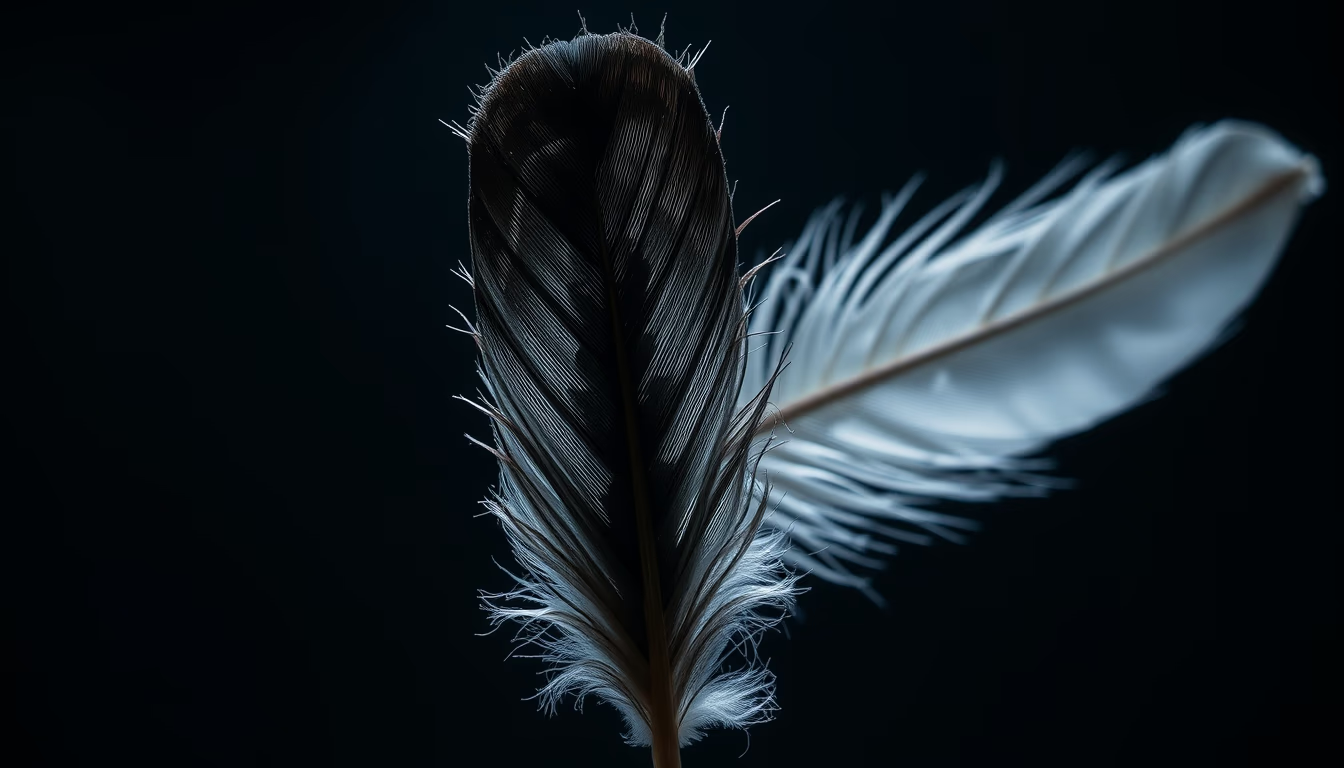
Feather quill and ink: writing instruments that shaped history before the fountain pen.
About this subject
The quill pen, made from feathers of birds such as geese, swans, or crows, was the primary writing instrument in the West from the 6th to the 19th century. The tip was cut at a bevel with a special penknife, and the ink, carbon-based or iron-gall, was stored in inkwells of metal, glass, or ceramic. Preparing a quill required skill: the shaft was hardened with hot sand and then cut to create an ink channel. This system allowed refined calligraphy and was used by scribes, authors, and cartographers.
Indian ink, originally Chinese, is a mixture of soot, gum arabic, and water. In medieval Europe, iron-gall ink (ferrous sulfate, tannin, and gum) was common, as it darkened over time and was water-resistant. The quill pen declined in the 19th century with the invention of the industrial steel pen and later the fountain pen. Yet the quill remains a symbol of scholarship, appearing in coats of arms and logos.
A curiosity: the word "pen" comes from Latin "penna" (feather), and "penknife" originally referred to a knife for cutting quills. Major documents like the U.S. Declaration of Independence (1776) and the U.S. Constitution (1787) were written with bird feather quills. Even after fountain pens became common, quills were still used by calligraphers and in formal ceremonies until the early 20th century.
Frequently Asked Questions
What is the difference between Indian ink and iron-gall ink?
Indian ink is made from soot and gum arabic, originating in China, and is permanent once dry. Iron-gall ink, common in medieval Europe, is made from ferrous sulfate, tannin (from oak galls), and gum; it darkens over time and can corrode paper over centuries.
Why were goose feathers preferred for quill pens?
Goose feathers are larger and sturdier than those of other birds, providing a firmer shaft and a larger ink reservoir. The three or four outermost feathers of each wing were best, as they have the ideal curve for right-handed (or left-handed, depending on the cut) use.
How was a quill prepared for writing?
First, the feather was cleaned and the shaft was heated in hot sand to harden it. Then the tip was cut at a bevel with a penknife, and a central slit was made to channel the ink. The nib was then shaped and sharpened according to the desired calligraphy style.
Direct URL
https://pub-c7d6a6ea828543ac903a74a341ccb2e1.r2.dev/imagens/feather-quill-ink-fine-art-photography-p9.avifHow to credit
Include a visible link back to UtilizAí. Copy one of the snippets below:
<a href="https://xn--utiliza-eza.com/en/midia/imagens/feather-quill-ink-fine-art-photography-p9">Feather quill ink</a> by <a href="https://xn--utiliza-eza.com">UtilizAí</a>, licensed under <a href="https://creativecommons.org/licenses/by/4.0/">CC BY 4.0</a>.
[Feather quill ink](https://xn--utiliza-eza.com/en/midia/imagens/feather-quill-ink-fine-art-photography-p9) by [UtilizAí](https://xn--utiliza-eza.com), CC BY 4.0
License: CC-BY-4.0