Feather barbs closeup
1344×768 · AVIF · CC BY 4.0
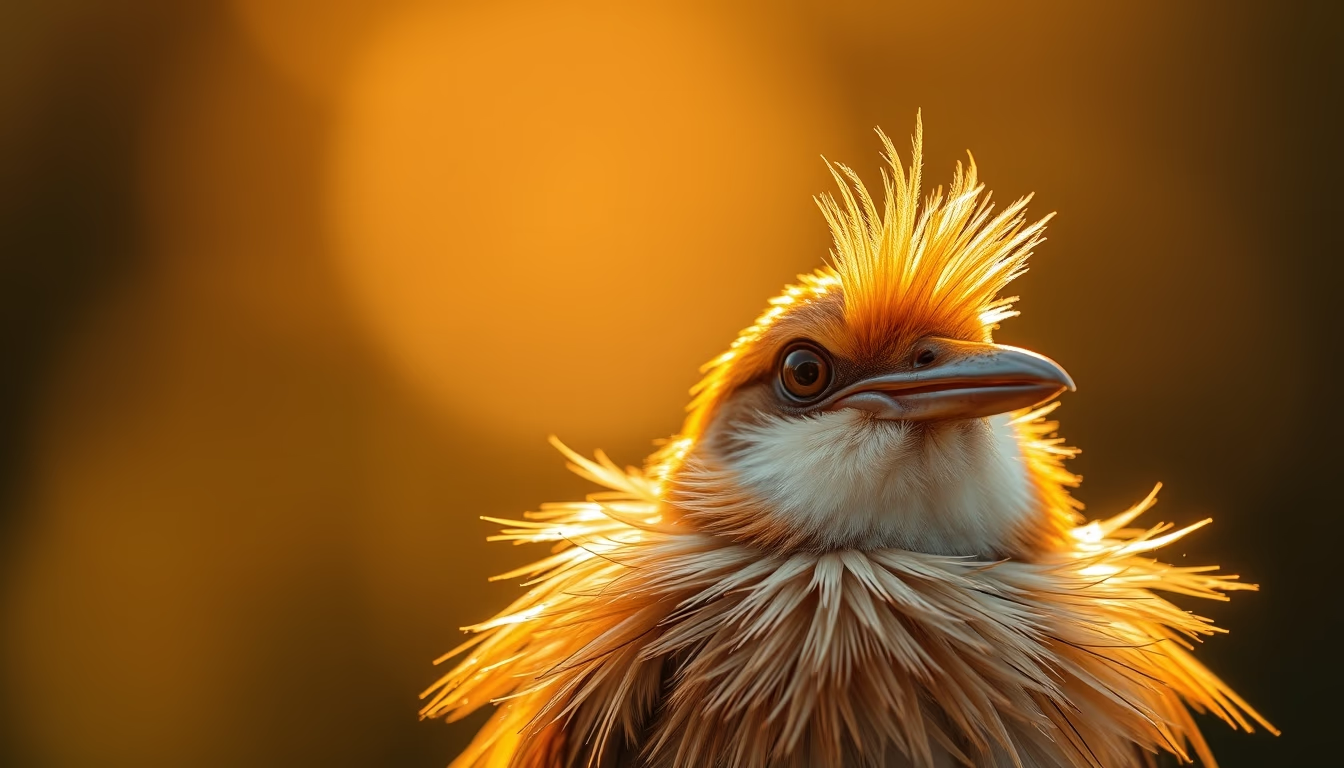
Feather barbs are the filaments that form the primary structure of feathers, essential for avian flight and thermal insulation.
About this subject
Feathers are complex structures consisting of a central shaft (rachis) and numerous lateral branches called barbs. In a close-up, barbs reveal a hierarchy of substructures: each barb bears tiny hooks (barbules) that interlock, forming a continuous and air-resistant surface. This architecture underlies the waterproofing and aerodynamic properties of flight feathers in birds.
Different feather types exist: contour feathers (covering the body), flight feathers (remiges and rectrices), and down feathers (plumules). The barbs of flight feathers are stiffer and highly organized, while those of down are soft and disorderly, trapping air for insulation. The microstructure of barbs varies by species: waterfowl like ducks have densely interlocking barbs to repel water, while raptors have barbs that aid silent flight.
Interestingly, feather colors depend not only on pigments but also on microscopic structures within barbs that refract light. For example, the iridescent blue of hyacinth macaw feathers results from nanoscale arrangements in barbules. Additionally, barb maintenance is vital for bird health: birds frequently preen to realign the hooks and remove parasites.
In birdwatching trips, such as in the Pantanal or Amazon, macro photography of feather barbs can reveal details invisible to the naked eye, like barbule symmetry or melanin presence. This type of image is valuable for biologists and nature enthusiasts studying evolutionary adaptations.
Frequently Asked Questions
What are feather barbs?
Feather barbs are the lateral branches extending from the rachis (central shaft) of a feather. They consist of smaller filaments called barbules, which interlock via hooks to form a continuous surface.
What is the function of barbs in birds?
Barbs are crucial for flight aerodynamics, as they create a rigid surface that pushes against air. They also aid in thermal insulation, waterproofing, and, in some species, structural coloration.
How do birds maintain their barbs?
Birds preen using their beaks to realign barbules and remove dirt or parasites. This process, called preening, is essential for flight efficiency and protection against cold and water.
Direct URL
https://pub-c7d6a6ea828543ac903a74a341ccb2e1.r2.dev/imagens/feather-barbs-closeup-travel-photography-p2.avifHow to credit
Include a visible link back to UtilizAí. Copy one of the snippets below:
<a href="https://xn--utiliza-eza.com/en/midia/imagens/feather-barbs-closeup-travel-photography-p2">Feather barbs closeup</a> by <a href="https://xn--utiliza-eza.com">UtilizAí</a>, licensed under <a href="https://creativecommons.org/licenses/by/4.0/">CC BY 4.0</a>.
[Feather barbs closeup](https://xn--utiliza-eza.com/en/midia/imagens/feather-barbs-closeup-travel-photography-p2) by [UtilizAí](https://xn--utiliza-eza.com), CC BY 4.0
License: CC-BY-4.0