Electric vehicle charging station
1344×768 · AVIF · CC BY 4.0
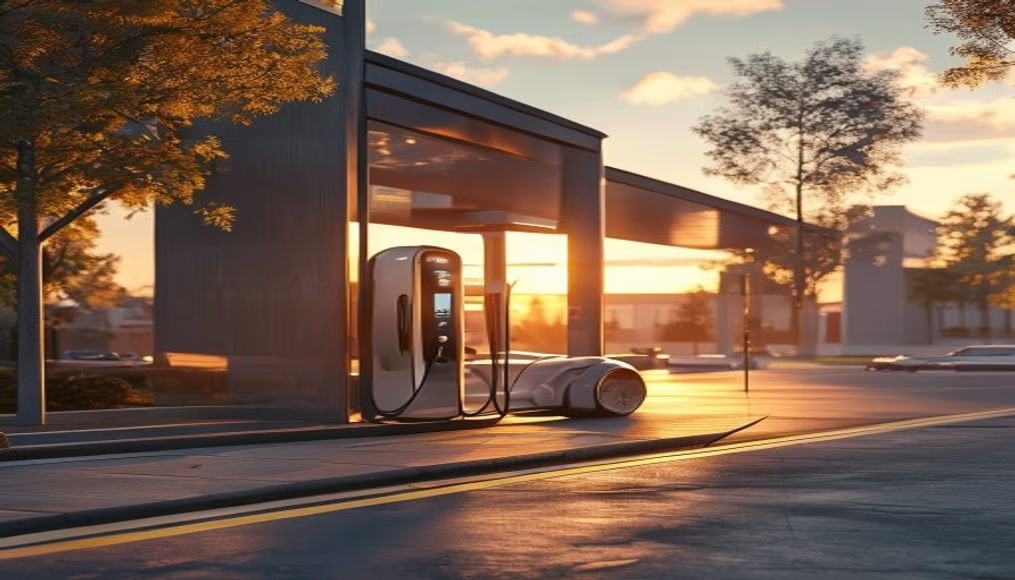
Electric vehicle charging stations are essential refueling points for electric mobility, found in urban areas and highways.
About this subject
Electric vehicle (EV) charging stations are infrastructures that supply electrical energy to recharge EV batteries. There are three main charging levels: Level 1 uses standard household outlets (120V) and is the slowest; Level 2 operates at 240V, common in homes and commercial buildings; and DC fast charging can replenish a battery to 80% in under 30 minutes. Global plug standards vary, including the CCS (Combined Charging System) used by VW and BMW, CHAdeMO by Nissan and Mitsubishi, and Tesla's proprietary Supercharger.
In Brazil, the public charging network has grown rapidly as the EV fleet expands. According to the Brazilian Electric Vehicle Association (ABVE), the country surpassed 4,000 public charging points by 2024, mainly in the Southeast and South regions. Companies like Electra, Tupi Energia, and EDP install stations in malls, supermarkets, gas stations, and highways. Street-side charging remains scarce, but federal programs like Rota 2030 and local incentives encourage further deployment.
Vehicle-to-grid (V2G) technology allows EVs to return energy to the grid, turning charging stations into balancing assets for the power system. Ultra-fast charging (350 kW) is already available on European and Asian highway corridors and is beginning to appear in Brazil. For travelers, strategically placed stations along major highways such as BR-116 and Rodovia dos Imigrantes help alleviate range anxiety. Apps like PlugShare and Electromaps assist in locating available chargers.
In travel photography, charging stations serve as modern landmarks documenting the energy transition. Photographs of these installations at iconic Brazilian sites, like alongside Christ the Redeemer or on Copacabana’s waterfront, capture the fusion of technology with cultural heritage.
Frequently Asked Questions
How long does it take to charge an electric vehicle at a charging station?
Charging time depends on the charger type: a Level 1 household outlet takes 8-20 hours for a full charge; a Level 2 (240V) takes 4-8 hours; and a DC fast charger can reach 80% in 20-40 minutes.
How many charging stations are there in Brazil currently?
As of 2024, Brazil has over 4,000 public charging points, mainly in the Southeast and South regions, with rapid expansion in other areas.
Do all electric cars use the same plug for charging?
No. Standards vary: CCS is common for European and American vehicles, CHAdeMO for Japanese cars (Nissan Leaf), and Tesla uses a proprietary connector. In Brazil, most public chargers offer both CCS and CHAdeMO.
Direct URL
https://pub-c7d6a6ea828543ac903a74a341ccb2e1.r2.dev/imagens/electric-vehicle-charging-station-travel-photography-v10.avifHow to credit
Include a visible link back to UtilizAí. Copy one of the snippets below:
<a href="https://xn--utiliza-eza.com/en/midia/imagens/electric-vehicle-charging-station-travel-photography-v10">Electric vehicle charging station</a> by <a href="https://xn--utiliza-eza.com">UtilizAí</a>, licensed under <a href="https://creativecommons.org/licenses/by/4.0/">CC BY 4.0</a>.
[Electric vehicle charging station](https://xn--utiliza-eza.com/en/midia/imagens/electric-vehicle-charging-station-travel-photography-v10) by [UtilizAí](https://xn--utiliza-eza.com), CC BY 4.0
License: CC-BY-4.0