Electric vehicle charging station
1344×768 · AVIF · CC BY 4.0
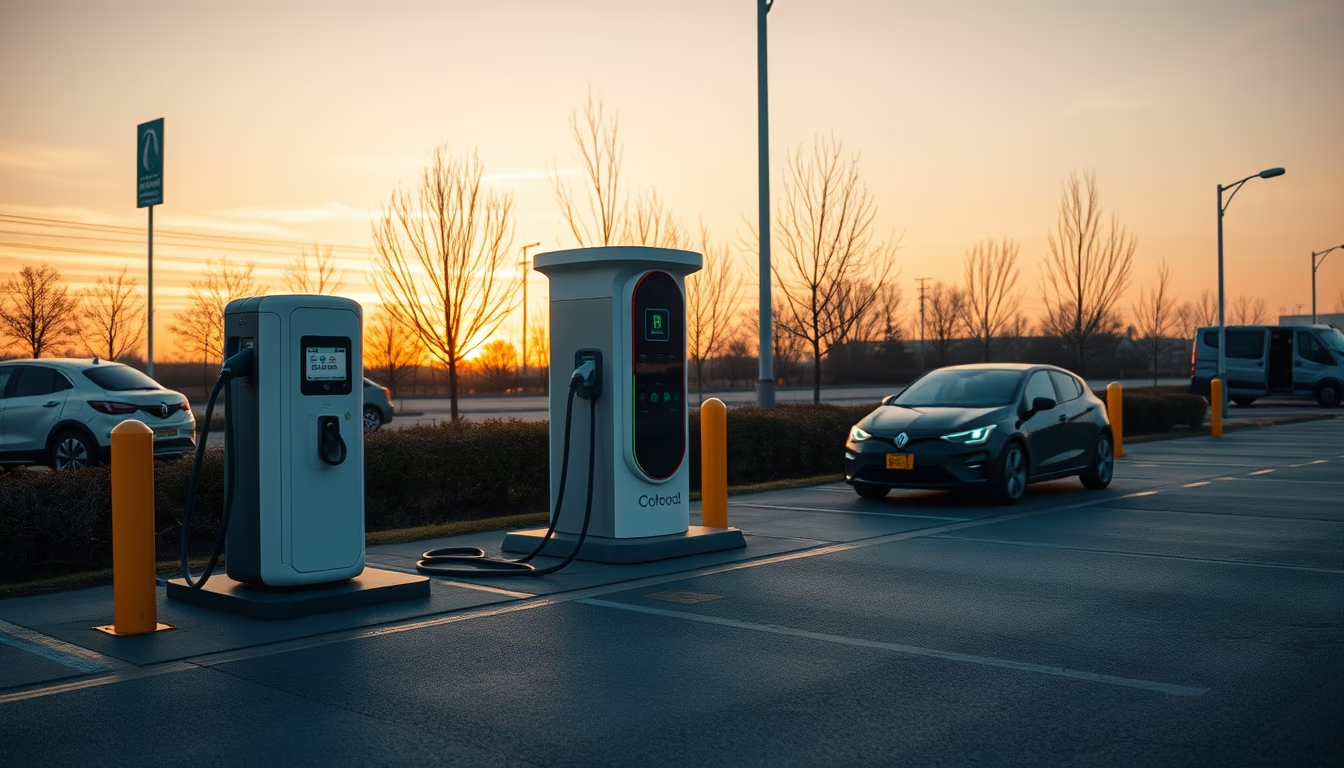
Electric vehicle charging station in an urban area, featuring a Type 2 connector and digital display.
About this subject
Electric vehicle charging stations are key components of sustainable mobility infrastructure. In Brazil, the expansion of these points has been growing, especially in capitals such as São Paulo, Rio de Janeiro, and Brasília, where hundreds of public charging stations already exist. The Type 2 connector, a European standard adopted in the country, allows AC charging of up to 22 kW, enough to recharge a medium-sized electric car in about 3 to 4 hours. The digital display shows information such as estimated charging time, energy supplied, and cost, integrating with payment apps.
Installation follows technical standards from ABNT NBR 17019, which defines safety and compatibility requirements. Additionally, the Brazilian Electricity Regulatory Agency (ANEEL) regulates pricing, which can be per time or per kWh consumed. In 2023, Brazil surpassed 80,000 light electric vehicles, boosting demand for fast chargers of 50 kW or more, common on highways.
Historically, the first public station in the country was inaugurated in 2011 in Rio de Janeiro by Petrobras in partnership with Nissan. Since then, the market has diversified with operators such as Tupinambá, Zletric, and EDP. Strategic locations in malls, supermarkets, and gas stations facilitate use during daily activities, while ultra-fast chargers (up to 350 kW) are beginning to appear on long-distance corridors like the Presidente Dutra highway.
Interestingly, Brazil has one of the largest clean energy potentials in the world, with a predominantly renewable electricity matrix. This makes electric vehicle charging even more sustainable, reducing carbon emissions by up to 90% compared to combustion vehicles. However, challenges such as connector standardization and network interoperability still need to be overcome to accelerate mass adoption.
Frequently Asked Questions
What is the difference between AC and DC chargers?
AC chargers are slower, typically up to 22 kW, using the vehicle's onboard charger. DC chargers supply high power (50 kW to 350 kW) directly to the battery, reducing charging time to minutes.
How long does it take to charge an electric car at a public station?
It depends on the charger's power and battery capacity. On a 22 kW AC charger, a 40 kWh battery takes about 2 hours. On a 50 kW DC fast charger, the same battery reaches 80% in approximately 30 minutes.
Can any electric vehicle charge at any station in Brazil?
Not always. Most stations use Type 2 (Mennekes) for AC and CCS Combo 2 for DC, the standard in Brazil. Vehicles with other connectors, like CHAdeMO (used in some Nissan Leafs), may need adapters or specific stations.
Direct URL
https://pub-c7d6a6ea828543ac903a74a341ccb2e1.r2.dev/imagens/electric-vehicle-charging-station-cinematic-wide-shot-v2.avifHow to credit
Include a visible link back to UtilizAí. Copy one of the snippets below:
<a href="https://xn--utiliza-eza.com/en/midia/imagens/electric-vehicle-charging-station-cinematic-wide-shot-v2">Electric vehicle charging station</a> by <a href="https://xn--utiliza-eza.com">UtilizAí</a>, licensed under <a href="https://creativecommons.org/licenses/by/4.0/">CC BY 4.0</a>.
[Electric vehicle charging station](https://xn--utiliza-eza.com/en/midia/imagens/electric-vehicle-charging-station-cinematic-wide-shot-v2) by [UtilizAí](https://xn--utiliza-eza.com), CC BY 4.0
License: CC-BY-4.0