Crystal salt macro
1344×768 · AVIF · CC BY 4.0
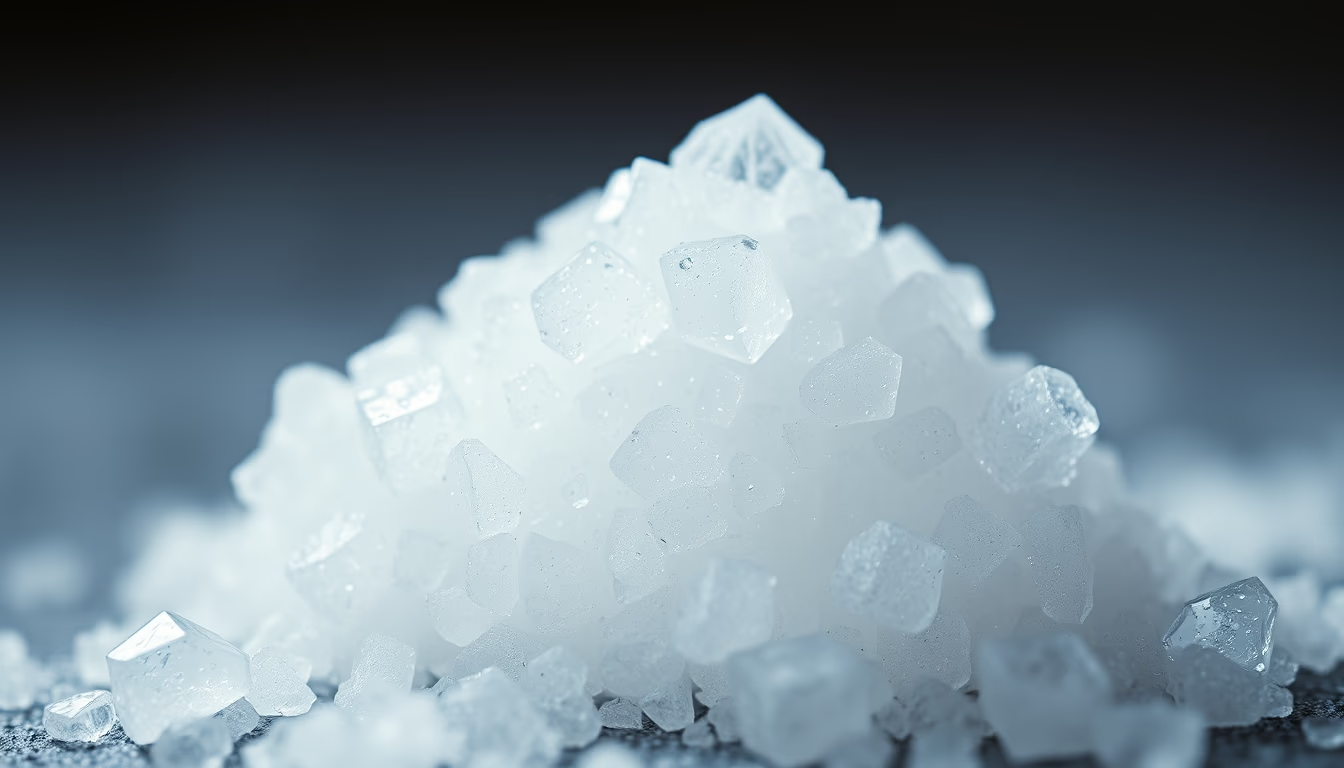
Crystallized salt seen in macro reveals the cubic geometry of sodium chloride crystals, one of the most common minerals on Earth.
About this subject
Table salt, or sodium chloride (NaCl), crystallizes in the cubic system, forming perfect cubes under ideal conditions. Each crystal consists of sodium and chlorine ions arranged in a three-dimensional lattice. This structure gives salt its cubic cleavage: when broken, it splits into smaller cubic fragments. At macro scale, smooth faces and right angles become visible.
Salt crystal formation depends on factors like temperature, water purity, and evaporation rate. In natural salt pans, seawater evaporates slowly in shallow ponds, allowing ordered crystal growth. Different impurities can alter shape or color: Himalayan pink salt gets its hue from trace iron oxide. Unrefined sea salt may contain small amounts of minerals like magnesium and calcium.
Salt is essential for human life, but excessive consumption is linked to health issues like hypertension. Historically, salt was used as a preservative, currency, and even caused wars. The word "salary" comes from Latin "salarium," payment given to Roman soldiers to buy salt. Today, global salt production exceeds 300 million tons annually, led by China, the United States, and India.
In macro photography, salt offers an accessible and visually rich subject. Side or grazing light highlights crystal faces and shadows, creating dramatic contrast. Using lo-fi or disposable cameras, as tagged, can add grain and desaturated colors, evoking a nostalgic aesthetic. This approach emphasizes textures and shapes that would go unnoticed by the naked eye.
Frequently Asked Questions
Why are salt crystals cubic?
Sodium chloride (NaCl) crystallizes in a cubic system because of its ionic lattice structure. Sodium and chlorine ions arrange in a face-centered cubic pattern, resulting in crystals with square faces and 90-degree angles.
What is the difference between sea salt and table salt?
Sea salt is produced by evaporating seawater and is usually less processed, retaining trace minerals that can affect color and flavor. Table salt is refined and often contains additives like iodine and anti-caking agents.
How to photograph salt crystals in macro?
Use a macro lens or extension tubes. Side lighting highlights textures. A dark background helps contrast translucent crystals. Avoid touching crystals to prevent breakage. Manual focus is recommended for precision.
Direct URL
https://pub-c7d6a6ea828543ac903a74a341ccb2e1.r2.dev/imagens/crystal-salt-macro-lo-fi-disposable-camera-p1.avifHow to credit
Include a visible link back to UtilizAí. Copy one of the snippets below:
<a href="https://xn--utiliza-eza.com/en/midia/imagens/crystal-salt-macro-lo-fi-disposable-camera-p1">Crystal salt macro</a> by <a href="https://xn--utiliza-eza.com">UtilizAí</a>, licensed under <a href="https://creativecommons.org/licenses/by/4.0/">CC BY 4.0</a>.
[Crystal salt macro](https://xn--utiliza-eza.com/en/midia/imagens/crystal-salt-macro-lo-fi-disposable-camera-p1) by [UtilizAí](https://xn--utiliza-eza.com), CC BY 4.0
License: CC-BY-4.0