Collaborative robot cobot
1344×768 · AVIF · CC BY 4.0

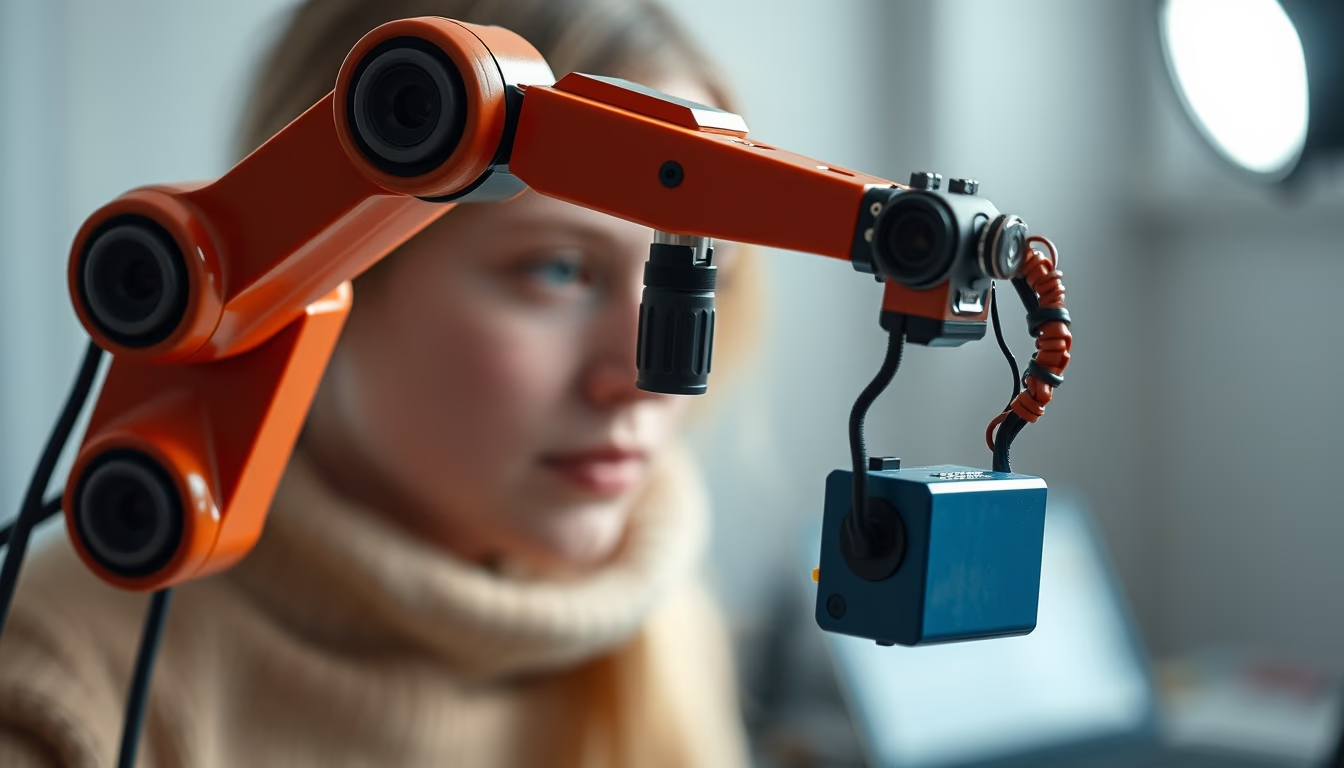
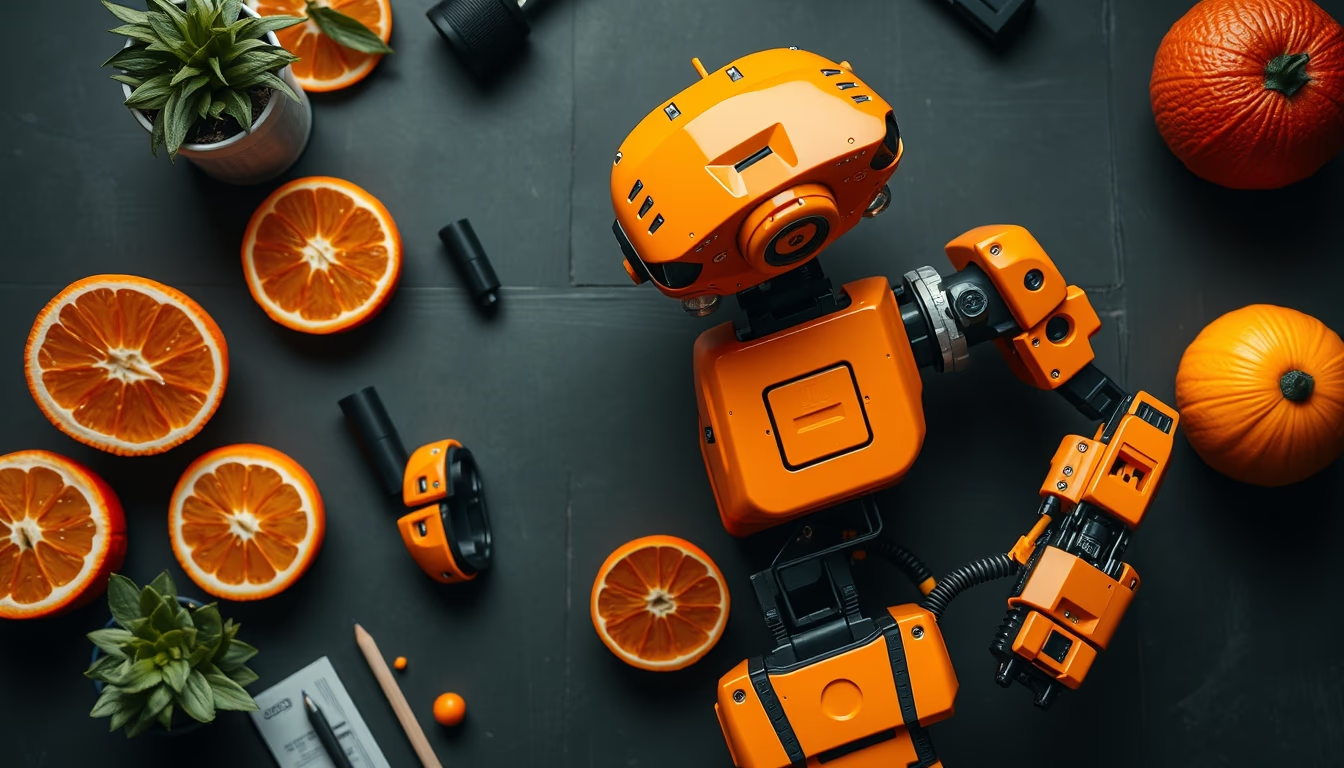
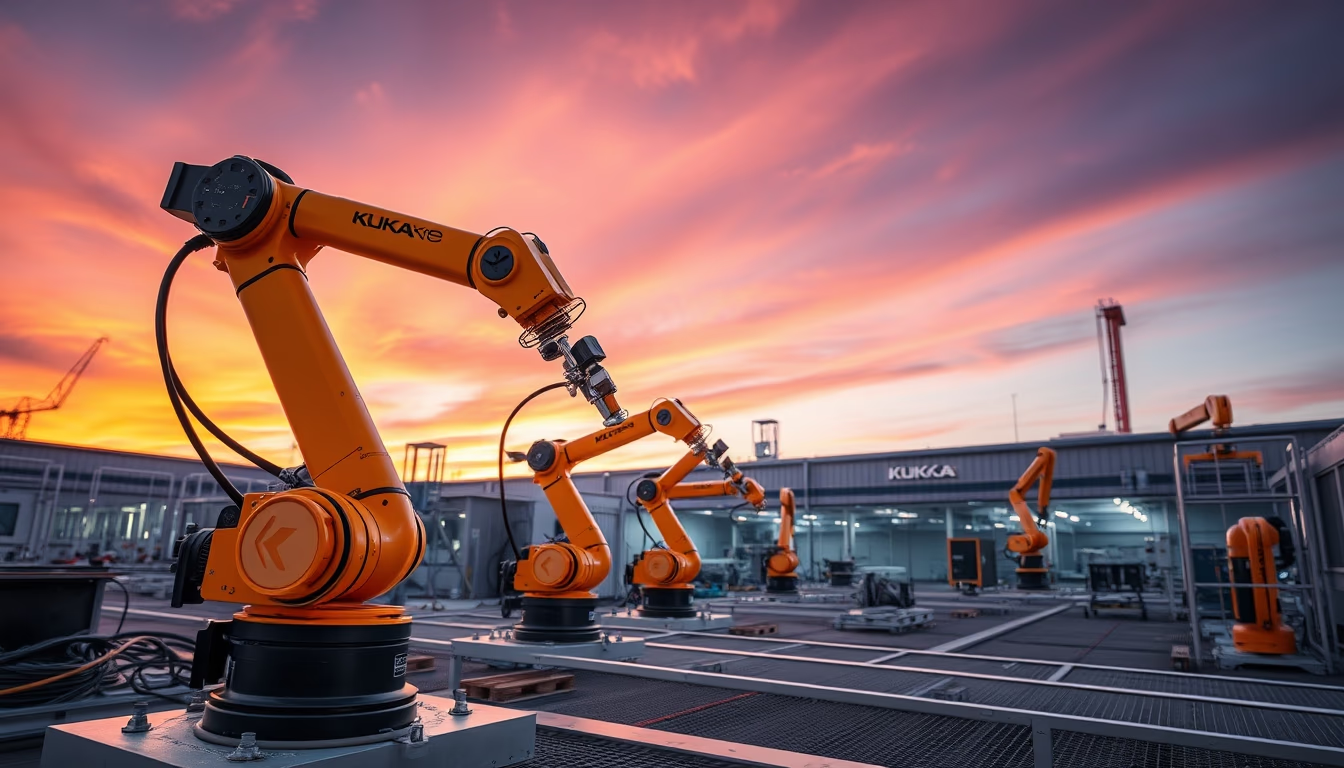
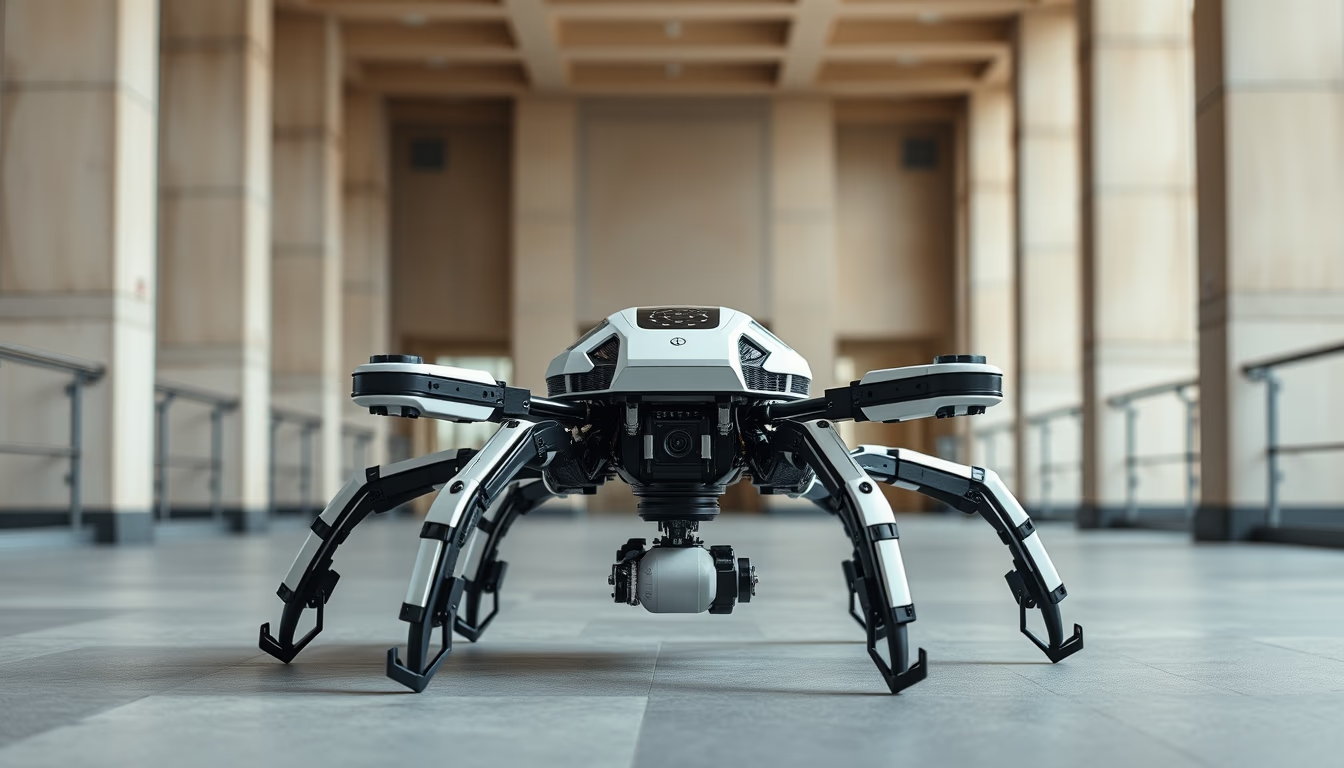
Collaborative robots, or cobots, are transforming industrial automation by working safely alongside humans with flexibility.
About this subject
Collaborative robots, commonly called cobots, represent a significant evolution in industrial robotics. Unlike traditional robots that operate isolated in safety cages, cobots are designed to interact directly with humans in shared spaces. This is made possible by advanced sensors, force and speed limits, and collision detection algorithms that ensure worker safety.
The concept of collaborative robotics gained momentum in the 2000s, with companies like Universal Robots (founded in 2005) popularizing the model. Cobots are widely used in repetitive or ergonomically challenging tasks such as assembly, packaging, quality inspection, and material handling. Their intuitive programming, often by demonstration, allows operators without deep technical knowledge to quickly reconfigure them for new tasks.
A crucial aspect of cobots is safety certification, such as ISO 10218 and ISO/TS 15066, which establish requirements for collaborative operation. These standards define biomechanical limits to prevent injury. Studies show that cobot adoption can increase productivity by up to 30% in certain production lines, while reducing errors and improving employee satisfaction by eliminating monotonous tasks.
Globally, the collaborative robot market grows at annual rates exceeding 20%, driven by Industry 4.0 and the demand for flexible automation. Countries like Germany, Japan, and China lead integration, while in Brazil sectors such as automotive, metalworking, and logistics are already experiencing real gains. Despite lower initial costs compared to traditional industrial robots, successful implementation requires careful risk analysis and adequate team training.
Frequently Asked Questions
What is the difference between a cobot and a traditional industrial robot?
Cobots are designed to work in direct contact with humans without safety cages, while traditional industrial robots operate in isolation due to accident risks. Cobots have sensors that limit force and speed, and their programming is simpler and more flexible.
Are cobots safe to operate near people?
Yes, as long as safety standards like ISO 10218 and ISO/TS 15066 are followed. They have collision detection and stop automatically on contact. However, risk assessment in the workplace is essential to ensure safety.
Which sectors use collaborative robots the most?
Industries such as automotive, electronics, metalworking, pharmaceutical, and logistics are the main ones. Common tasks include assembly, packaging, inspection, welding, and part handling. Small and medium enterprises also adopt cobots due to affordable cost.
Direct URL
https://pub-c7d6a6ea828543ac903a74a341ccb2e1.r2.dev/imagens/collaborative-robot-cobot-lo-fi-disposable-camera-p5.avifHow to credit
Include a visible link back to UtilizAí. Copy one of the snippets below:
<a href="https://xn--utiliza-eza.com/en/midia/imagens/collaborative-robot-cobot-lo-fi-disposable-camera-p5">Collaborative robot cobot</a> by <a href="https://xn--utiliza-eza.com">UtilizAí</a>, licensed under <a href="https://creativecommons.org/licenses/by/4.0/">CC BY 4.0</a>.
[Collaborative robot cobot](https://xn--utiliza-eza.com/en/midia/imagens/collaborative-robot-cobot-lo-fi-disposable-camera-p5) by [UtilizAí](https://xn--utiliza-eza.com), CC BY 4.0
License: CC-BY-4.0