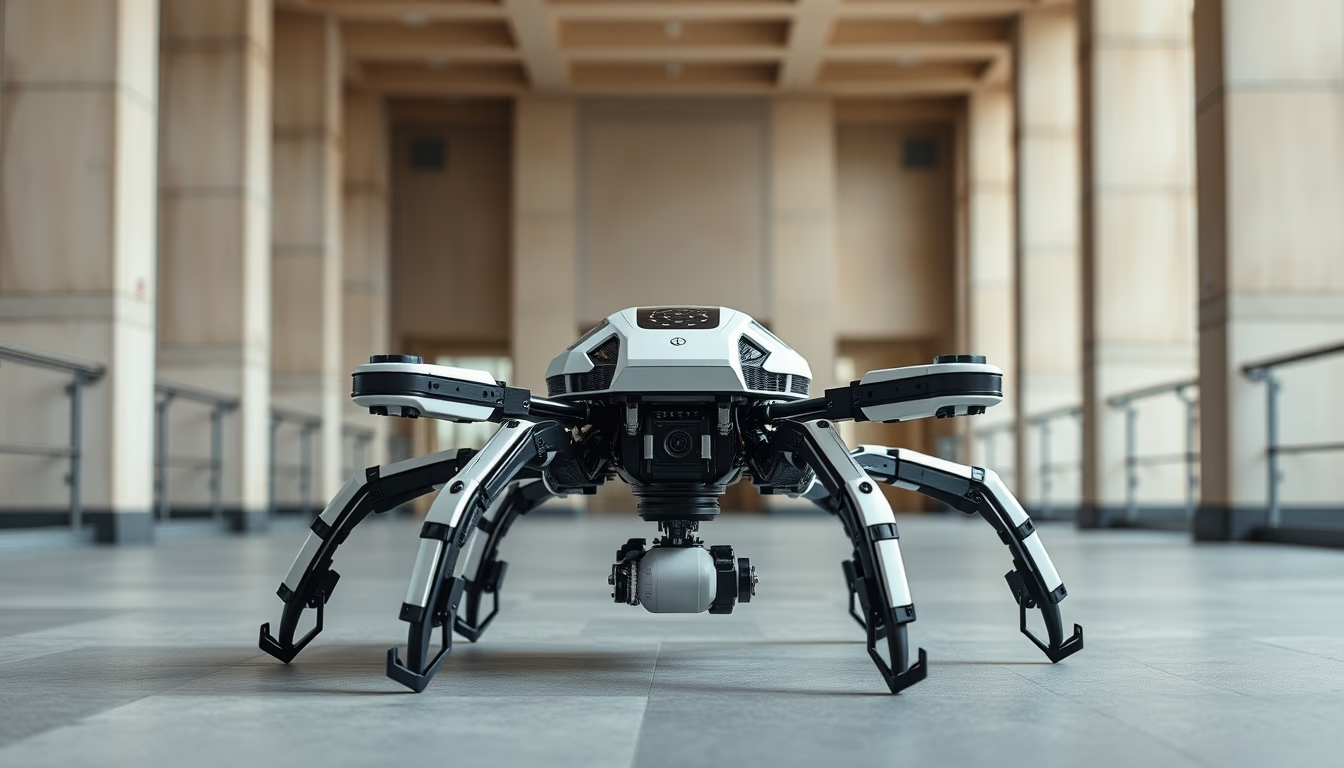
Collaborative robot cobot
1344×768 · AVIF · CC BY 4.0

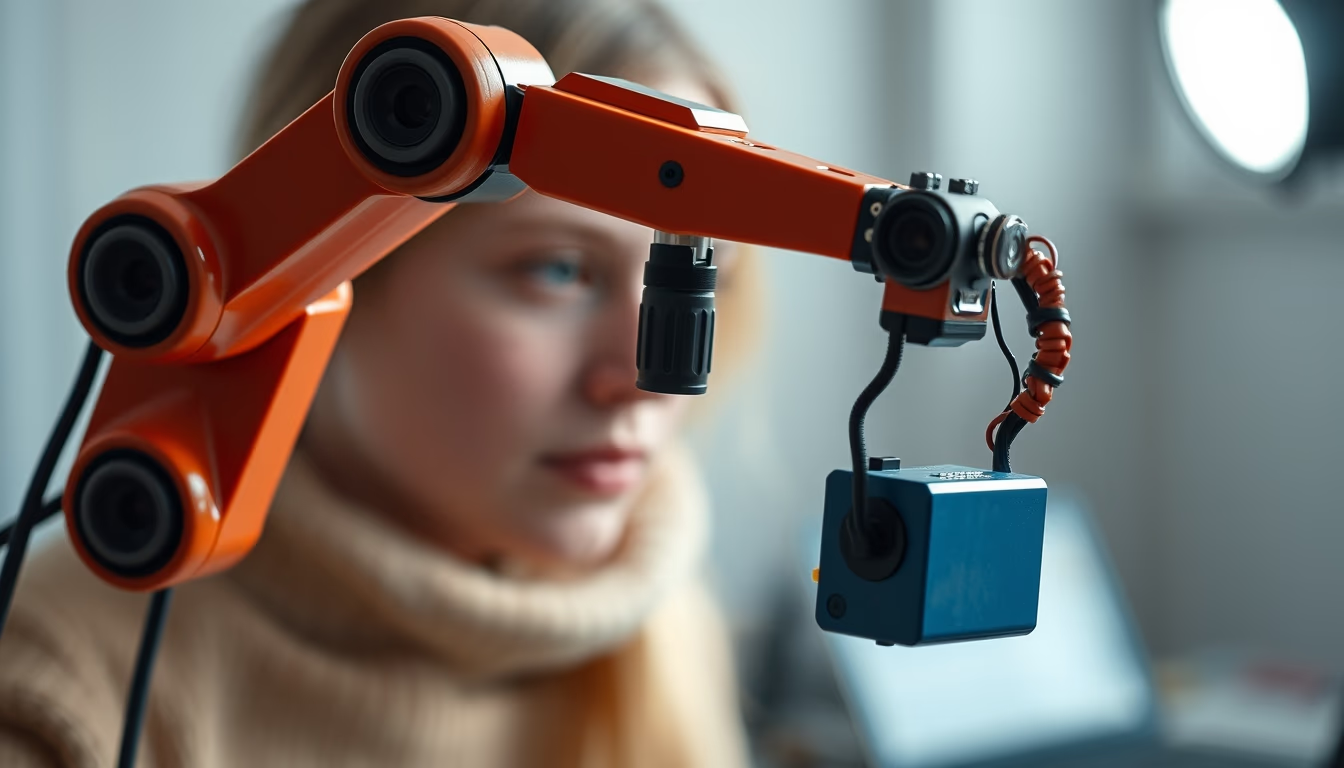
Collaborative robots, or cobots, are transforming the fashion industry, combining mechanical precision with human creativity in high-fashion editorials.
About this subject
Collaborative robots, known as cobots, are designed to work side by side with humans in shared environments. Unlike traditional industrial robots that operate isolated in safety cages, cobots feature sensors and algorithms that enable safe and flexible interaction. In the fashion industry, these robots are being adopted for repetitive and precise tasks such as fabric cutting, assisted sewing, and handling delicate materials.
A notable example is the use of cobots in high-fashion garment construction, where millimeter repeatability is essential for flawless finishes. Brands like Italian Benetton and Japanese Uniqlo have already implemented cobots on their production lines to increase efficiency without fully replacing manual craftsmanship. In an editorial context, the presence of a cobot in a fashion setting creates a visual narrative that contrasts the coldness of the machine with the expressiveness of design.
Integrating cobots in fashion also raises sustainability questions. By optimizing fabric usage and reducing errors, these robots help decrease textile waste. Moreover, the ability to quickly reprogram new patterns allows on-demand production, reducing inventory and waste. In high-fashion editorials, the image of a cobot evokes the future of fashion: a symbiosis between technology and art, where the machine does not replace the designer but expands their creative possibilities.
Frequently Asked Questions
Will cobots replace fashion designers?
No. Cobots are tools that automate repetitive and precise tasks, freeing designers to focus on creativity and design. The fashion industry values human touch and artistic innovation, which cannot be replicated by machines.
How do cobots contribute to sustainability in fashion?
They reduce fabric waste through more precise cutting and optimize material usage. Additionally, they enable on-demand production, avoiding excess inventory and disposal of unsold items.
Are cobots safe to work near humans?
Yes, cobots are designed with force and vision sensors that detect human presence and automatically stop or slow down to prevent accidents. They are certified by international safety standards such as ISO 10218.
Direct URL
https://pub-c7d6a6ea828543ac903a74a341ccb2e1.r2.dev/imagens/collaborative-robot-cobot-high-fashion-editorial-p2.avifHow to credit
Include a visible link back to UtilizAí. Copy one of the snippets below:
<a href="https://xn--utiliza-eza.com/en/midia/imagens/collaborative-robot-cobot-high-fashion-editorial-p2">Collaborative robot cobot</a> by <a href="https://xn--utiliza-eza.com">UtilizAí</a>, licensed under <a href="https://creativecommons.org/licenses/by/4.0/">CC BY 4.0</a>.
[Collaborative robot cobot](https://xn--utiliza-eza.com/en/midia/imagens/collaborative-robot-cobot-high-fashion-editorial-p2) by [UtilizAí](https://xn--utiliza-eza.com), CC BY 4.0
License: CC-BY-4.0