Collaborative robot cobot
1344×768 · AVIF · CC BY 4.0

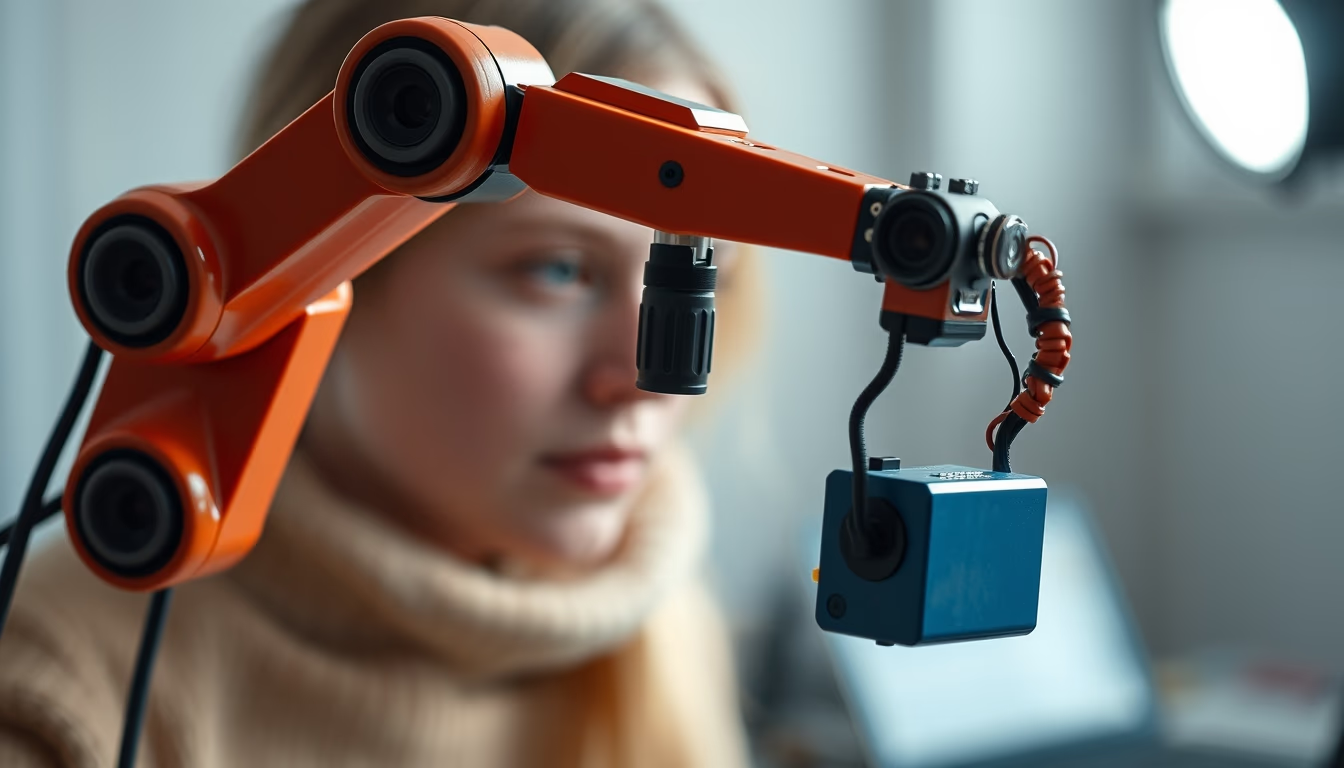
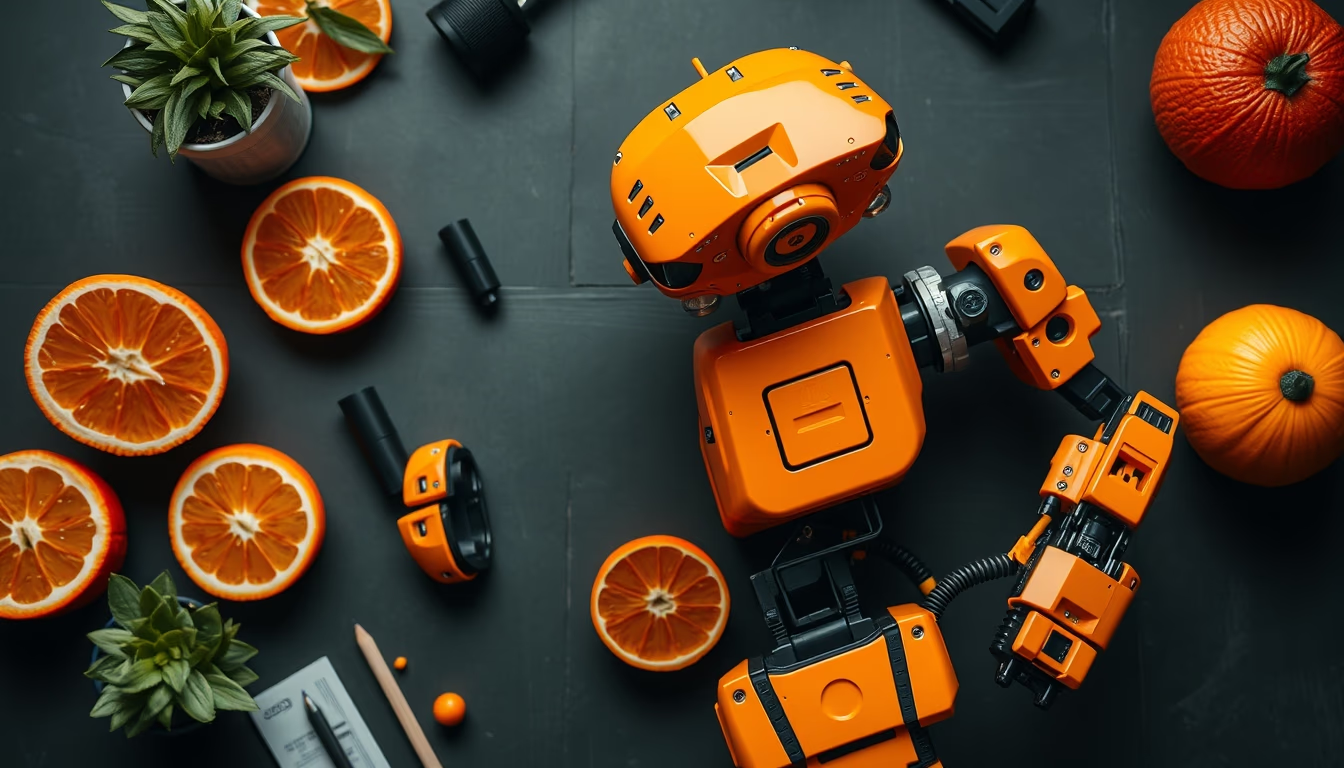
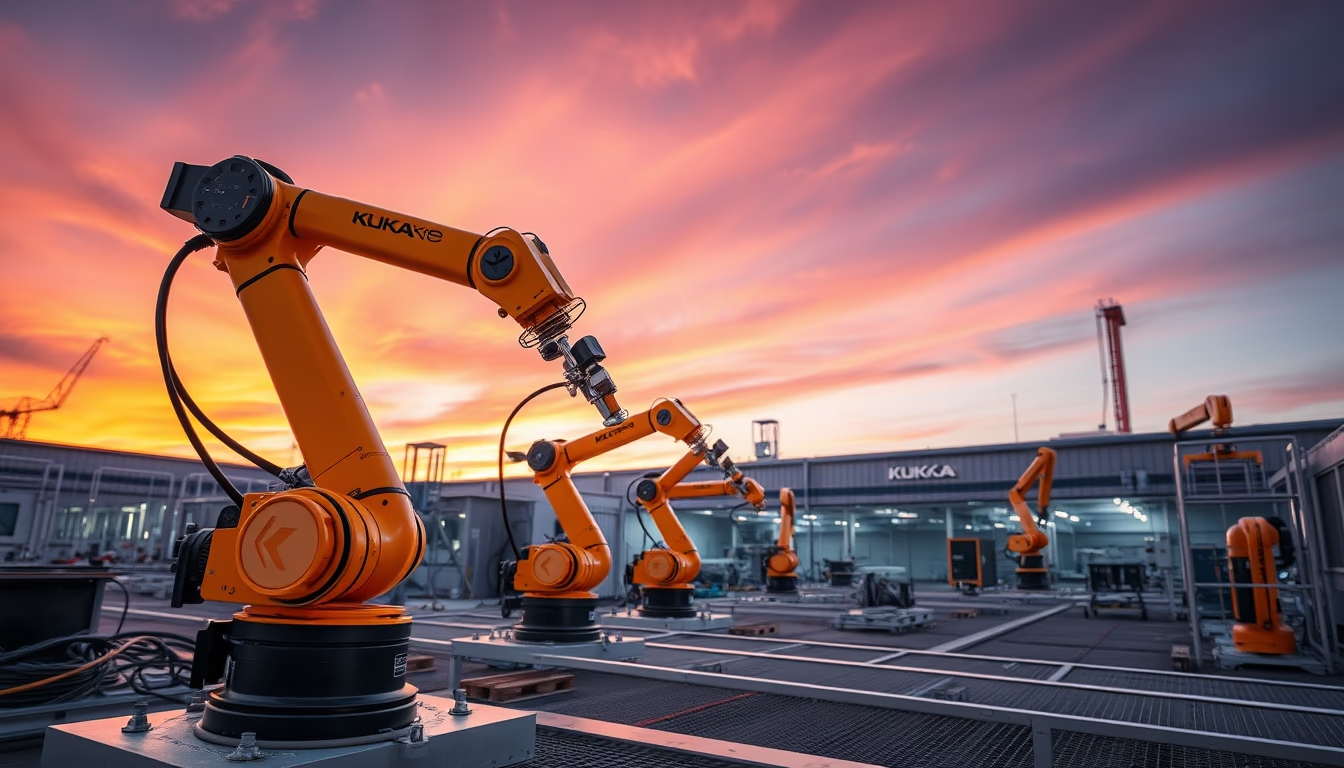
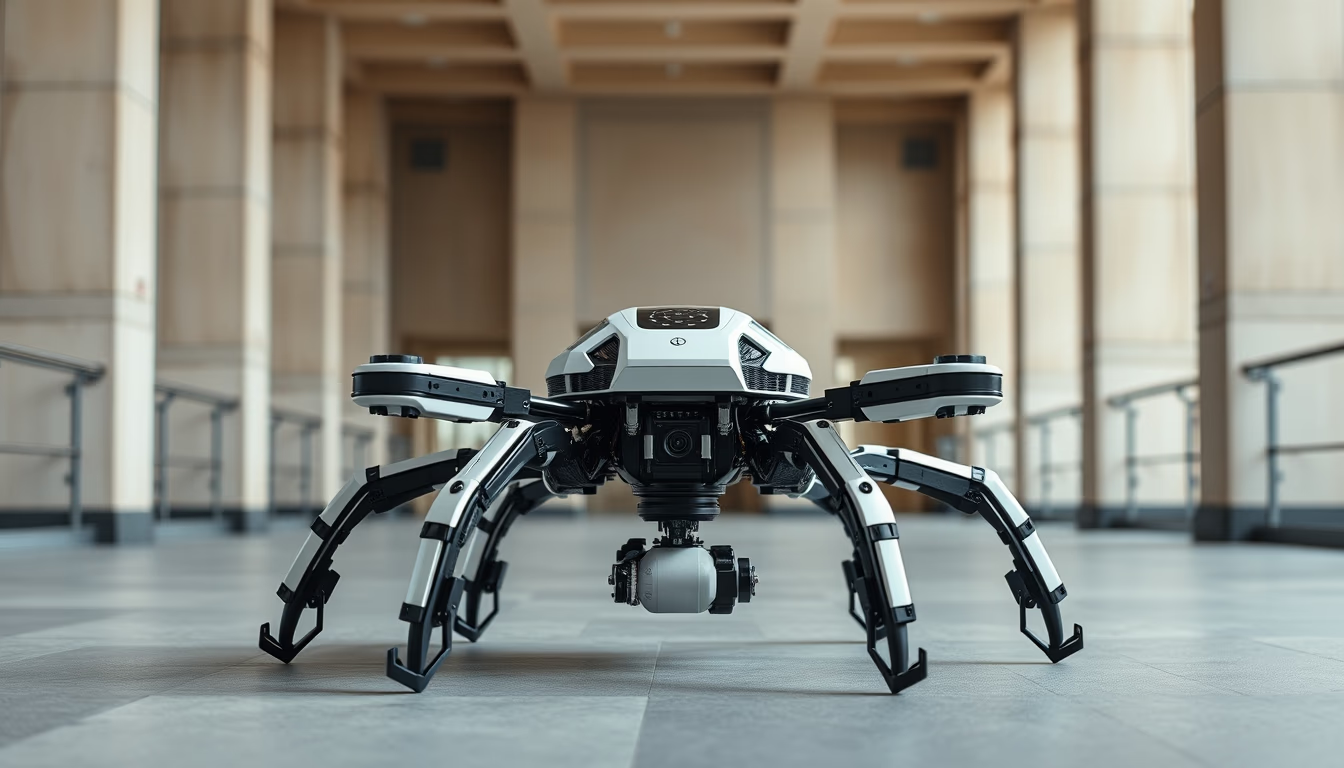
Collaborative robots, or cobots, revolutionize industrial automation by working safely alongside humans.
About this subject
Collaborative robots, known as cobots, represent a significant evolution in industrial automation. Unlike traditional robots that operate in isolated safety cages, cobots are designed to interact directly with human workers in a shared space. They are equipped with force and torque sensors, vision systems, and algorithms that limit speed and force, ensuring that accidental contact does not cause injury. This feature makes them ideal for repetitive tasks such as assembly, packaging, quality inspection, and light part handling, especially in small and medium-sized enterprises that cannot invest in large robotic cells.
The concept of the cobot emerged in the 1990s from research at Northwestern University and General Motors, but the market exploded in the 2010s with the launch of the UR5 robot from Universal Robots, a Danish company that became a benchmark in the sector. Today, manufacturers like Fanuc, ABB, KUKA, and Yaskawa also offer cobot lines. Ease of programming, often through intuitive interfaces with tablets or simplified teach pendants, allows operators without robotics training to quickly adjust tasks, reducing deployment time from months to days.
In the context of Industry 4.0, cobots are key enablers of flexible manufacturing. They can be easily reconfigured for different products, collaborate with machine vision systems, and integrate into IoT networks for real-time data collection. An example application is in automotive assembly lines, where cobots assist in windshield installation or sealant application, alleviating physical strain on workers. In healthcare, cobots assist in minimally invasive surgeries and laboratory sample handling. In logistics, they are used in picking stations to reduce errors and increase productivity.
Interestingly, the global cobot market is expected to surpass US$10 billion by 2028, growing at annual rates above 30%. Countries like China, Germany, and the United States lead adoption, but Brazil is also expanding use, especially in automotive and consumer goods industries. Despite advantages, challenges such as still-high initial cost and the need for adequate training limit widespread adoption. However, with falling component prices and advances in artificial intelligence, cobots are expected to become as common as computers on the factory floor.
Frequently Asked Questions
What is the difference between a collaborative robot and a traditional industrial robot?
Collaborative robots are designed to work in direct contact with humans, with sensors that limit force and speed to prevent accidents. Traditional robots operate in isolated areas behind safety fences due to their high risk potential.
What are the main applications of cobots in industry?
Cobots are used in assembly, packaging, quality inspection, part handling, light welding, adhesive application, and laboratory assistance. They are especially useful for repetitive tasks requiring precision and can be quickly reprogrammed for new functions.
How do cobots impact workplace safety?
Cobots reduce ergonomic risks by taking over repetitive and heavy tasks, decreasing repetitive strain injuries. Additionally, their safety systems (torque sensors, automatic stop) minimize collision risk, creating a safer work environment.
Direct URL
https://pub-c7d6a6ea828543ac903a74a341ccb2e1.r2.dev/imagens/collaborative-robot-cobot-fish-eye-wide-angle-p9.avifHow to credit
Include a visible link back to UtilizAí. Copy one of the snippets below:
<a href="https://xn--utiliza-eza.com/en/midia/imagens/collaborative-robot-cobot-fish-eye-wide-angle-p9">Collaborative robot cobot</a> by <a href="https://xn--utiliza-eza.com">UtilizAí</a>, licensed under <a href="https://creativecommons.org/licenses/by/4.0/">CC BY 4.0</a>.
[Collaborative robot cobot](https://xn--utiliza-eza.com/en/midia/imagens/collaborative-robot-cobot-fish-eye-wide-angle-p9) by [UtilizAí](https://xn--utiliza-eza.com), CC BY 4.0
License: CC-BY-4.0