Codex pages ancient
1344×768 · AVIF · CC BY 4.0
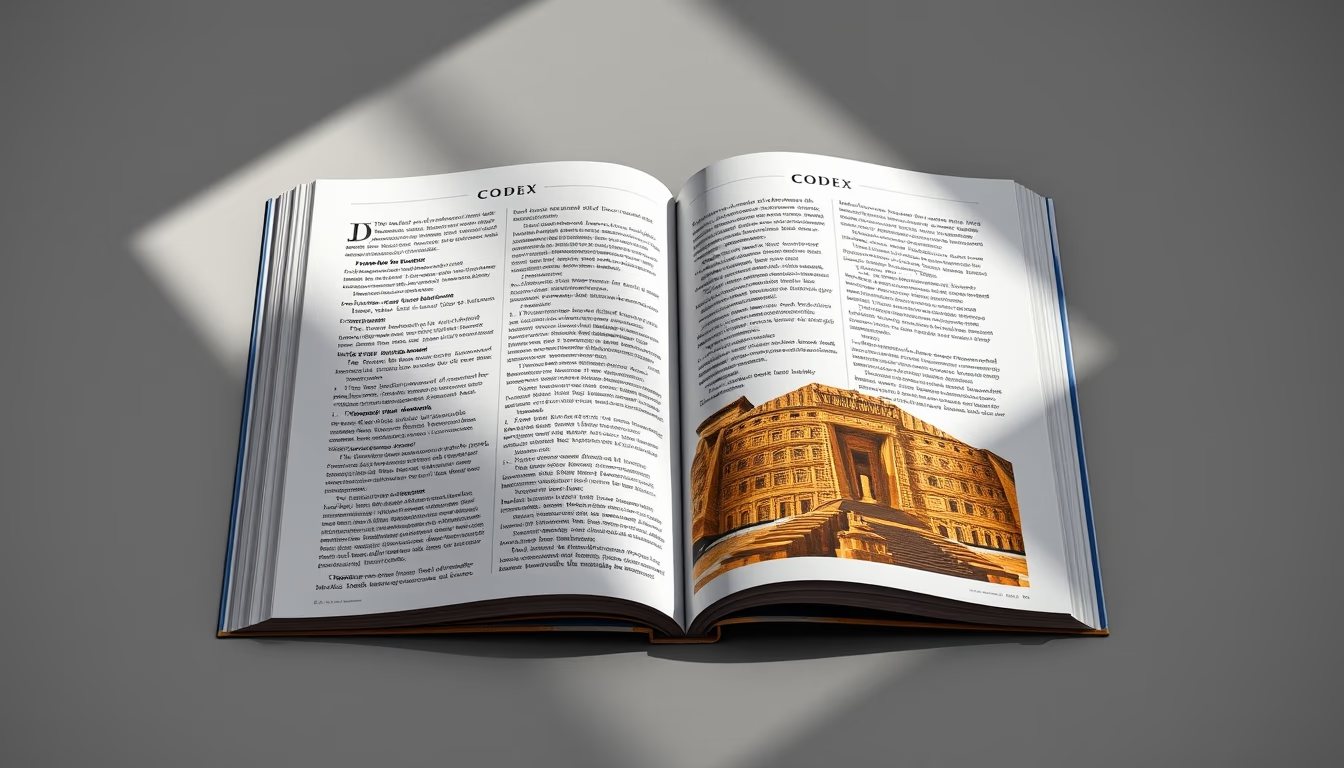
Pages from an ancient codex, the precursor to the modern book that revolutionized knowledge preservation.
About this subject
The codex, from Latin 'caudex' (tree trunk), marks the evolution from papyrus scrolls to bound books. Emerging around the 1st century AD in the Roman Empire, it was quickly adopted by early Christian communities for sacred texts. Unlike scrolls, which required unrolling, the codex allowed easy page-turning and quick reference, revolutionizing study and scholarship.
Materials varied: Egyptian papyrus, animal-skin parchment, and later vellum. The Codex Sinaiticus (4th century) is one of the oldest and most complete biblical manuscripts, with 400 parchment leaves. The Codex Vaticanus (also 4th century) contains the Greek Bible and is a treasure of the Vatican Library. These codices were written in Greek uncial script and sometimes decorated with illuminations.
Production took place in monastic scriptoria, where scribes and illuminators worked meticulously. Pages were ruled and written with inks made from soot or iron gall. Bindings used wooden boards covered in leather. Besides religious works, codices preserved classical philosophy, history, and science, such as Aristotle's treatises and Hippocrates' medical texts.
Intriguingly, the codex format endured for millennia and directly influenced Gutenberg's printed books in the 15th century. Today, researchers use multispectral imaging and spectroscopy to study erased or damaged texts in ancient codices, uncovering lost knowledge.
Frequently Asked Questions
What is the oldest known codex?
The Codex Sinaiticus, dating from the 4th century AD, is one of the oldest and most complete biblical manuscripts. Other early codices include the Codex Vaticanus and Codex Alexandrinus, also from the 4th or 5th century.
How were ancient codices produced?
They were hand-copied by scribes in monastic scriptoria, using papyrus, parchment, or vellum. Pages were sewn and bound with wood and leather. Inks were typically made from soot or iron compounds.
Why are codices important for history?
They preserved classical and religious texts that might have been lost. The codex format made reading and referencing more efficient than scrolls, influencing book design to the present day.
Direct URL
https://pub-c7d6a6ea828543ac903a74a341ccb2e1.r2.dev/imagens/codex-pages-ancient-magazine-editorial-p6.avifHow to credit
Include a visible link back to UtilizAí. Copy one of the snippets below:
<a href="https://xn--utiliza-eza.com/en/midia/imagens/codex-pages-ancient-magazine-editorial-p6">Codex pages ancient</a> by <a href="https://xn--utiliza-eza.com">UtilizAí</a>, licensed under <a href="https://creativecommons.org/licenses/by/4.0/">CC BY 4.0</a>.
[Codex pages ancient](https://xn--utiliza-eza.com/en/midia/imagens/codex-pages-ancient-magazine-editorial-p6) by [UtilizAí](https://xn--utiliza-eza.com), CC BY 4.0
License: CC-BY-4.0