Butterfly wing macro detail
1344×768 · AVIF · CC BY 4.0
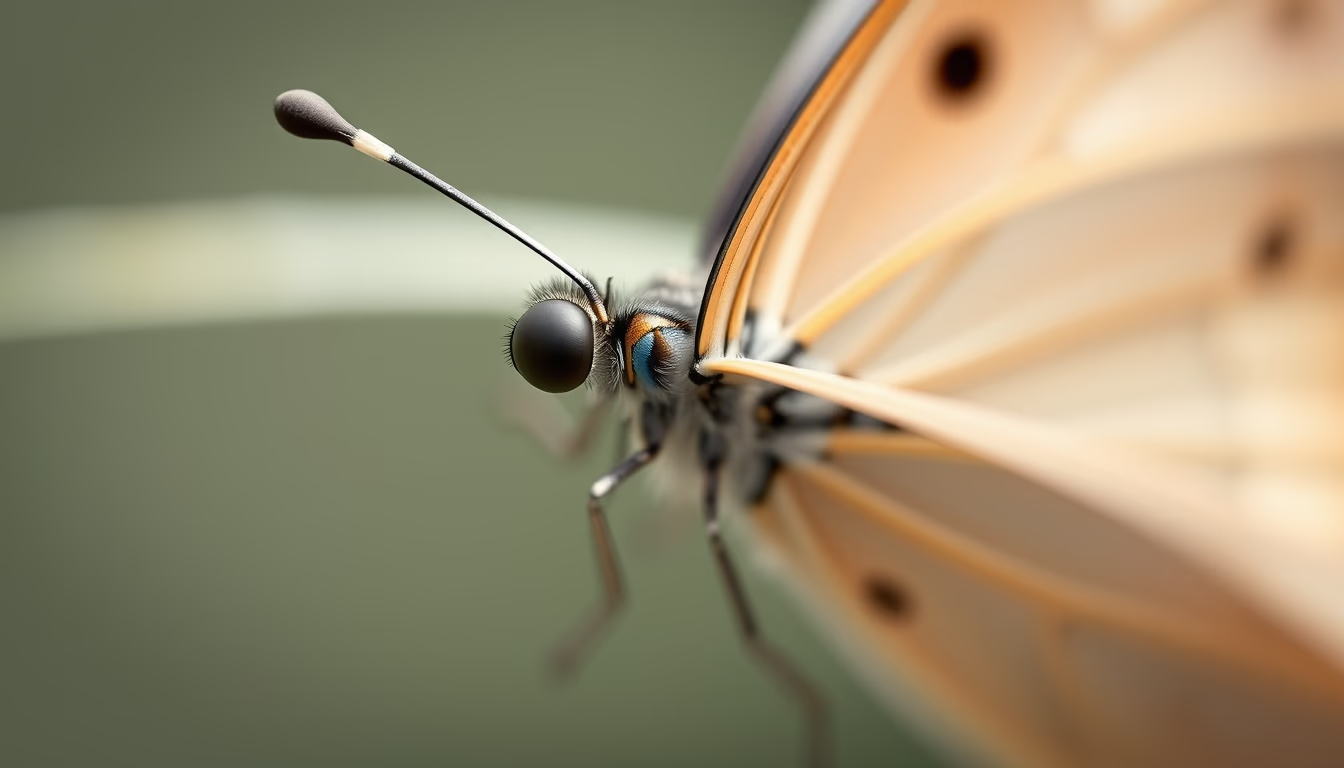
Butterfly wings are covered with thousands of overlapping scales that create stunning colors and patterns, resulting from nanostructures that interact with light.
About this subject
Butterfly wings are covered with tiny chitinous scales arranged like roof tiles. These scales, which give the order Lepidoptera its name (from Greek lepis, scale, and pteron, wing), are responsible for the vivid colors and distinctive patterns. Colors can derive from chemical pigments, such as melanin (dark tones) and flavonoids (yellows), or be structural colors produced by microstructures that diffract and interfere with light. A prime example is the iridescent blue of Morpho butterflies, native to Brazilian tropical forests.
Scales also play crucial roles in thermoregulation and camouflage. By adjusting wing angle to the sun, butterflies regulate heat absorption. Some species mimic dry leaves or predator eyes for protection. There are approximately 24,000 butterfly species worldwide, with Brazil hosting one of the highest diversities. Scales detach easily, which explains the powder left on fingers when touching a wing.
Scientists study these nanostructures to develop synthetic materials with revolutionary optical properties, such as anti-reflective screens and sensors. Additionally, wing pattern analysis aids species identification and evolutionary studies. Scales are not toxic, but some butterflies store toxins from host plants during larval stage, deterring predators.
Frequently Asked Questions
How are butterfly wing colors formed?
Colors can be chemical, from pigments like melanin and flavonoids, or structural, produced by nanostructures that reflect and interfere with light. The blue of Morpho butterflies is structural.
Why do wings have scales?
Scales aid in thermoregulation, camouflage, waterproofing, and mate attraction. They also help release pheromones during courtship.
What is the difference between a butterfly and a moth?
Butterflies are diurnal, have thin antennae with clubbed tips, and often colorful wings. Moths are nocturnal, have feathery antennae, and duller wings with a stouter body.
Direct URL
https://pub-c7d6a6ea828543ac903a74a341ccb2e1.r2.dev/imagens/butterfly-wing-macro-detail-minimalist-composition-p4.avifHow to credit
Include a visible link back to UtilizAí. Copy one of the snippets below:
<a href="https://xn--utiliza-eza.com/en/midia/imagens/butterfly-wing-macro-detail-minimalist-composition-p4">Butterfly wing macro detail</a> by <a href="https://xn--utiliza-eza.com">UtilizAí</a>, licensed under <a href="https://creativecommons.org/licenses/by/4.0/">CC BY 4.0</a>.
[Butterfly wing macro detail](https://xn--utiliza-eza.com/en/midia/imagens/butterfly-wing-macro-detail-minimalist-composition-p4) by [UtilizAí](https://xn--utiliza-eza.com), CC BY 4.0
License: CC-BY-4.0