Butterfly wing macro detail
1344×768 · AVIF · CC BY 4.0
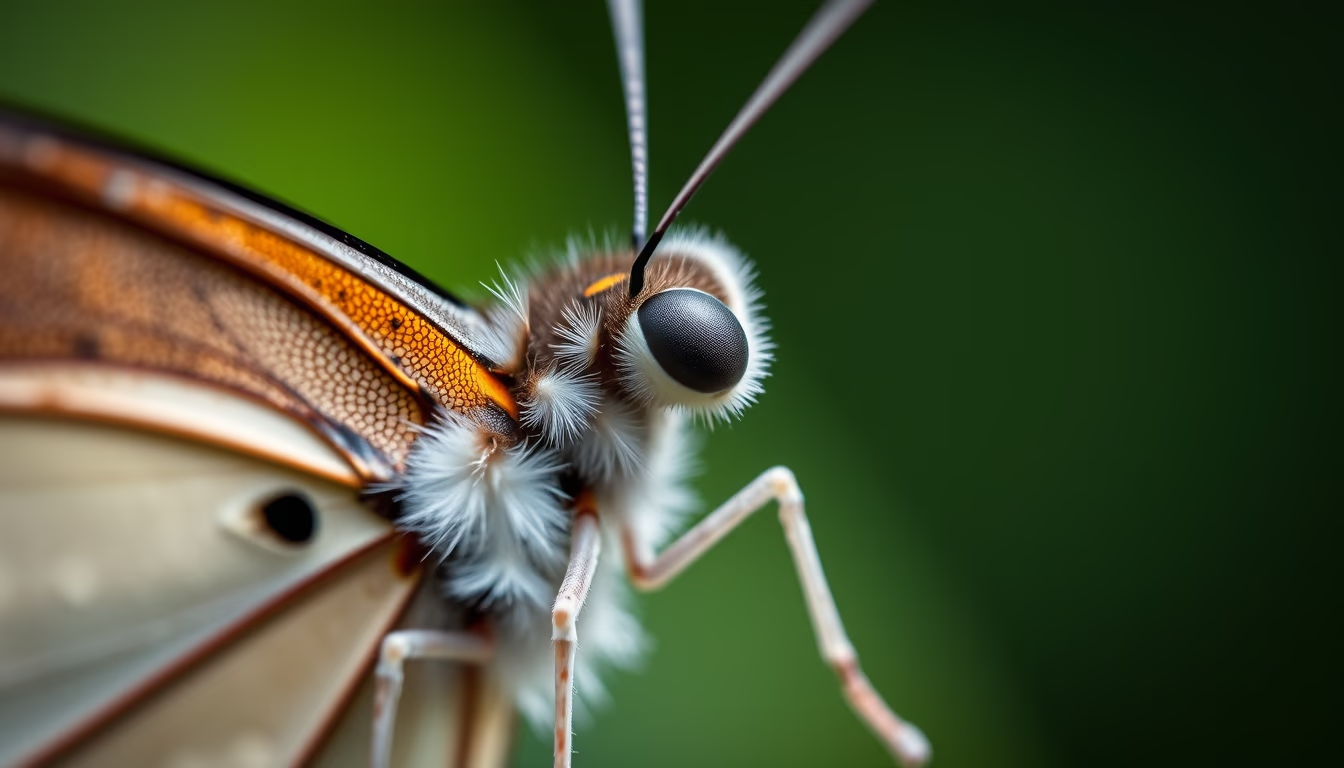
Microscopic details of butterfly wings reveal overlapping scales that create structural colors and iridescence, a phenomenon studied by physicists and biologists.
About this subject
Butterfly wings are covered by thousands of tiny scales, which are actually modified hairs. These scales overlap like roof tiles, forming complex patterns that determine the coloration and shine characteristic of each species. There are two main types of wing colors: pigmentary colors, produced by chemical substances such as melanin and flavonoids, and structural colors, generated by the interaction of light with the microstructures of the scales. Iridescence, for example, is a structural color effect that changes with viewing angle, especially notable in butterflies of the family Morphidae, such as Morpho menelaus, native to the Amazon.
The function of these colors goes beyond aesthetics. They play crucial survival roles: camouflage, sexual attraction, and warning to predators. In many species, like the monarch butterfly (Danaus plexippus), bright colors signal toxicity, a phenomenon known as aposematism. In contrast, some nocturnal butterflies, such as moths, have subdued colors to blend into daytime environments. Research on scale nanostructures has inspired advances in synthetic materials, such as fabrics that mimic iridescence for applications in design and security.
Macro photography of butterfly wings requires specialized equipment, such as macro lenses and extreme focusing, to capture details as small as 10 micrometers. Each scale measures about 0.1 to 0.2 millimeters, and their arrangement creates patterns that can be used for species identification. The diversity of butterflies in Brazil is immense: an estimated 3,500 species are cataloged, many endemic to the Atlantic Forest and the Amazon. This biodiversity makes the country a prime destination for photographers and scientists interested in understanding these fascinating insects.
Frequently Asked Questions
Why do butterfly wings have such vibrant colors?
The vibrant colors can originate from pigments (such as melanin) or structural colors (like iridescence). Structural colors are produced by nanostructures in the scales that refract light, creating metallic hues. These colors aid in camouflage, mate attraction, and predator warning.
What are butterfly wing scales?
Scales are modified hairs covering the wing, arranged like roof tiles. Each scale is about 0.1 mm long and may contain pigments or microstructures. They are responsible for color, waterproofing, and thermoregulation.
How many butterfly species are there in Brazil?
An estimated 3,500 butterfly species are cataloged in Brazil, with many still undescribed. The country has the highest butterfly diversity in the world, especially in the Amazon and Atlantic Forest.
Direct URL
https://pub-c7d6a6ea828543ac903a74a341ccb2e1.r2.dev/imagens/butterfly-wing-macro-detail-macro-closeup-p3.avifHow to credit
Include a visible link back to UtilizAí. Copy one of the snippets below:
<a href="https://xn--utiliza-eza.com/en/midia/imagens/butterfly-wing-macro-detail-macro-closeup-p3">Butterfly wing macro detail</a> by <a href="https://xn--utiliza-eza.com">UtilizAí</a>, licensed under <a href="https://creativecommons.org/licenses/by/4.0/">CC BY 4.0</a>.
[Butterfly wing macro detail](https://xn--utiliza-eza.com/en/midia/imagens/butterfly-wing-macro-detail-macro-closeup-p3) by [UtilizAí](https://xn--utiliza-eza.com), CC BY 4.0
License: CC-BY-4.0