Bronze patina aged
1344×768 · AVIF · CC BY 4.0
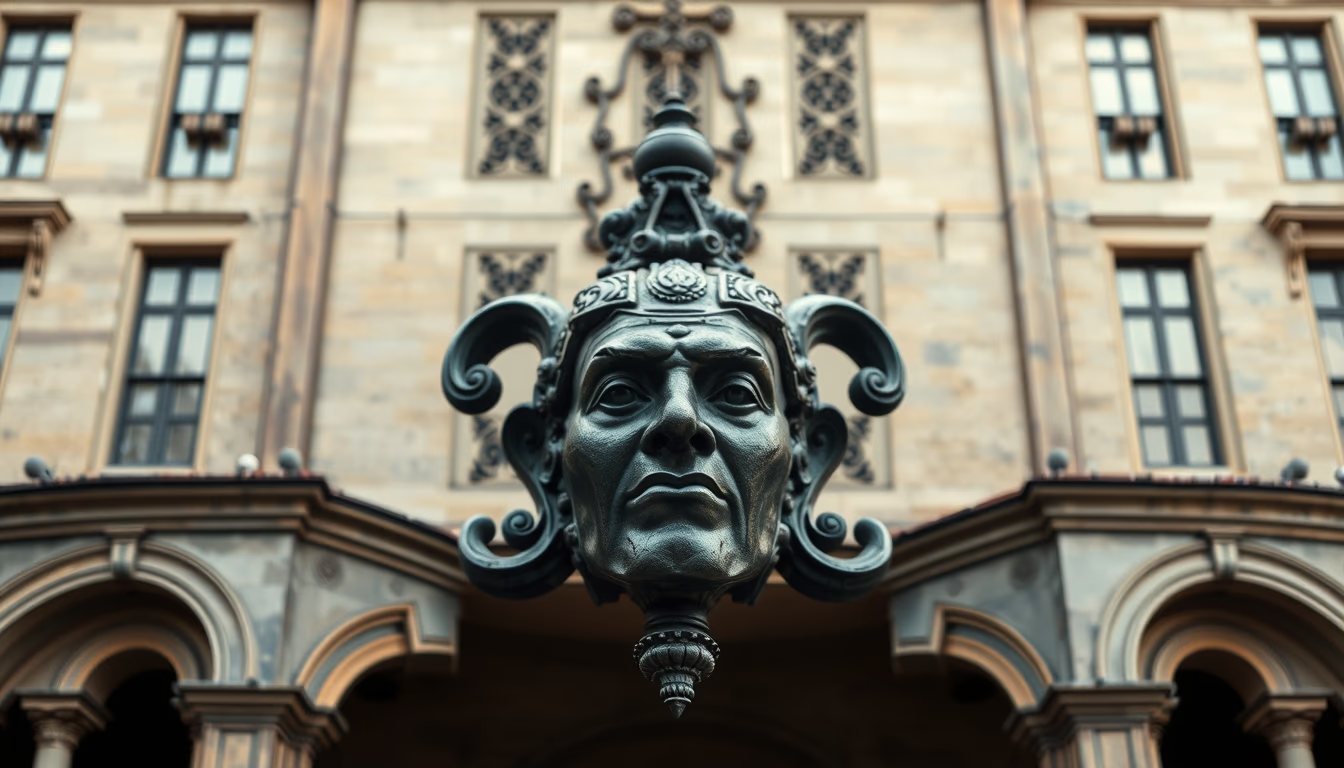
Bronze patina is a greenish layer that naturally forms on the surface, protecting the metal and giving a historic, noble look to statues and architectural elements.
About this subject
Bronze patina is the result of natural oxidation over decades or centuries. Composed mainly of copper carbonate, it forms when bronze, an alloy of copper and tin, reacts with oxygen, moisture, and air pollutants. This process can take 20 to 50 years to create a uniform layer, but in urban or coastal environments, chemical acceleration produces shades ranging from light green to blue-green, as seen on iconic monuments like Christ the Redeemer in Rio de Janeiro or the equestrian statues in São Paulo.
Culturally, patina is widely valued as a sign of authenticity and antiquity. In architecture, bronze domes and roofs, such as those of the National Congress in Brasília or the São Paulo Cathedral, develop this protective layer that not only beautifies but also preserves the metal against deep corrosion. Art collectors and antiquarians often regard the original patina as an invaluable part of the piece, and attempts to remove or artificially accelerate it are seen as damaging to historical value.
Interestingly, patina is not merely aesthetic: it acts as a passive barrier that prevents further deterioration of bronze. In antiquity, Greeks and Romans already observed this phenomenon on their sculptures, and the term "patina" comes from Italian, referring to the film that forms on ancient objects. Today, conservation techniques aim to stabilize existing patina by controlling humidity and pollution, ensuring that outdoor monuments maintain their noble appearance for generations to come.
Frequently Asked Questions
How does bronze patina form?
Bronze patina forms through natural oxidation of the copper in bronze when exposed to air, moisture, and pollutants. The process takes 20 to 50 years to create a uniform layer, but can be faster in urban or coastal environments.
Does patina protect bronze from corrosion?
Yes, patina acts as a passive barrier that prevents deep corrosion of the metal. It is therefore considered a protective layer, not a sign of deterioration.
Can patina formation be artificially accelerated?
Yes, there are chemical techniques to artificially patinate bronze, but for historical and artistic objects, natural patina is more valued. Attempts to accelerate it may compromise the piece's value.
Direct URL
https://pub-c7d6a6ea828543ac903a74a341ccb2e1.r2.dev/imagens/bronze-patina-aged-architectural-photography-p1.avifHow to credit
Include a visible link back to UtilizAí. Copy one of the snippets below:
<a href="https://xn--utiliza-eza.com/en/midia/imagens/bronze-patina-aged-architectural-photography-p1">Bronze patina aged</a> by <a href="https://xn--utiliza-eza.com">UtilizAí</a>, licensed under <a href="https://creativecommons.org/licenses/by/4.0/">CC BY 4.0</a>.
[Bronze patina aged](https://xn--utiliza-eza.com/en/midia/imagens/bronze-patina-aged-architectural-photography-p1) by [UtilizAí](https://xn--utiliza-eza.com), CC BY 4.0
License: CC-BY-4.0