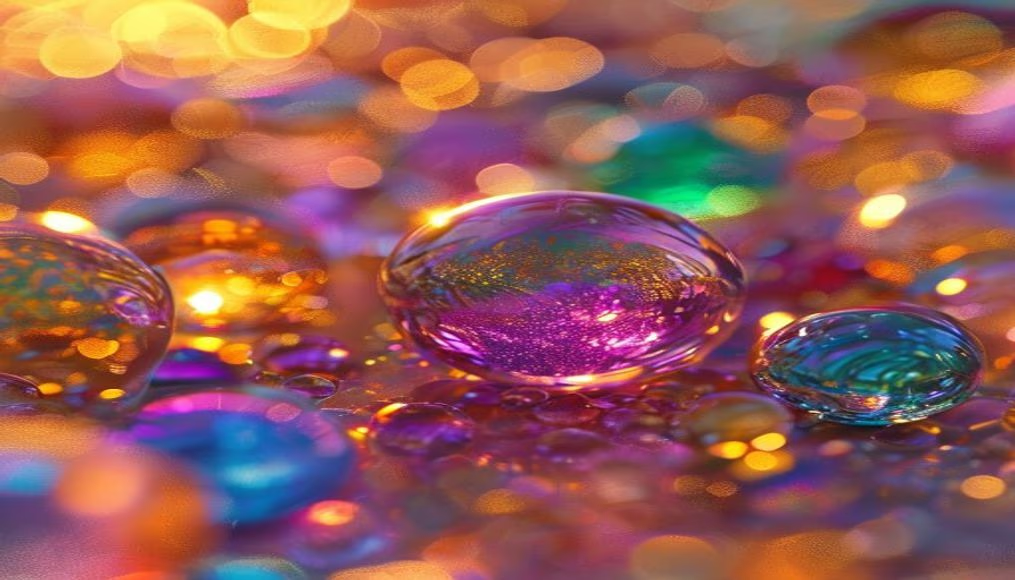
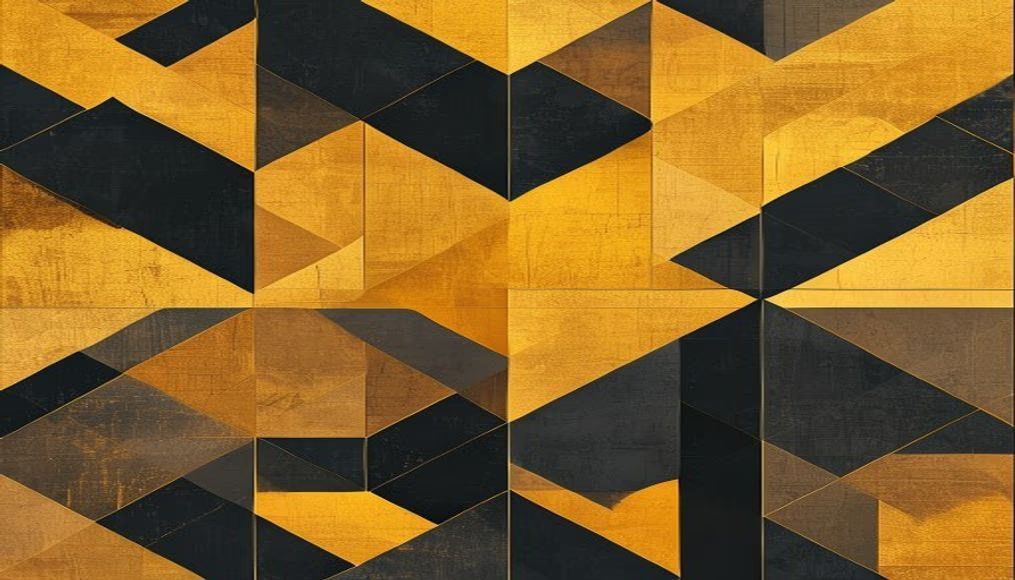
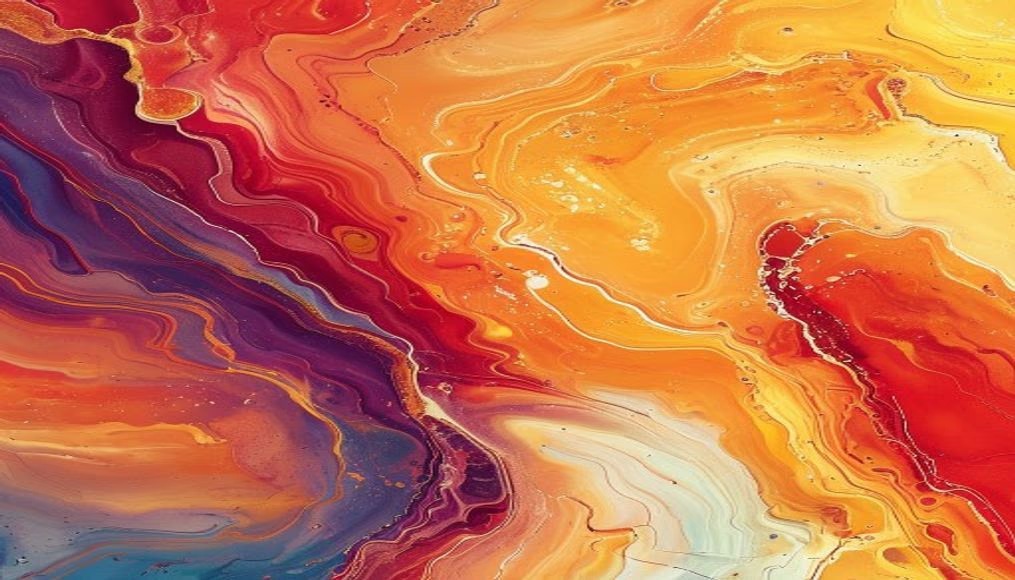
Broken glass pattern
1344×768 · AVIF · CC BY 4.0

The broken glass pattern symbolizes creative transformation, merging fragility and strength in contemporary art.
About this subject
The broken glass pattern emerges in contemporary art as a metaphor for destruction and renewal. Irregular glass fragments, often captured through digital photography or artistic manipulation, evoke themes of vulnerability, resilience, and the search for beauty in chaotic situations. This technique is common in public art installations and private collections, particularly in cities like Berlin and New York, where artists explore the relationship between matter and space.
The fragility of glass contrasts with its ability to form complex structures, a duality that inspires works by artists such as Sarah Lucas and Anish Kapoor. In cultural contexts, the pattern may symbolize social ruptures or paradigm shifts, as seen in post-war art. Interestingly, studies from the University of Cambridge show that fractal patterns, like those found in broken surfaces, reduce viewers' perception of tension.
Modern techniques, such as high-resolution photography and 3D manipulation, allow for submillimeter precision in capturing glass texture. Museums like MoMA include similar works in exhibitions discussing the intersection of art and science, highlighting how random patterns can follow mathematical rules. The use of metallic colors or reflectors also enhances the perception of depth in compositions.
Frequently Asked Questions
What themes are explored in the broken glass pattern?
The pattern symbolizes fragility and resilience, as well as themes of destruction, renewal, and the search for beauty in chaos. The duality between vulnerability and strength is central to its interpretation.
What techniques are used to create this artistic representation?
High-resolution photography, digital manipulation, and 3D art techniques are common. Physical installations also use real glass combined with lighting and reflectors for visual effects.
Where is this pattern most commonly presented?
Exhibitions at museums like MoMA, urban installations, and private collections. Cities with strong artistic scenes, such as Berlin and New York, are global references for this approach.
Direct URL
https://pub-c7d6a6ea828543ac903a74a341ccb2e1.r2.dev/imagens/broken-glass-pattern-fine-art-photography-v7.avifHow to credit
Include a visible link back to UtilizAí. Copy one of the snippets below:
<a href="https://xn--utiliza-eza.com/en/midia/imagens/broken-glass-pattern-fine-art-photography-v7">Broken glass pattern</a> by <a href="https://xn--utiliza-eza.com">UtilizAí</a>, licensed under <a href="https://creativecommons.org/licenses/by/4.0/">CC BY 4.0</a>.
[Broken glass pattern](https://xn--utiliza-eza.com/en/midia/imagens/broken-glass-pattern-fine-art-photography-v7) by [UtilizAí](https://xn--utiliza-eza.com), CC BY 4.0
License: CC-BY-4.0