Bridge construction site with cranes over river
1344×768 · AVIF · CC BY 4.0
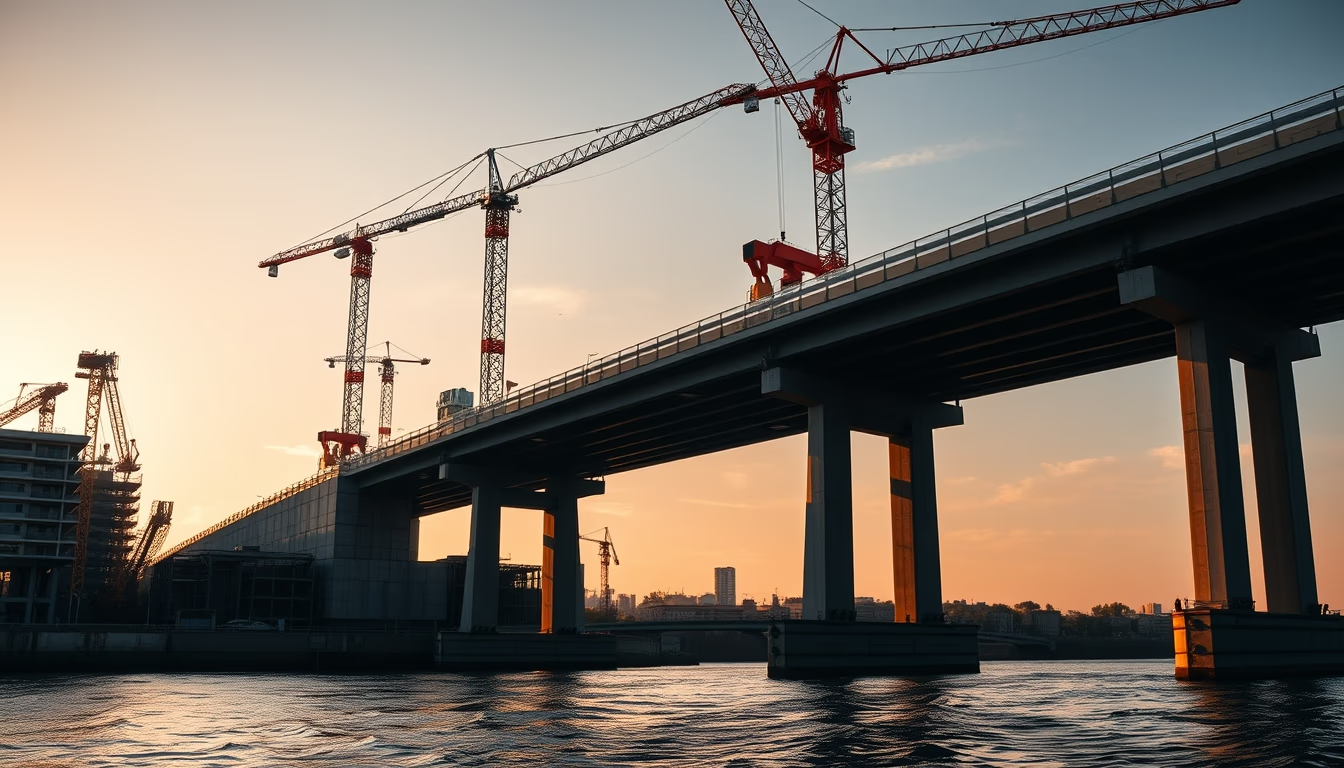
Bridge construction site with cranes over river, late afternoon, highlights large-scale Brazilian infrastructure engineering.
About this subject
Bridge construction is a hallmark of Brazilian civil engineering, especially in regions with vast river networks like the Amazon and Pantanal. Brazil holds over 12% of the world's freshwater, requiring robust crossing structures adapted to flood and drought cycles. Historic bridges like Rio-Niterói (13 km) and Hercílio Luz (suspension) are icons, but the country also invests in new works for logistical integration, such as bridges over the Madeira and Tocantins rivers, facilitating grain and ore transport.
On the depicted site, large cranes are essential for lifting precast beams and steel trusses, reducing construction time and environmental impact. Construction techniques vary by span and soil type: cantilever, cable-stayed, or reinforced concrete bridges are common. Late afternoon, with lower light, is strategic for operations requiring visibility and less heat, providing safer conditions for high-altitude work.
Logistics for such projects range from foundations with piles driven into the riverbed to superstructure assembly. In Brazil, ABNT and DNIT standards regulate designs to withstand wind, traffic, and thermal variations. Interestingly, some Brazilian bridges are designed to allow large-draft vessels, requiring clear spans up to 300 meters. Multiple cranes indicate a medium-to-large project, common on federal highways like BR-163 and BR-364, which cut through heavy cargo flow areas.
Site selection considers hydrological, geotechnical, and environmental studies. Environmental licensing by IBAMA can take years and includes mitigation measures like wildlife passages and erosion control. Works like the Integration Bridge (over São Francisco River) and Rio Negro Bridge (Manaus) exemplify the complexity of building in sensitive ecosystems. The crane-filled site at late afternoon symbolizes Brazil's infrastructure progress, connecting regions and driving economic development.
Frequently Asked Questions
How long does it take to build a large bridge in Brazil?
The timeline varies by size and conditions, but medium to large bridges typically take 2 to 5 years, including environmental licensing and civil works. For instance, the Rio Negro Bridge in Manaus took about 4 years.
What are the main challenges in building bridges over rivers in Brazil?
Challenges include seasonal river level fluctuations, unstable soils in the Amazon, logistics of materials in remote areas, and stringent environmental licensing to protect ecosystems.
Why are cranes essential on bridge construction sites?
Cranes enable precise lifting of precast beams and heavy components, reducing assembly time and risks. For long spans, they position steel trusses and sliding forms, crucial for safety and efficiency.
Direct URL
https://pub-c7d6a6ea828543ac903a74a341ccb2e1.r2.dev/imagens/bridge-construction-site-with-cranes-over-river-wide-late-afternoon.avifHow to credit
Include a visible link back to UtilizAí. Copy one of the snippets below:
<a href="https://xn--utiliza-eza.com/en/midia/imagens/bridge-construction-site-with-cranes-over-river-wide-late-afternoon">Bridge construction site with cranes over river</a> by <a href="https://xn--utiliza-eza.com">UtilizAí</a>, licensed under <a href="https://creativecommons.org/licenses/by/4.0/">CC BY 4.0</a>.
[Bridge construction site with cranes over river](https://xn--utiliza-eza.com/en/midia/imagens/bridge-construction-site-with-cranes-over-river-wide-late-afternoon) by [UtilizAí](https://xn--utiliza-eza.com), CC BY 4.0
License: CC-BY-4.0