Bridge construction site with cranes over river
1344×768 · AVIF · CC BY 4.0
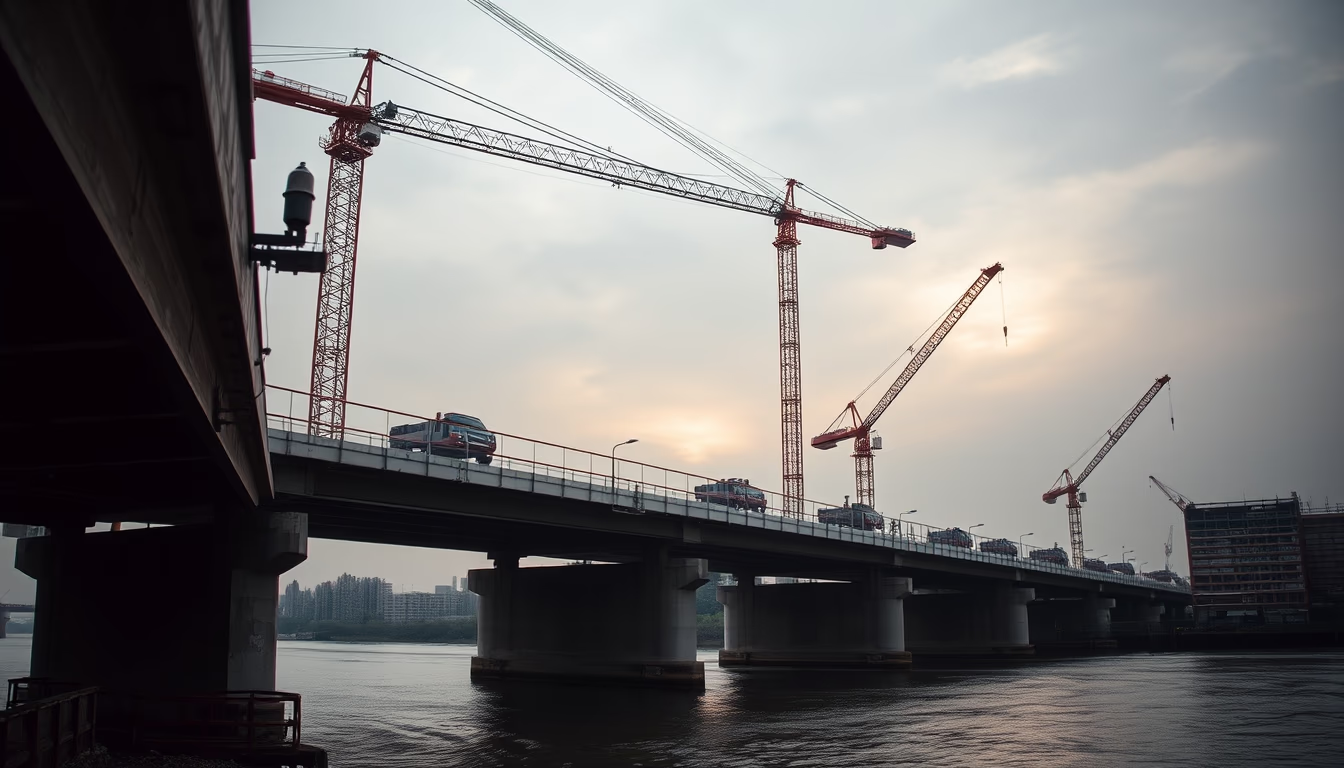
Construction site of a bridge over a river, with cranes and steel structures on an overcast day.
About this subject
Bridges are essential structures for transportation infrastructure, connecting riverbanks, valleys, or other natural barriers. In Brazil, bridge construction is a strategic sector, especially in regions with extensive river networks, such as the Amazon and the Midwest. The construction site depicts an advanced stage, with cranes positioning concrete or steel beams on already erected pillars. The overcast weather, common in many parts of the country, does not halt work but requires safety precautions and rain planning.
Modern bridges use techniques like the balanced cantilever method or precast elements, which speed up construction and reduce environmental impact. In Brazil, the Rio-Niterói Bridge, opened in 1974, is a landmark of national engineering, spanning 13.29 km. The bridge over the Negro River in Manaus, completed in 2011, is 3.5 km long and the country's largest fluvial bridge in free span. Large cranes are common in cable-stayed or suspension bridges, which require lifting heavy components.
Bridge construction involves multiple stages: deep foundations (piles), pillars, beams, deck, and paving. The site shown is likely in the superstructure assembly phase, with crawler or mobile cranes. The presence of barges may indicate material transport by river, a common logistical alternative in areas with difficult land access. Work safety is a priority, with PPE, signage, and protective barriers.
Fun fact: the world's longest bridge is the Danyang-Kunshan Bridge in China, at 164.8 km. In Brazil, the longest is the Rio-Niterói Bridge, but the tallest is the Hercílio Luz Bridge in Florianópolis, at 75 m. Reinforced and prestressed concrete is the most used material due to durability and strength. Regular maintenance is crucial to prevent corrosion and fatigue, especially in high humidity regions.
Frequently Asked Questions
How long does it take to build a large bridge?
The timeline varies by size and conditions. Bridges like the Rio-Niterói took about 5 years to complete. Complex projects can take 2 to 10 years, depending on climate, logistics, and funding.
What are the main challenges in building bridges over rivers?
Challenges include foundations in unstable riverbeds, strong currents, navigation, environmental impact, and material logistics. Techniques like deep piles and cofferdams are used to overcome these obstacles.
What is the difference between a cable-stayed bridge and a suspension bridge?
In a cable-stayed bridge, the deck is supported by straight cables directly connected to towers. In a suspension bridge, main cables pass over towers and support the deck via vertical cables. Cable-stayed bridges are stiffer and common for medium spans.
Direct URL
https://pub-c7d6a6ea828543ac903a74a341ccb2e1.r2.dev/imagens/bridge-construction-site-with-cranes-over-river-editorial-overcast-daytime.avifHow to credit
Include a visible link back to UtilizAí. Copy one of the snippets below:
<a href="https://xn--utiliza-eza.com/en/midia/imagens/bridge-construction-site-with-cranes-over-river-editorial-overcast-daytime">Bridge construction site with cranes over river</a> by <a href="https://xn--utiliza-eza.com">UtilizAí</a>, licensed under <a href="https://creativecommons.org/licenses/by/4.0/">CC BY 4.0</a>.
[Bridge construction site with cranes over river](https://xn--utiliza-eza.com/en/midia/imagens/bridge-construction-site-with-cranes-over-river-editorial-overcast-daytime) by [UtilizAí](https://xn--utiliza-eza.com), CC BY 4.0
License: CC-BY-4.0