Brazilian highway BR-101 stretching toward horizon with cargo trucks at golden hour
1344×768 · AVIF · CC BY 4.0
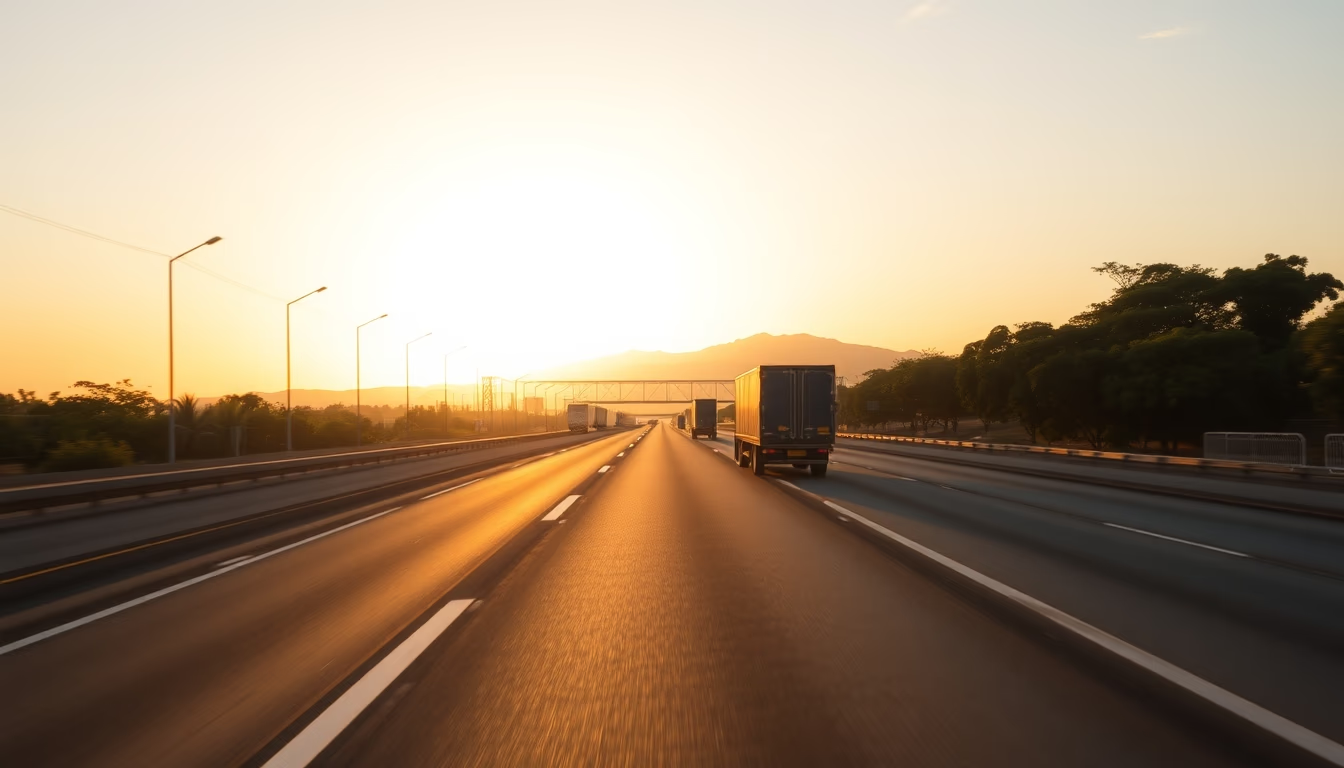
BR-101, Brazil's main longitudinal highway, stretches over 4,800 km connecting Rio Grande do Norte to Rio Grande do Sul.
About this subject
BR-101 is one of Brazil's most important highways, crossing 12 states and linking the Northeast, Southeast, and South regions. Built in sections throughout the 1960s and 1970s, its construction was key to economically integrating the Brazilian coast, facilitating the flow of commodities such as coffee, soybeans, iron ore, and manufactured goods. Today, the highway is vital for road freight transport, accounting for a significant share of the logistics sector's GDP.
The busiest stretch lies between São Paulo and Rio de Janeiro, where BR-101 (also known as Rodovia Presidente Dutra in that segment) sees heavy truck traffic. The highway faces maintenance and safety challenges, with accident hotspots in mountainous and urban areas. In 2023, the federal government announced investments in duplication and concession projects to improve flow.
BR-101 also has tourist importance, passing through destinations like Santa Catarina's beaches, Rio de Janeiro's Green Coast, and the northeastern coast. However, its primary role remains as a logistics corridor for agribusiness and industry, with tens of thousands of trucks circulating daily. The highway has been the stage for phenomena such as trucker strikes that paralyze the country.
Interestingly, BR-101 is not Brazil's longest highway (BR-116 is longer), but it has the highest freight traffic volume. Its route follows the coast but sometimes moves inland to avoid mangroves and environmental preservation areas. The highway symbolizes Brazil's heavy reliance on road transport, which concentrates over 60% of the country's cargo movement.
Frequently Asked Questions
What is the total length of BR-101?
BR-101 is approximately 4,800 km long, connecting Touros (RN) to São José do Norte (RS).
Why is BR-101 important for the Brazilian economy?
It is the main freight corridor along the coast, linking ports, industrial centers, and agricultural areas. About 60% of Brazil's cargo transport uses highways, and BR-101 is one of the busiest.
What are the main problems faced by BR-101?
The highway suffers from lack of maintenance, congested stretches, high accident rates, and expensive tolls. In some sections, duplication has not yet been completed.
Direct URL
https://pub-c7d6a6ea828543ac903a74a341ccb2e1.r2.dev/imagens/brazilian-highway-br-101-stretching-toward-horizon-with-cargo-trucks-at-golden-h-symmetric-bright-midday-4.avifHow to credit
Include a visible link back to UtilizAí. Copy one of the snippets below:
<a href="https://xn--utiliza-eza.com/en/midia/imagens/brazilian-highway-br-101-stretching-toward-horizon-with-cargo-trucks-at-golden-h-symmetric-bright-midday-4">Brazilian highway BR-101 stretching toward horizon with cargo trucks at golden hour</a> by <a href="https://xn--utiliza-eza.com">UtilizAí</a>, licensed under <a href="https://creativecommons.org/licenses/by/4.0/">CC BY 4.0</a>.
[Brazilian highway BR-101 stretching toward horizon with cargo trucks at golden hour](https://xn--utiliza-eza.com/en/midia/imagens/brazilian-highway-br-101-stretching-toward-horizon-with-cargo-trucks-at-golden-h-symmetric-bright-midday-4) by [UtilizAí](https://xn--utiliza-eza.com), CC BY 4.0
License: CC-BY-4.0