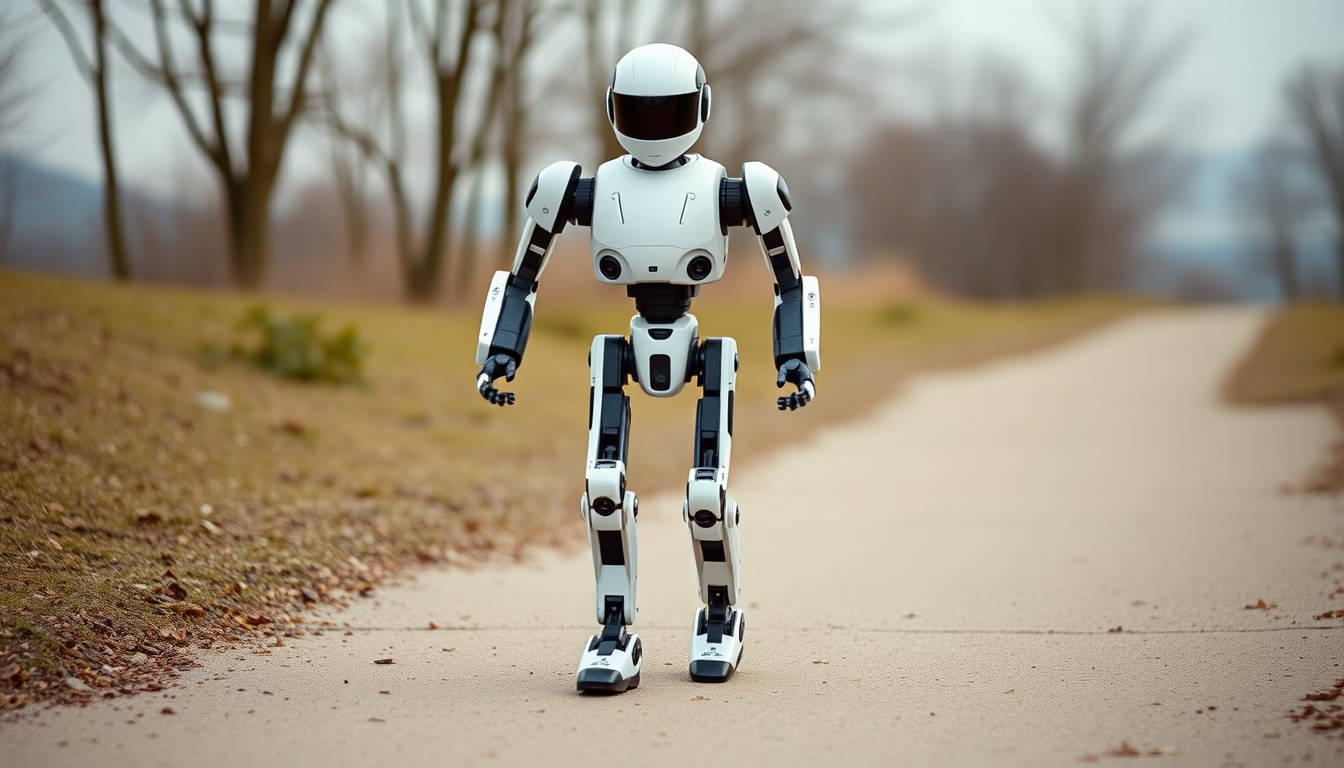
Bipedal robot walking
1344×768 · AVIF · CC BY 4.0
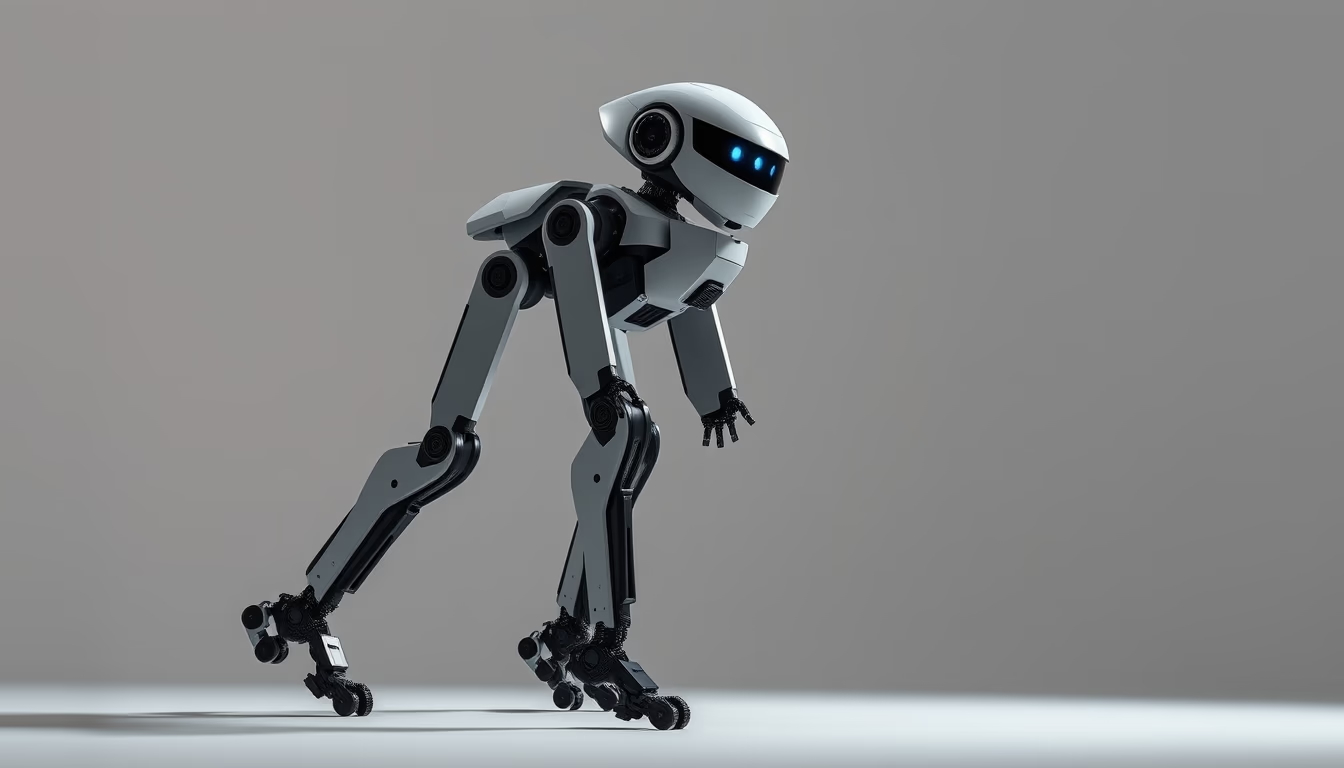
Bipedal robots mimic human locomotion, advancing in rescue and exploration, with historical milestones since the 1980s.
About this subject
Bipedal robots are machines designed to walk on two legs, mimicking human locomotion. Significant development began in the 1980s, with Honda's ASIMO project unveiled in 2000. Since then, companies like Boston Dynamics created models such as Atlas, capable of running, jumping, and performing acrobatics. The technical challenge lies in dynamic balance, joint coordination, and adapting to uneven terrain, requiring complex control algorithms and sensors like gyroscopes and accelerometers.
Practical applications include search and rescue missions in rubble, where wheels or tracks cannot operate, and exploration of hostile environments such as volcanoes or other planets. Bipedal robots are also used in rehabilitation research, helping to understand human biomechanics and develop advanced prosthetics. However, energy efficiency remains a challenge: walking on two legs consumes more power than using wheels, limiting autonomy.
A milestone was the Cassie robot from the University of Oregon, which in 2022 completed a 5 km run autonomously. Another example is Digit, focused on logistics and cargo transport. In Brazil, groups like the USP Robotics Lab develop bipedal prototypes for teaching and research. The future includes improvements in artificial intelligence for real-time decision-making and lighter materials, bringing these robots closer to human-like performance.
Frequently Asked Questions
What was the first functional bipedal robot?
Honda's ASIMO, unveiled in 2000, was one of the first stable walking bipedal robots. Earlier projects like WABOT-1 (1973) had legs but were limited.
Why are bipedal robots difficult to build?
Dynamic balance requires precise sensors and algorithms to constantly adjust posture. Additionally, energy consumption is higher compared to wheeled robots.
Can bipedal robots replace humans in dangerous tasks?
Yes, they are ideal for search and rescue in rough terrain or radioactive environments, but still have limited autonomy and high cost.
Direct URL
https://pub-c7d6a6ea828543ac903a74a341ccb2e1.r2.dev/imagens/bipedal-robot-walking-studio-editorial-portrait-p1.avifHow to credit
Include a visible link back to UtilizAí. Copy one of the snippets below:
<a href="https://xn--utiliza-eza.com/en/midia/imagens/bipedal-robot-walking-studio-editorial-portrait-p1">Bipedal robot walking</a> by <a href="https://xn--utiliza-eza.com">UtilizAí</a>, licensed under <a href="https://creativecommons.org/licenses/by/4.0/">CC BY 4.0</a>.
[Bipedal robot walking](https://xn--utiliza-eza.com/en/midia/imagens/bipedal-robot-walking-studio-editorial-portrait-p1) by [UtilizAí](https://xn--utiliza-eza.com), CC BY 4.0
License: CC-BY-4.0