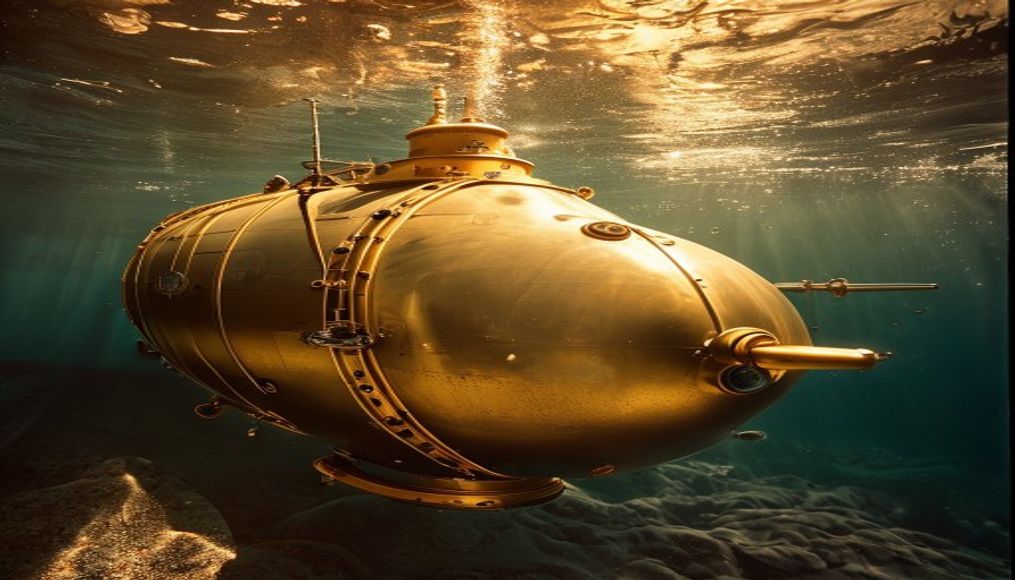
Bathysphere antique
1344×768 · AVIF · CC BY 4.0
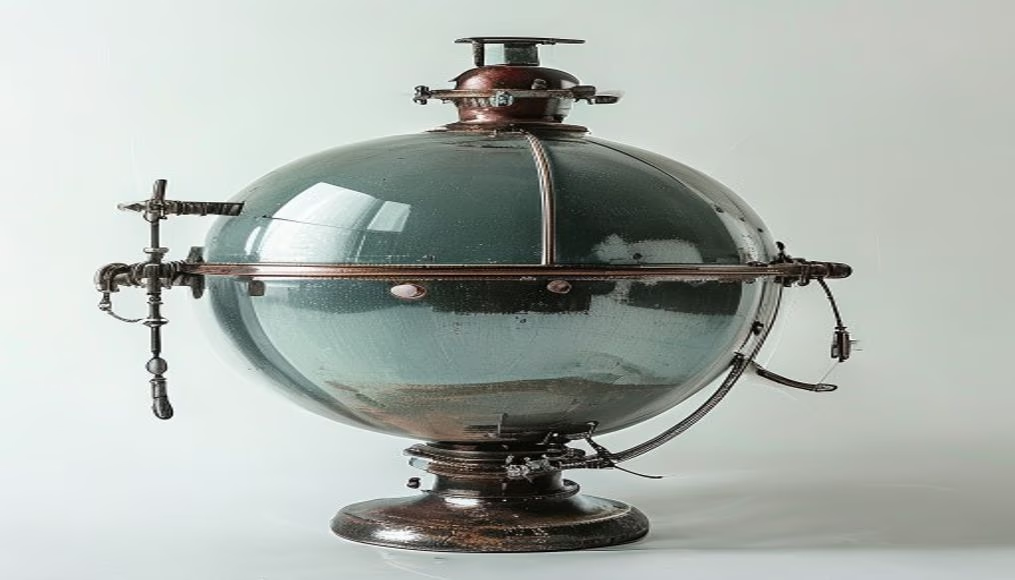
The bathysphere, the first manned deep-sea diving chamber, revolutionized ocean exploration in the 1930s.
About this subject
The bathysphere was a steel spherical chamber designed by zoologist William Beebe and engineer Otis Barton, used to explore ocean depths never before reached. In 1934, Beebe and Barton descended to 923 meters (3,028 feet) in the Atlantic Ocean near Bermuda, setting a world record. The sphere, only 1.45 meters in diameter, had walls 3.8 cm thick and three windows made of fused quartz, the strongest material available at the time.
The system relied on a steel cable for support and telephone communication with the surface. There was no propulsion or air supply; oxygen was provided by cylinders, and CO₂ absorption was achieved with trays of soda lime. Descents took about an hour and a half, and ascents two hours. Despite limitations, Beebe's observations revealed bioluminescent species and unknown ecosystems, challenging the belief that life was impossible at great depths.
The bathysphere marked a milestone in naval engineering and oceanography. Unlike modern submersibles, it could not move independently, but its reliable simplicity allowed crucial data collection on pressure, temperature, and abyssal fauna. Its design influenced later vehicles such as the bathyscaphe Trieste, which reached the Mariana Trench in 1960. Today, the original bathysphere is displayed at the American Museum of Natural History in New York, a symbol of early 20th-century scientific daring.
Frequently Asked Questions
What was the maximum depth reached by the bathysphere?
The bathysphere reached 923 meters (3,028 feet) during the 1934 record dive near Bermuda. This limit was due to the steel cable, not the sphere's resistance.
How was the bathysphere built to withstand pressure?
It was a steel sphere 1.45 meters in diameter with walls 3.8 cm thick. The windows were made of fused quartz, chosen for its strength and clarity.
What important discoveries were made during bathysphere dives?
William Beebe documented hundreds of unknown species, including fish with bioluminescent organs and jellyfish. He also recorded the twilight zone, proving that marine life thrives at extreme depths.
Direct URL
https://pub-c7d6a6ea828543ac903a74a341ccb2e1.r2.dev/imagens/bathysphere-antique-commercial-product-photography-p3.avifHow to credit
Include a visible link back to UtilizAí. Copy one of the snippets below:
<a href="https://xn--utiliza-eza.com/en/midia/imagens/bathysphere-antique-commercial-product-photography-p3">Bathysphere antique</a> by <a href="https://xn--utiliza-eza.com">UtilizAí</a>, licensed under <a href="https://creativecommons.org/licenses/by/4.0/">CC BY 4.0</a>.
[Bathysphere antique](https://xn--utiliza-eza.com/en/midia/imagens/bathysphere-antique-commercial-product-photography-p3) by [UtilizAí](https://xn--utiliza-eza.com), CC BY 4.0
License: CC-BY-4.0