Deep sea diving suit antique
1344×768 · JPG · CC BY 4.0
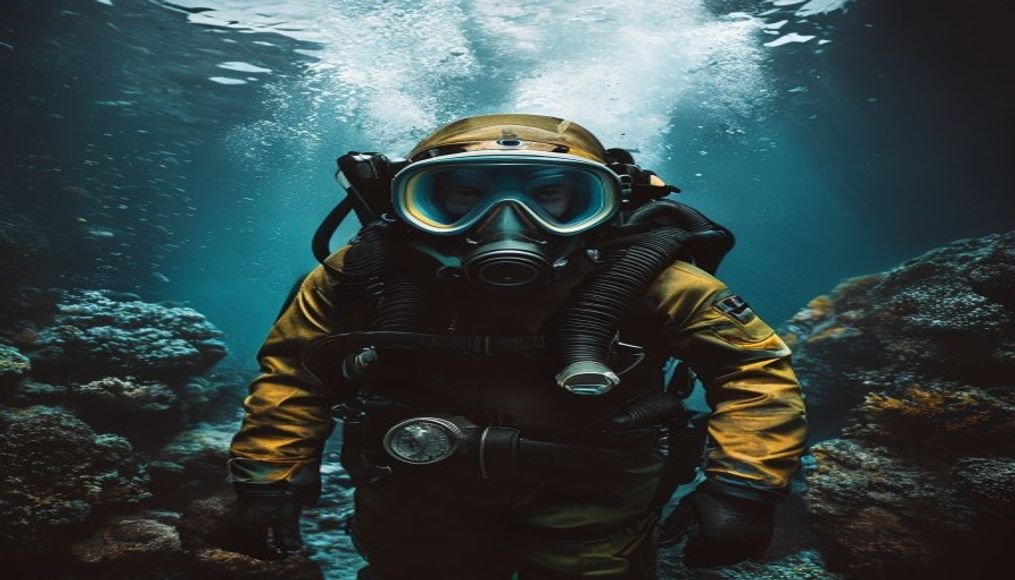
Antique deep sea diving suits from the 19th century, such as the Royal Navy's copper helmets, represent the dawn of human underwater exploration.
About this subject
In the early days of underwater exploration, antique diving suits represented a technological milestone. The most iconic model, the copper diving helmet with a full dress, was perfected by Augustus Siebe in the 1830s. Known as the 'Siebe suit', it allowed divers to breathe through a hose connected to surface air pumps, enabling hours of submerged work. These suits were made of rubberized canvas reinforced with brass rings, while the copper helmet weighed about 10 kilograms, with glass windows and ventilation valves.
The use of these suits was crucial for salvage operations, bridge and harbor construction, and even wreck exploration. By the late 19th century, the British Navy adopted the 'Standard Dress', which included lead-soled boots to keep the diver on the bottom. The safe maximum depth was around 30 meters, limited by air supply and risks of nitrogen narcosis. Despite limitations, these suits enabled the first steps in underwater engineering.
Culturally, the antique diving suit became a symbol of adventure and mystery, immortalized in works like Jules Verne's 'Twenty Thousand Leagues Under the Sea'. Today, preserved specimens in museums tell the story of ocean exploration and Victorian engineering. The robust aesthetic and functional design continue to inspire artists and photographers, especially in fine art photography, which values the texture and historical patina of these objects.
Frequently Asked Questions
Who invented the first modern diving suit?
German-British engineer Augustus Siebe is credited with perfecting the copper helmet diving suit in the 1830s, creating the 'Siebe suit' that became standard for decades.
How heavy was the typical copper helmet?
The copper helmet weighed approximately 10 kilograms, including glass windows and ventilation valves, and was part of a full suit that could reach 50 kilograms.
What were these antique diving suits used for?
They were used for salvage operations, construction of bridges, harbors and dikes, as well as wreck exploration and collection of sponges and corals.
Direct URL
https://pub-c7d6a6ea828543ac903a74a341ccb2e1.r2.dev/imagens/deep-sea-diving-suit-antique-fine-art-photography-p4.jpgHow to credit
Include a visible link back to UtilizAí. Copy one of the snippets below:
<a href="https://xn--utiliza-eza.com/en/midia/imagens/deep-sea-diving-suit-antique-fine-art-photography-p4">Deep sea diving suit antique</a> by <a href="https://xn--utiliza-eza.com">UtilizAí</a>, licensed under <a href="https://creativecommons.org/licenses/by/4.0/">CC BY 4.0</a>.
[Deep sea diving suit antique](https://xn--utiliza-eza.com/en/midia/imagens/deep-sea-diving-suit-antique-fine-art-photography-p4) by [UtilizAí](https://xn--utiliza-eza.com), CC BY 4.0
License: CC-BY-4.0