Autonomous drone military
1344×768 · AVIF · CC BY 4.0
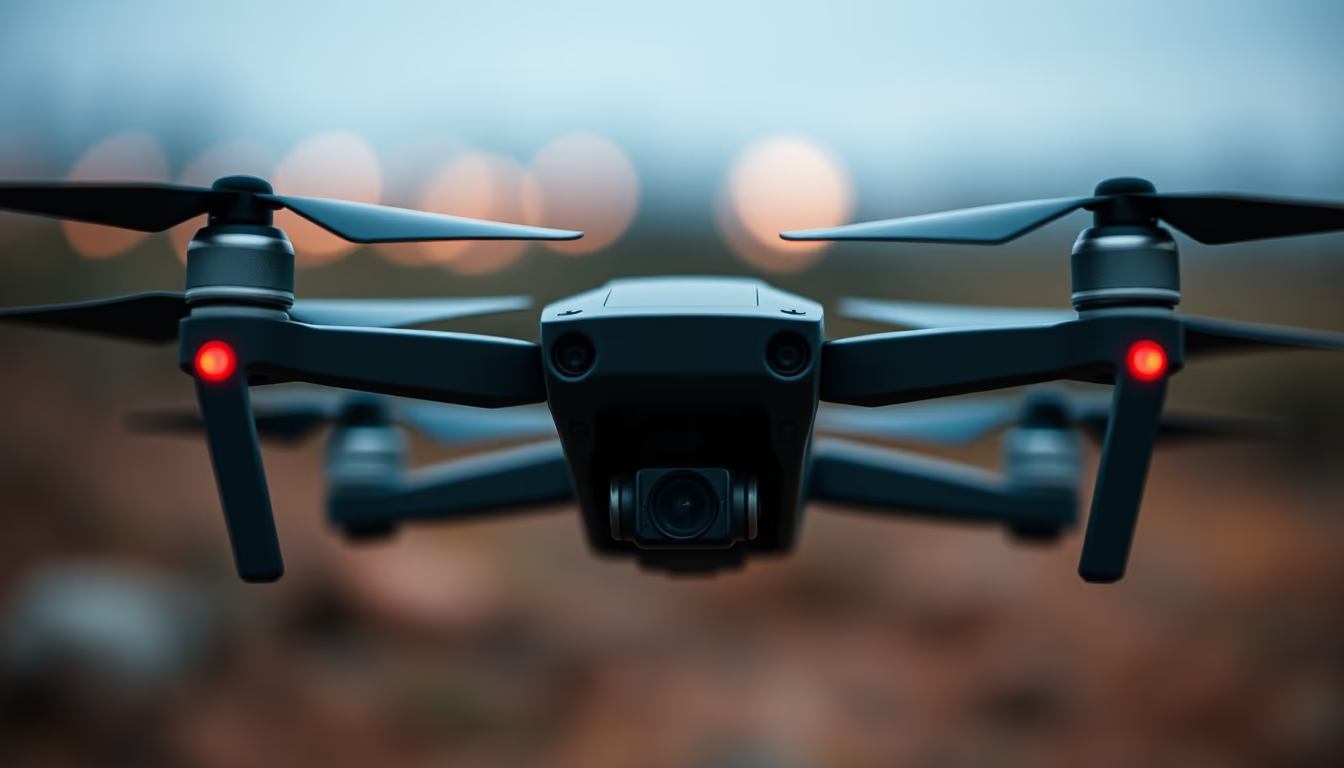
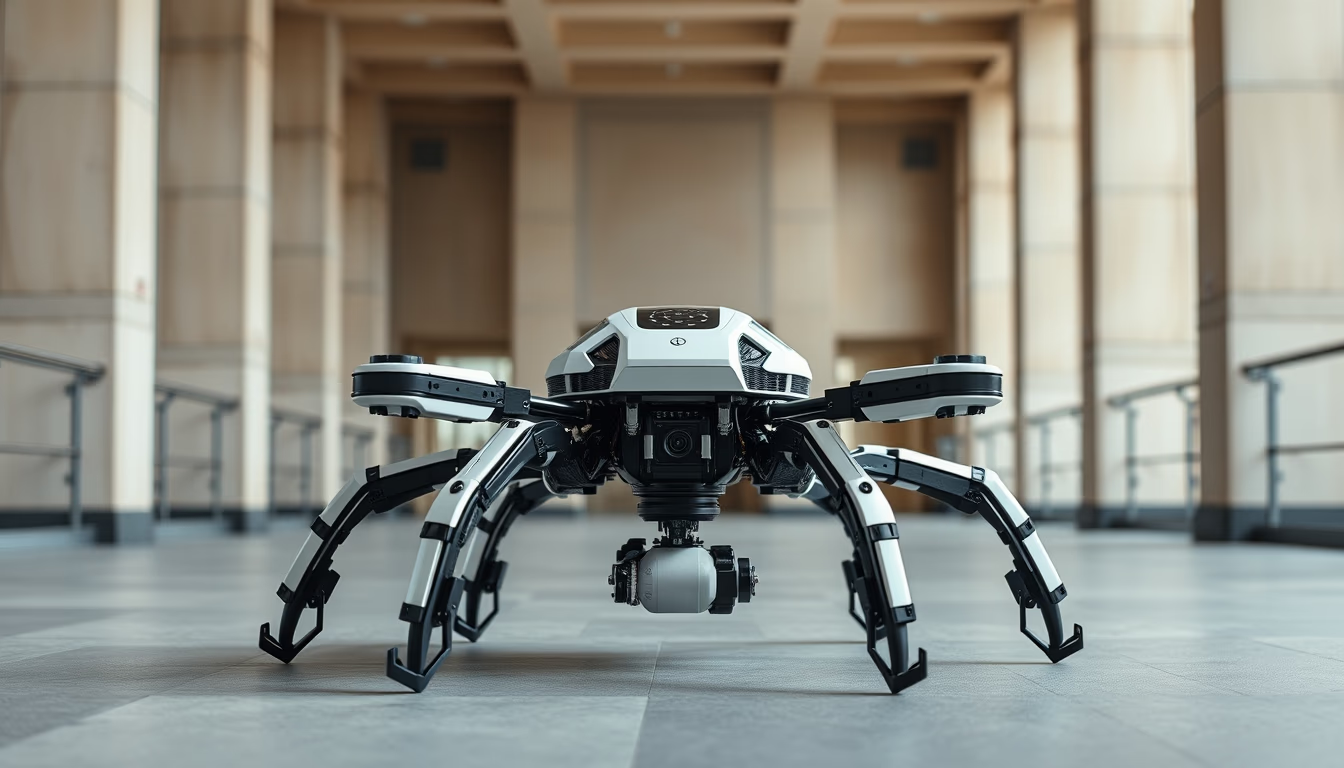
Autonomous military drones are transforming combat tactics with artificial intelligence, advanced sensors, and real-time decision-making capabilities without human intervention.
About this subject
Autonomous military drones represent the evolution of unmanned aerial vehicles (UAVs) by incorporating artificial intelligence to operate without direct human control. These systems use machine learning algorithms, computer vision, and sensor fusion to navigate, identify targets, and execute reconnaissance or attack missions independently. Unlike remotely piloted drones such as the MQ-9 Reaper, autonomous models can make split-second decisions by analyzing data from radar, infrared cameras, and communications.
Development of these aircraft is led by military powers like the United States, China, and Israel. Examples include the Kratos XQ-58A Valkyrie, designed to escort manned fighters, and the Turkish Bayraktar Kızılelma, capable of landing on aircraft carriers. Autonomy ranges from supervised levels (human in the loop) to full autonomy (human out of the loop), sparking ethical debates about responsibility in lethal strikes and risks of algorithmic errors.
In Brazil, the VANT Flyer 2 project by the Brazilian Air Force and partnerships with national industry aim to develop autonomous capabilities for Amazon surveillance and border monitoring. The increasing use raises concerns about technology proliferation and the need for international treaties. Historical data show the first operational use of armed drones occurred in the 2000s, but full autonomy remains controversial due to software failures in simulated tests.
Interestingly, autonomous systems are also tested for search and rescue, logistics, and long-range reconnaissance. Miniaturization of sensors and batteries allows smaller designs, with AI-coordinated drone swarms explored by programs like LOCUST (US) and Drone Swarm (UK). The future points to stricter regulations and greater transparency in decision-making algorithms.
Frequently Asked Questions
How do autonomous military drones make combat decisions?
They use artificial intelligence, machine learning algorithms, and sensors like radar and cameras to process the environment. Based on pre-programmed rules or trained neural networks, they can identify targets and execute actions without human intervention.
What are the main ethical risks of using these drones?
Risks include unintended civilian casualties from algorithm errors, lack of legal accountability in failures, and conflict escalation due to autonomous speed. International organizations call for a moratorium until clear regulations are established.
Which countries lead the development of autonomous military drones?
The United States, China, Israel, and Turkey are at the forefront. The US LOCUST project tests swarms, China develops the stealth CH-7, and Israel exports systems like the Harop. Brazil advances with the VANT Flyer 02 for surveillance.
Direct URL
https://pub-c7d6a6ea828543ac903a74a341ccb2e1.r2.dev/imagens/autonomous-drone-military-tilt-shift-miniature-p0.avifHow to credit
Include a visible link back to UtilizAí. Copy one of the snippets below:
<a href="https://xn--utiliza-eza.com/en/midia/imagens/autonomous-drone-military-tilt-shift-miniature-p0">Autonomous drone military</a> by <a href="https://xn--utiliza-eza.com">UtilizAí</a>, licensed under <a href="https://creativecommons.org/licenses/by/4.0/">CC BY 4.0</a>.
[Autonomous drone military](https://xn--utiliza-eza.com/en/midia/imagens/autonomous-drone-military-tilt-shift-miniature-p0) by [UtilizAí](https://xn--utiliza-eza.com), CC BY 4.0
License: CC-BY-4.0